Key Takeaways: The first year after a heart transplant is a gradual journey from close hospital monitoring back to a full life. Most people stay in the hospital about one to two weeks, then have frequent clinic visits and heart biopsies that space out over the year. Two goals shape this period: preventing rejection, managing anti-rejection medications you will take for life, and preventing infection, since those same medications lower your defenses. Cardiac rehab, usually starting around six to eight weeks, safely rebuilds your strength. Most recipients return to normal activities within three to six months and go on to enjoy years of good-quality life.
Receiving a new heart is the start of a hopeful new chapter, and the first year is when you and your care team work closely together to protect it. It can feel like a lot at first, with new medications, frequent appointments, and unfamiliar precautions, but there is a clear rhythm to it. Here is what the first year typically looks like, so you know what to expect and what is normal.
The First Year at a Glance
Recovery is different for everyone, but most first years follow a broadly similar arc, moving from intensive monitoring toward a settled routine.
In the Hospital: The First Days and Weeks
Right after surgery you will spend a few days in the intensive care unit, then move to a step-down unit as you grow stronger. Most people stay in the hospital for about 10 to 14 days, depending on how ill you were beforehand. During this time you will start your anti-rejection medications, begin gentle movement and breathing exercises, and have your first heart biopsies. Because the surgery is done through the breastbone, you are also healing from a sternotomy, with the usual sternal precautions. Our guide to open-heart surgery recovery covers that incision healing in detail.
The Two Jobs of the First Year: Preventing Rejection and Infection
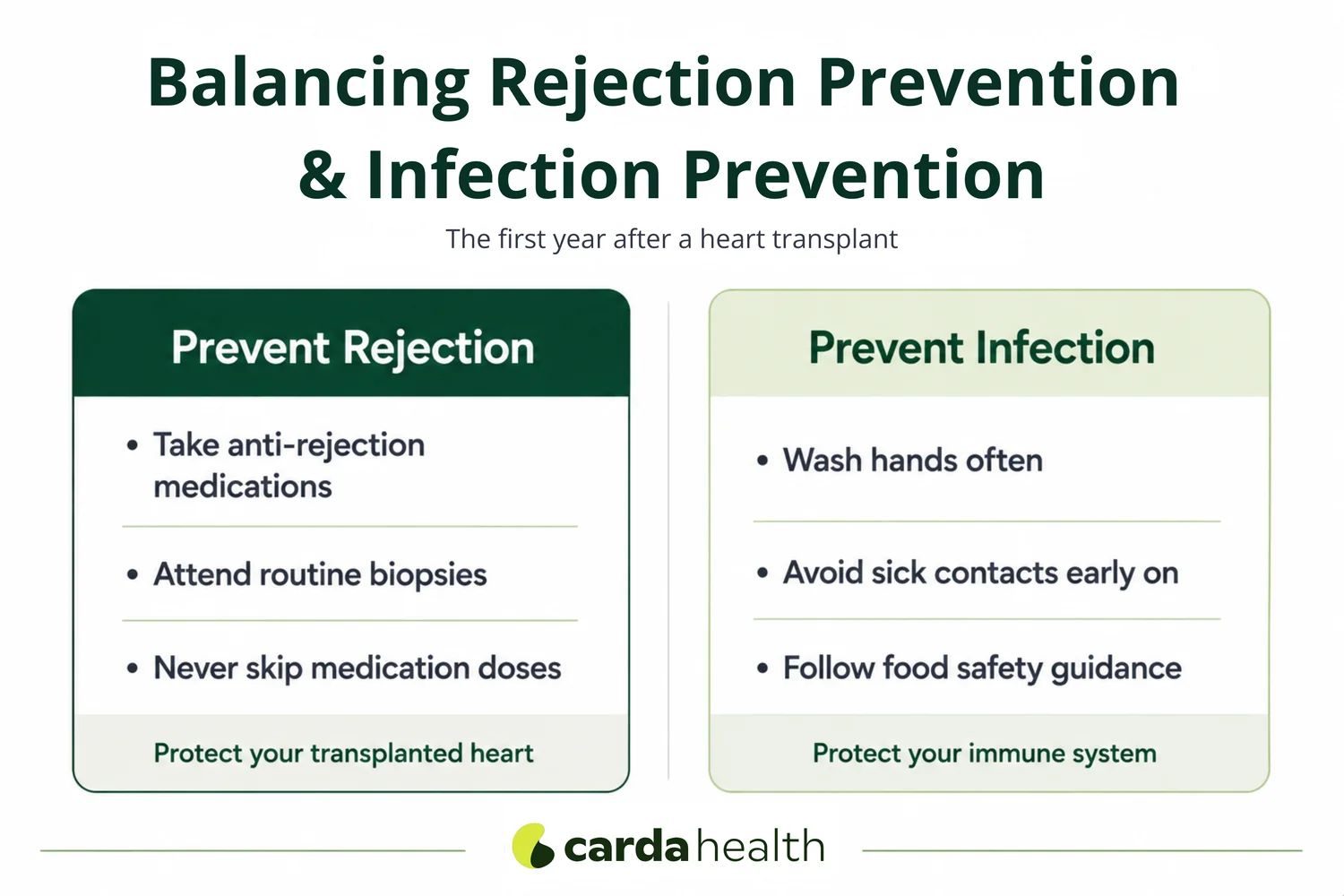
If the first year has a theme, it is balance. Your care team is working to prevent your body from rejecting the new heart, while also protecting you from infection, and the two are linked in an important way.
Understanding Rejection
Rejection happens because your immune system sees the donor heart as foreign and tries to attack it. It is most common in the first three to six months, and reassuringly, nearly all recipients have at least one rejection episode that is caught early and treated. Most rejection has no symptoms, which is exactly why you have regular biopsies, a small tissue sample taken through a vein to spot early signs. When found, it is usually treated effectively by adjusting your medications, and serious outcomes are uncommon when it is caught early.
Your Anti-Rejection Medications
To keep your immune system from attacking the new heart, you will take immunosuppressant medications. The doses are highest right after surgery, when rejection risk is greatest, then gradually lowered over the first year to the smallest amount that keeps your heart safe. These medications are lifelong, and taking them exactly as prescribed is the single most important thing you can do to protect your transplant. If side effects or costs ever make that hard, tell your team rather than skipping doses, because they can help.
Guarding Against Infection
The same medications that prevent rejection also lower your defenses against germs, so infection risk is higher, especially in the first six months when doses are highest. The precautions are practical: wash your hands often, avoid crowds and sick people early on, keep up with team-approved vaccines, and follow food-safety guidance. These steps ease as your doses come down over the year.
Rebuilding Strength: Exercise and Cardiac Rehab
Rebuilding your strength is central to recovery, and the safest way to do it is cardiac rehabilitation, a medically supervised program of monitored exercise, education, and support recommended for transplant recipients, usually beginning around six to eight weeks after surgery. Heart transplant is also a qualifying condition for cardiac rehab coverage. Learn more about the benefits of cardiac rehabilitation and what cardiac rehab involves.
Your New Heart Works a Little Differently
Here is something many people are surprised to learn. During the transplant, the nerves connecting your brain to your heart are not reconnected, so your new heart is denervated. In practice, it beats a little faster at rest and responds more slowly when you start and stop exercising, because it relies on hormones in your bloodstream rather than nerve signals. That is why longer warm-ups and cool-downs matter, and why supervised exercise helps at first. It also means you may not feel the usual chest pain warning signs, another reason monitored exercise is valuable early on.
How Carda Fits In
Getting to a rehab center several times a week can be hard, and early on there is an added consideration: limiting exposure to crowds while your immune system is suppressed. This is where home-based, supervised rehab can be a natural fit. Carda Health delivers virtual cardiac rehab with live, monitored sessions and real-time heart tracking from home, letting you rebuild strength under supervision while limiting time in waiting rooms. Because transplant recovery is highly individual, coordinate any rehab plan with your transplant team, and the simplest way to see whether it fits is to check your eligibility.
Getting Back to Life: Milestones
Life steadily returns over the first year. Because of breastbone healing, most people avoid driving for about six weeks and hold off on heavy lifting for three to four months. Many return to work between one and three months, depending on the job, and most resume usual activities within three to six months. A heart-healthy diet supports recovery, with attention to food safety and to a few foods, such as grapefruit, that can interact with transplant medications. Questions about intimacy, travel, and exercise limits are all normal and worth raising with your care team, who would far rather you ask.
Caring for Your Emotional Health
Recovery is emotional as well as physical. It is common to feel a mix of gratitude, anxiety, low mood, fear of rejection, or complicated feelings about the donor. None of this means anything is wrong with you, and caring for your mental health is part of caring for your heart, since stress and depression can make recovery harder. Lean on your support network, ask your team about counseling, and know these feelings usually ease with time. Our guide to managing anxiety after a heart event offers strategies many recipients find helpful.
Warning Signs: When to Call Your Transplant Team
Contact your transplant team promptly if you notice possible signs of rejection or infection, including:
- Unusual shortness of breath, fatigue, or swelling in the legs or abdomen
- A fever, chills, or any sign of infection such as redness or drainage at the incision
- A breastbone that feels like it moves, pops, or cracks
- Rapid weight gain, dizziness, or a heartbeat that feels off.
When in doubt, call. Your team would rather hear from you early.
The Outlook
The reason a heart transplant is worth this careful first year is simple: it works. Survival keeps improving, and about 85 to 90 percent of recipients are doing well one year after surgery, with many living active, fulfilling lives for a decade or more. The recipients who do best take their medications faithfully, keep every follow-up appointment, stay active, and care for their emotional health. With that commitment, the first year becomes the foundation for many good years ahead.
The Bottom Line
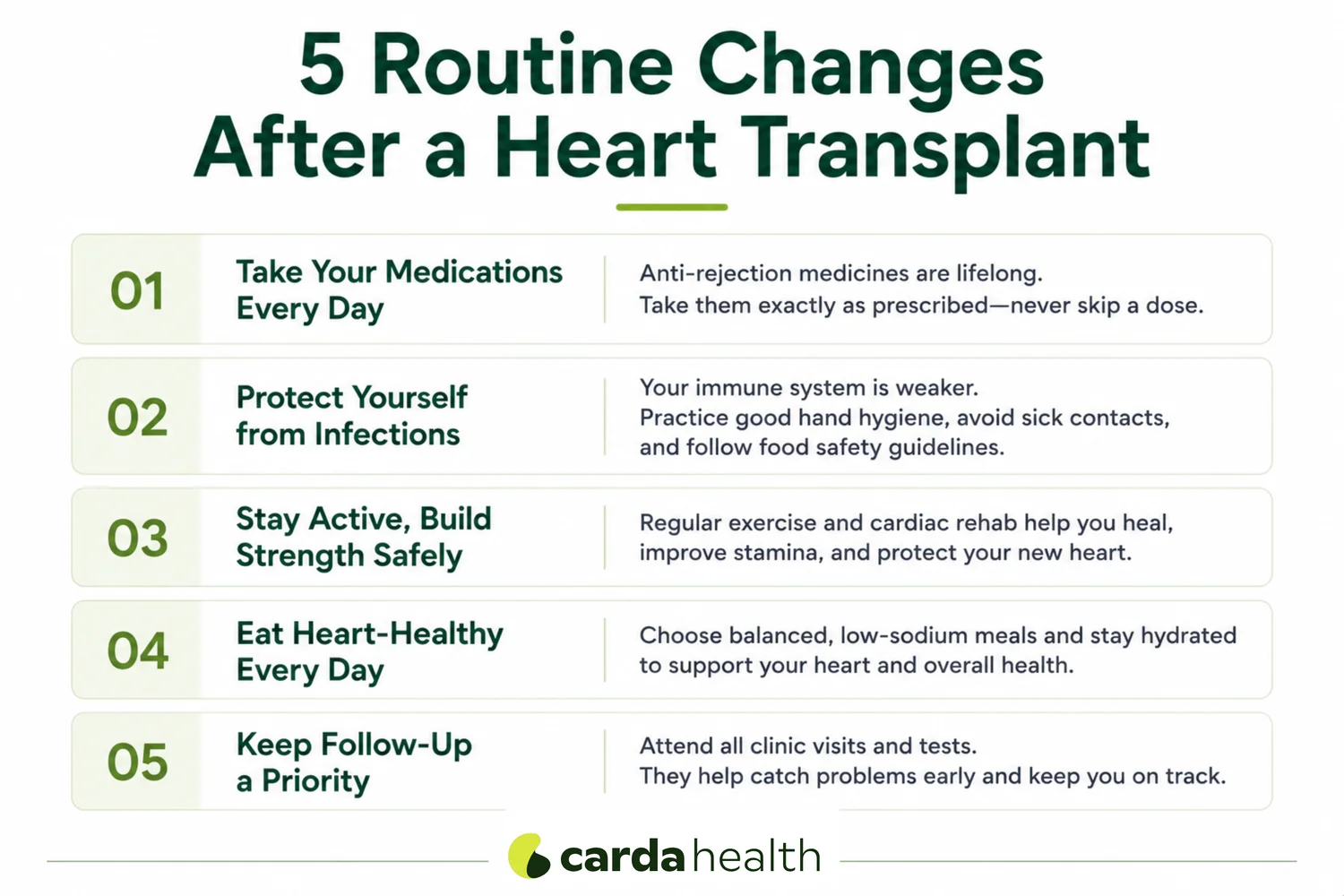
The first year after a heart transplant asks a lot of you, but it follows a clear path: close monitoring that gradually eases, medications that protect your new heart, careful attention to rejection and infection, and steady rebuilding through cardiac rehab. Most recipients return to a full life within months and gain years of good health. You do not walk this path alone, and every appointment, dose, and workout is an investment in the gift you have been given.
{{get-started}}
Frequently Asked Questions
How long does it take to recover from a heart transplant?
Most people stay in the hospital about one to two weeks, then recover at home with frequent monitoring. Many resume normal activities within three to six months, though full recovery and settling into a medication routine unfold over the first year.
How long do you stay in the hospital after a heart transplant?
Typically about 10 to 14 days, starting in the ICU and moving to a step-down unit, though it can be longer depending on how ill you were before surgery and how your recovery goes.
What are the signs of heart transplant rejection?
Rejection is often silent, which is why regular biopsies are used to detect it early. When symptoms do occur, they can include unusual fatigue, shortness of breath, fluid retention or swelling, and feeling generally unwell. Report these to your team promptly.
Why do you need anti-rejection medication for life?
Your immune system will always recognize the donor heart as foreign, so immunosuppressant medications are needed for life to prevent it from attacking the heart. Doses are highest early on and are lowered to a maintenance level over the first year.
When can you start cardiac rehab and exercise after a heart transplant?
Gentle movement begins in the hospital, and formal cardiac rehab usually starts around six to eight weeks after surgery, once the breastbone has begun healing. Because the transplanted heart responds differently to exercise, supervised rehab is especially valuable at first.
When can you drive and return to work?
Most people avoid driving for about six weeks while the breastbone heals, and return to work somewhere between one and three months, depending on the type of work and how they feel. Your team will give you specific guidance.
How long can you live after a heart transplant?
Outcomes keep improving. About 85 to 90 percent of recipients are doing well at one year, and many live active lives for a decade or more. Taking medications faithfully and keeping up with follow-up care strongly support long-term success.
References
- Cleveland Clinic. Post Transplant Process and Recovery (Heart Transplant).
- Penn Medicine. Recovery and Life After Heart Transplant.
- Awad M, et al. Heart Transplantation Rejection. StatPearls, NCBI Bookshelf.
- Cedars-Sinai Medical Center. Heart Transplant Immunosuppression Strategies. PMC.
- UPMC. Heart Transplant: What to Expect After Surgery.