

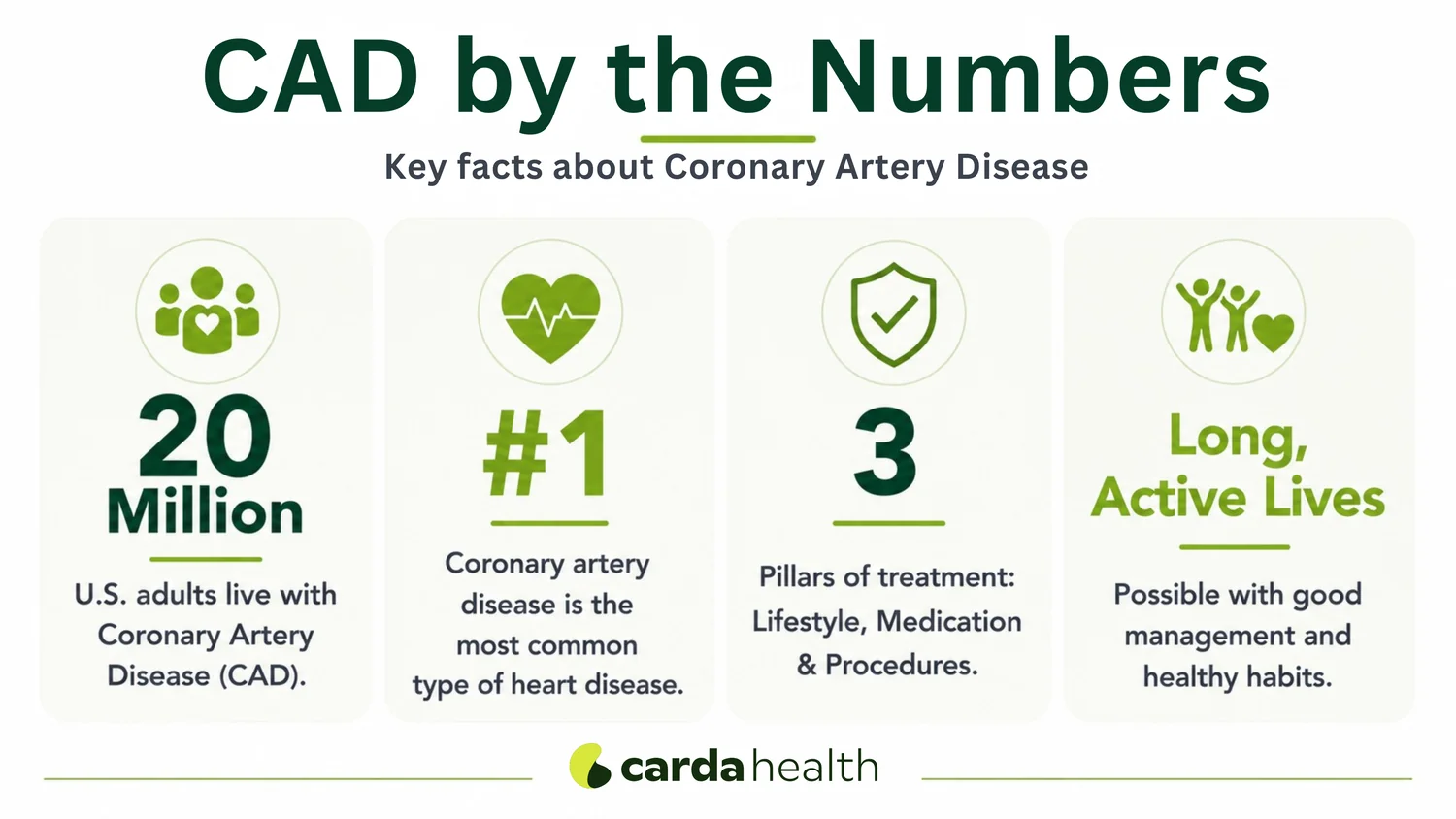
Key Takeaways: Coronary artery disease (CAD) is the most common form of heart disease. It develops when plaque builds up in the arteries that supply your heart, a process called atherosclerosis, reducing blood flow and sometimes causing chest pain (angina) or a heart attack. CAD affects about 20 million American adults, and it is often silent until the first symptom appears. It cannot be cured, but here is the hopeful part: it can be controlled. With medication, healthy habits, and cardiac rehab, most people with well-managed CAD live long, active lives, and their plaque can be stabilized so it is far less likely to cause a heart attack.
Being told you have coronary artery disease can feel like a verdict. It is not. CAD is the most common heart condition in the world, doctors understand it well, and for most people it is a manageable, long-term condition rather than a sudden danger. This guide explains what CAD is and, just as importantly, how to live well with it.
What Is Coronary Artery Disease?
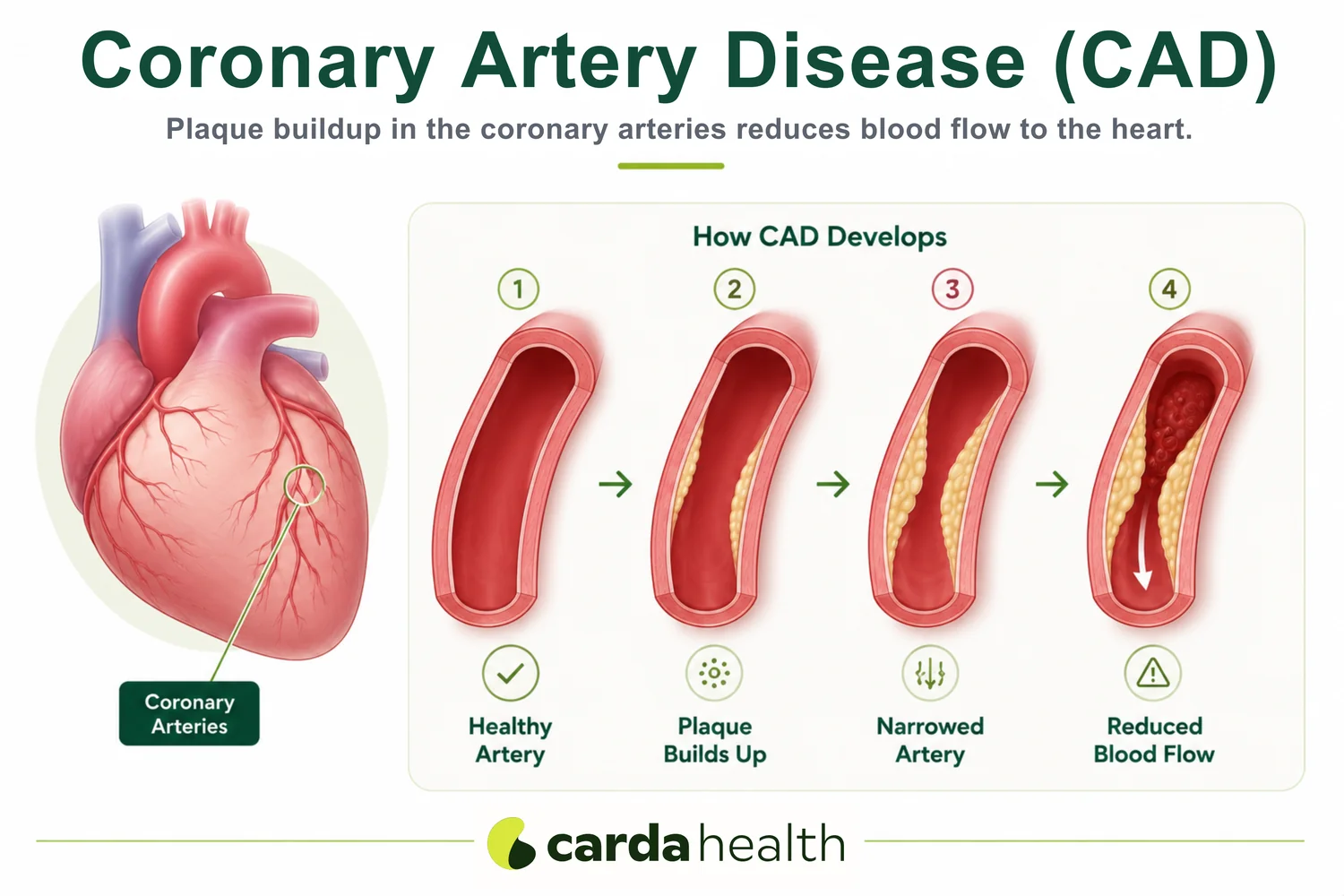
Your heart is a muscle, and like any muscle it needs a steady supply of oxygen-rich blood from the coronary arteries. In coronary artery disease, those arteries become narrowed by plaque, a buildup of cholesterol, fatty deposits, calcium, and inflammatory cells, in a process called atherosclerosis. As the arteries narrow, less blood reaches the heart muscle, which can cause chest pain and, if a plaque ruptures and blocks the artery, a heart attack.
You may hear several names for the same condition. CAD is also called coronary heart disease (CHD) or ischemic heart disease, and it is what most people mean by the general term “heart disease.” As the Cleveland Clinic notes, it is the most common type of heart disease, affecting about 20 million adults in the United States.
The Two Forms of CAD
It helps to think of CAD in two forms, because they are managed very differently. One is a chronic, day-to-day condition; the other is an emergency.
Symptoms of CAD
The most common symptom is angina, a chest pain, pressure, or tightness that can spread to the arm, jaw, neck, back, or shoulder. It often shows up during activity or stress, when the heart needs more blood than the narrowed arteries can supply, and it typically eases with rest. Other symptoms include shortness of breath and unusual fatigue. Women and older adults may have less typical symptoms such as nausea or pain in the back or jaw, which is one reason CAD is sometimes missed.
When CAD Is Silent
CAD is often called a silent disease. It can build for years without any symptoms, and for some people the first sign is a heart attack. That is why it is so important to know your numbers, such as blood pressure and cholesterol, and to talk with your doctor about your risk, even if you feel well.
When Chest Pain Is an Emergency
Call 911 immediately if you have chest pain or pressure that is severe, lasts more than a few minutes, or spreads to your arm, jaw, or back, especially with shortness of breath, sweating, nausea, or lightheadedness. These can be signs of a heart attack, and fast treatment saves heart muscle and lives. When in doubt, do not wait.
What Causes CAD and Who Is at Risk
CAD is caused by atherosclerosis, and several factors speed it up. Some you cannot change, such as older age and family history. Many you can influence, and these are where prevention focuses: high LDL cholesterol, high blood pressure, smoking, diabetes, obesity, and a sedentary lifestyle. Because these factors add up, the more you address, the more you slow the disease and lower your risk.
How CAD Is Diagnosed
Doctors diagnose CAD using your history and a combination of tests: blood tests for cholesterol, an electrocardiogram (ECG), and a stress test to see how your heart performs during exertion. Imaging such as an echocardiogram, a coronary calcium scan, or a coronary angiogram can show the arteries and blockages in more detail. Your doctor will choose the right tests for you.
How CAD Is Treated
Treatment rests on three pillars that work together. The first is lifestyle change, including exercise, a heart-healthy diet, quitting smoking, and stress management. The second is medication, often a statin to lower cholesterol, along with medicines to control blood pressure, prevent blood clots (such as low-dose aspirin), and reduce the heart’s workload. The third is procedures, such as angioplasty with a stent or bypass surgery, used to restore blood flow when a blockage is significant or symptoms are not controlled by medication.
Does a Stent or Bypass Cure CAD?
This is a common and important point of confusion. A stent or bypass treats one blocked segment, and during a heart attack, opening the artery quickly is genuinely life-saving. But these procedures do not cure the underlying disease. The atherosclerosis is still present throughout your arteries, so plaque can build elsewhere. For stable angina, procedures mainly relieve symptoms rather than extend life, which is why lifestyle changes and medication remain essential even after a stent. Think of a procedure as fixing one pothole, not repaving the whole road.
Can Coronary Artery Disease Be Reversed?
Honestly, no, not in the sense of making your arteries new again. There is no cure that erases atherosclerosis. But that is not the end of the story, because CAD can be controlled, and that makes an enormous difference. Aggressive lifestyle changes combined with medication, especially statins, can slow or halt the disease, stabilize existing plaque so it is far less likely to rupture, and in some cases modestly shrink it. The practical goal is not brand-new arteries; it is dramatically lowering your risk of a heart attack and keeping the disease from progressing.
How to Live Well With CAD
Here is the message that matters most. A diagnosis of CAD is the beginning of managing your heart health, not the end of a full life. Most people with stable, well-managed CAD continue to work, travel, exercise, and enjoy their lives, and with good care their life expectancy can approach that of people without the condition. Three habits make the biggest difference.
Move Your Body: Exercise and Cardiac Rehab
Regular, appropriate exercise is one of the most powerful things you can do for CAD. It strengthens the heart, improves circulation, and helps control the risk factors that drive the disease. The safest way to start, especially after a heart attack, stent, or bypass, is cardiac rehabilitation, a medically supervised program of monitored exercise, education, and support that research shows improves survival and reduces repeat cardiac events. Read more about the benefits of cardiac rehabilitation, and if getting to a center is hard, Carda Health delivers virtual cardiac rehab with supervised sessions and real-time monitoring from home. If you are recovering from a cardiac event, our guides to cardiac rehab after a heart attack and open-heart surgery recovery walk through what to expect.
Eat, Medicate, and Monitor
A heart-healthy eating pattern, rich in vegetables, fruits, whole grains, and healthy fats and low in saturated fat, sodium, and processed food, helps control cholesterol and blood pressure. Just as important is taking your medications consistently, since statins and other heart medicines only work if you keep taking them, and keeping up with regular checkups so your care team can adjust your plan.
Mind Your Mental Health
A heart diagnosis can bring real anxiety and low mood, and that matters: depression and chronic stress can worsen heart outcomes and make healthy habits harder to sustain. Caring for your mental health is part of caring for your heart. If worry is weighing on you, our guide to cardiac anxiety after a heart event offers practical support, and it is always worth talking with your care team.
The Bottom Line
Coronary artery disease develops as plaque narrows the arteries that feed your heart. It cannot be cured, but it can be controlled remarkably well. With medication, healthy habits, and cardiac rehab, most people stabilize their disease, lower their heart attack risk, and go on to live long, active, fulfilling lives. A CAD diagnosis is not a stop sign. It is a call to take charge of your heart, and you do not have to do it alone.
{{get-started}}
Frequently Asked Questions
What is the difference between coronary artery disease and coronary heart disease?
They refer to the same condition. Coronary artery disease (CAD) is also called coronary heart disease (CHD) or ischemic heart disease. All describe narrowing of the coronary arteries from plaque buildup.
What are the symptoms of CAD?
The most common is angina: chest pain or pressure, often with exertion, that may spread to the arm or jaw and eases with rest. Others include shortness of breath and fatigue. Women and older adults may have less typical signs like nausea or back and jaw pain, and some people have no symptoms until a heart attack occurs.
What causes coronary artery disease?
Atherosclerosis, the buildup of plaque in the coronary arteries. It is accelerated by high LDL cholesterol, high blood pressure, smoking, diabetes, obesity, inactivity, older age, and family history.
Can coronary artery disease be reversed or cured?
There is no cure that makes the arteries new again, but CAD can be controlled. Lifestyle changes and medication, especially statins, can slow or halt progression, stabilize plaque, and sometimes shrink it modestly, dramatically lowering the risk of a heart attack.
Can you live a long, normal life with CAD?
Yes. Most people with stable, well-managed CAD live long, active lives, and with good management life expectancy can approach that of people without CAD. Consistent treatment, healthy habits, and cardiac rehab are key.
Does a stent cure coronary artery disease?
No. A stent opens one blocked segment and is life-saving during a heart attack, but the underlying disease remains in the rest of your arteries. Lifestyle changes and medication are still essential after a stent.
Is exercise safe with CAD?
For most people, yes, and it is one of the best things you can do. The safest way to start, especially after a cardiac event, is a supervised program like cardiac rehab. Always check with your care team before beginning a new exercise routine.
References
- Cleveland Clinic. Coronary Artery Disease.
- Harvard Health Publishing. Coronary Artery Disease A to Z.
- Johns Hopkins Medicine. Coronary Heart Disease.
- American Heart Association. Coronary Artery Disease: Symptoms, Diagnosis and Treatment.
- Systematic Review. The Impact of Lifestyle Intervention Programs on Long-Term Cardiac Event-Free Survival in Patients With Established Coronary Artery Disease. PMC.