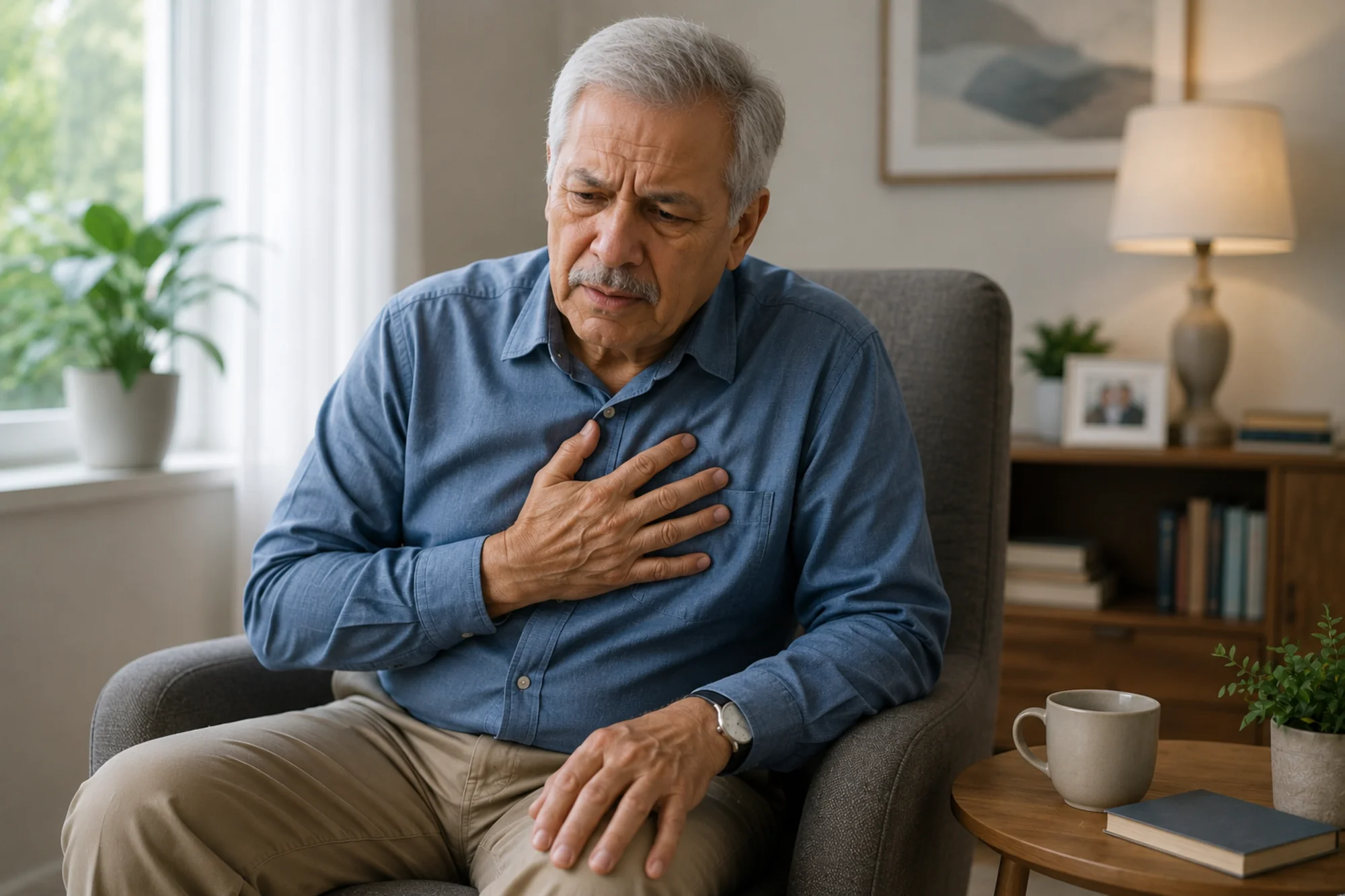
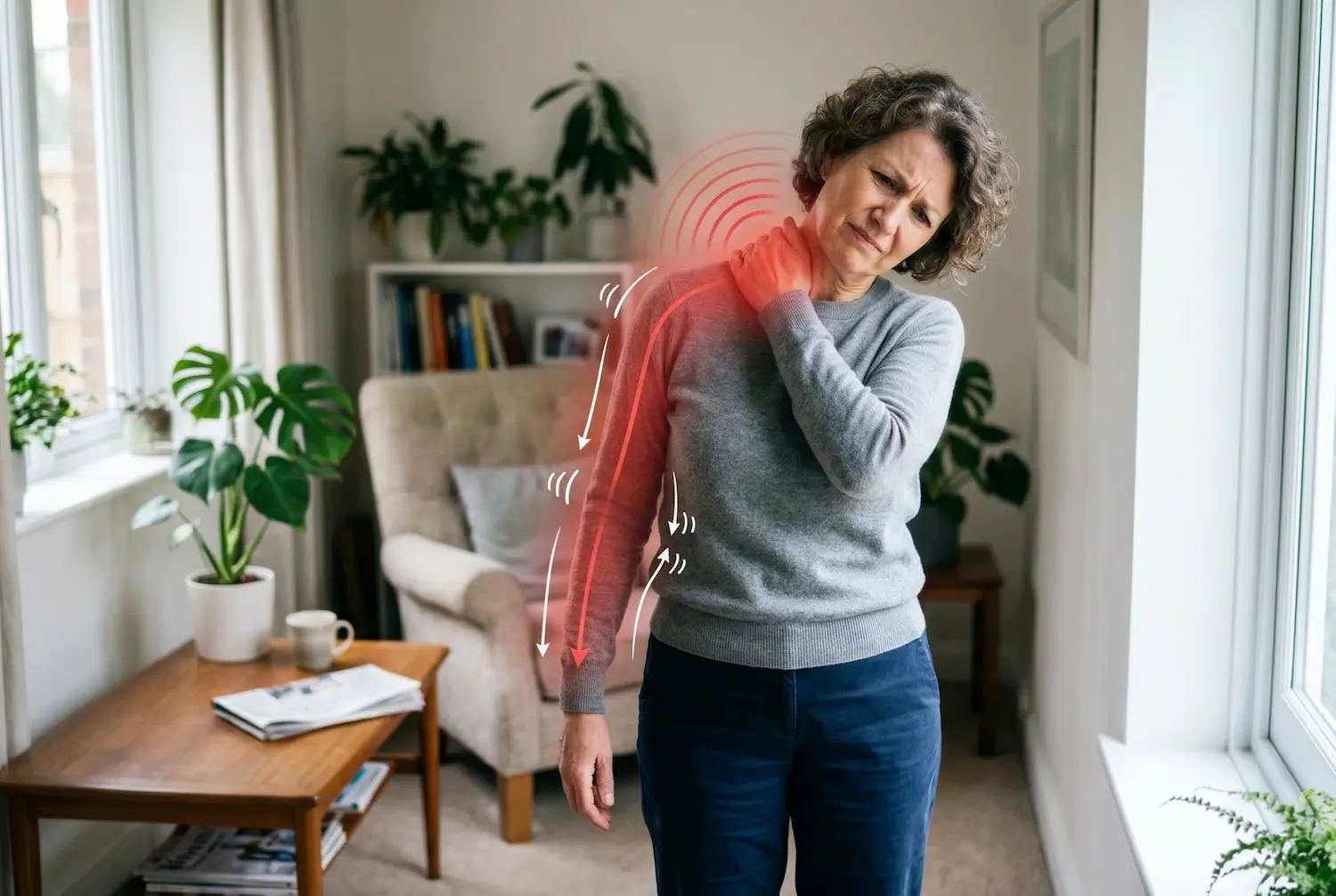
Most people picture a heart attack as crushing chest pain. And while chest discomfort is the most common symptom, many people experience pain in areas that seem unrelated to the heart — the shoulder, arm, jaw, back, neck, or stomach. Understanding why this happens can help you recognize a heart attack even when the symptoms don't match what you expect.
Why Heart Attack Pain Can Appear in Unexpected Places
The explanation is a phenomenon called "referred pain." The heart's sensory nerves enter the spinal cord at the same levels as nerves from the shoulder, arm, jaw, neck, and upper back (primarily the C3 through T4 spinal segments).
When the heart muscle is deprived of oxygen during a heart attack, it sends distress signals through these shared nerve pathways. The brain sometimes interprets those signals as coming from the shoulder, arm, or jaw rather than the heart itself. This is why some people feel no chest pain at all during a heart attack.
As cited by Cleveland Clinic, more than 40% of women victims experience a silent heart attack without classic chest discomfort — their primary symptoms may be jaw pain, upper back pressure, unusual fatigue, or nausea.
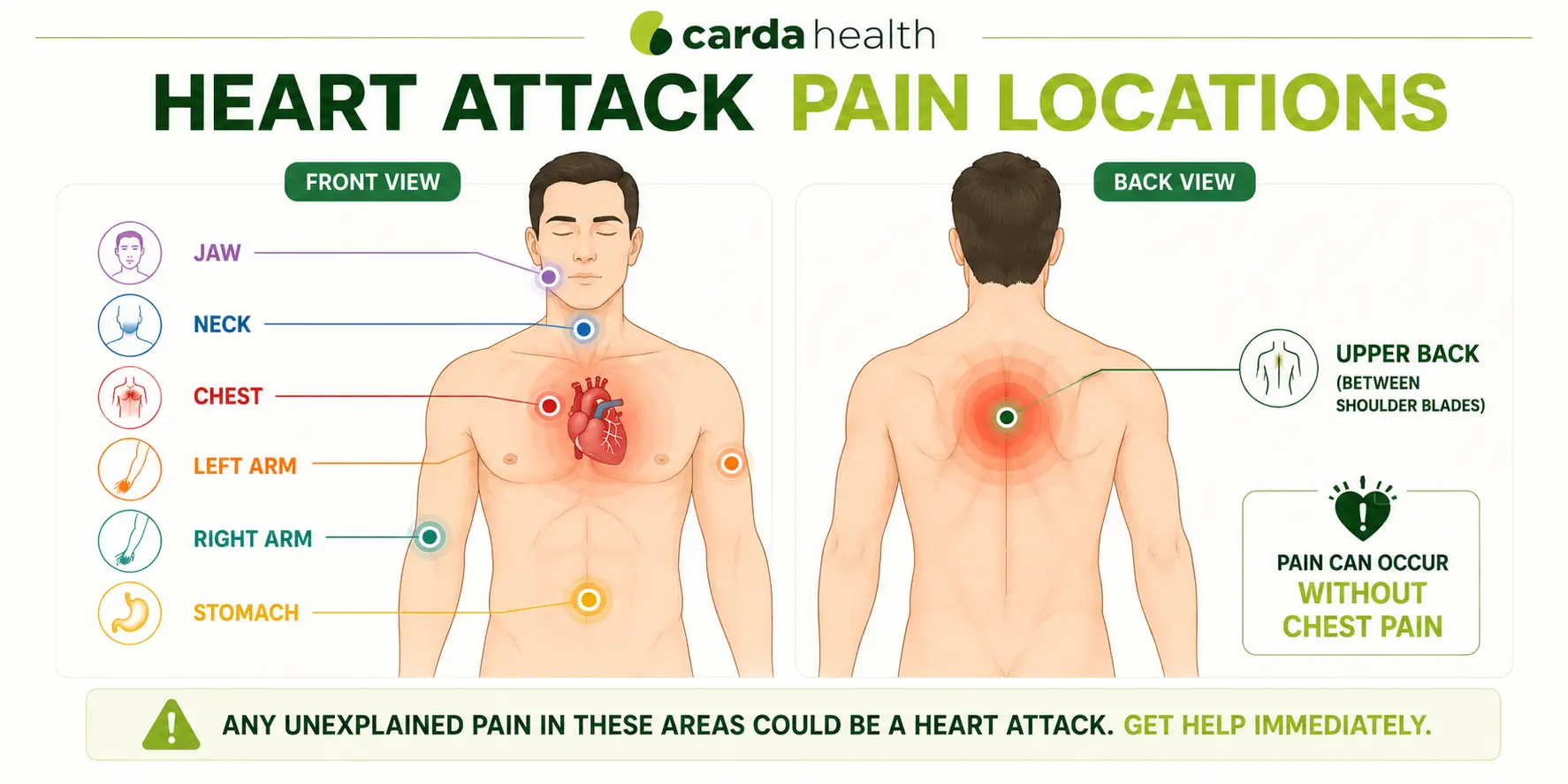
Pain Location by Location
Below is a detailed look at each area of the body where heart attack pain can appear, what the pain typically feels like, and how it differs from non-cardiac causes.
Chest Pain and Heart Attack
Chest discomfort remains the most common heart attack symptom for both men and women. It is typically felt in the center or left side of the chest and may be described as pressure, squeezing, fullness, tightness, or a heavy weight. The pain may last more than a few minutes, or it may come and go.
Some people describe it as burning or indigestion rather than pain, which is one reason heart attacks are sometimes mistaken for acid reflux.
Also Read: angina vs. heart attack
Left Arm Pain and Heart Attack
Pain or discomfort radiating down the left arm is one of the most widely recognized heart attack signs. It often begins in the chest or shoulder and moves downward, and may feel like a dull ache, heaviness, tingling, or numbness rather than sharp or stabbing pain. Left arm pain during a heart attack is more commonly reported by men, though it can occur in anyone.
The pain does not improve with changes in arm position and is not reproduced by pressing on the affected area.
Right Arm Pain and Heart Attack
Because most educational materials focus on left-side symptoms, right arm pain is more likely to be dismissed. However, the same referred pain mechanism applies — the heart's nerve pathways can route distress signals to either arm or both arms.
Right arm pain associated with a heart attack feels similar to left arm pain: a deep ache or heaviness that does not respond to rest or position change, and often occurs with other symptoms.
Shoulder Pain and Heart Attack
Shoulder pain, particularly in the left shoulder, is a common referred pain location during a heart attack. The pain differs from the sharp, localized pain of a rotator cuff injury or muscle strain. Right shoulder pain can also occur during a heart attack, though it should be noted that right shoulder pain is also associated with gallbladder problems, making clinical differentiation important.
Shoulder pain that accompanies chest tightness, shortness of breath, or sweating should be treated as a potential cardiac emergency.
Jaw Pain and Heart Attack
Jaw pain during a heart attack is more commonly reported by women and is one of the most frequently missed cardiac symptoms. It typically presents as a dull ache or pressure in the lower jaw, often on both sides, and is distinct from the sharp, clicking pain of TMJ disorders or dental problems.
Jaw pain from a heart attack may feel like a toothache that you cannot pinpoint, and it does not improve with jaw movement or dental treatment. When it occurs alongside other symptoms — particularly nausea, shortness of breath, or chest discomfort — it warrants immediate medical evaluation.
Neck Pain and Heart Attack
Neck pain or tightness during a heart attack is often described as a constricting, choking, or "band around the neck" sensation. It tends to come on suddenly (not related to sleeping position or muscle strain) and is frequently accompanied by chest or shoulder discomfort.
Like jaw pain, neck pain is more commonly reported by women and older adults and can be a primary symptom rather than an accompanying one.
Upper Back Pain and Heart Attack
Upper back pain, particularly between the shoulder blades, is an important and often overlooked heart attack symptom. The AHA notes that some women describe it as a squeezing pressure or "a rope being tied around them." This pain may begin days or even weeks before the acute heart attack event, making it one of the earliest warning signs.
Because upper back pain is so commonly attributed to muscle tension or poor posture, it is frequently dismissed — especially when it occurs without chest pain.
Stomach Pain and Heart Attack
Nausea, indigestion, a burning sensation in the upper abdomen, or a feeling of fullness can all be signs of a heart attack, particularly in women, older adults, and people with diabetes. These symptoms are frequently mistaken for heartburn, food poisoning, or a stomach bug only.
The key differentiator is context: stomach discomfort that comes on suddenly with no clear dietary cause and is accompanied by sweating, fatigue, lightheadedness, or any of the other pain locations described above should raise immediate concern.
Also read our guide on heart failure symptoms.
{{get-started}}
Cardiac Pain vs. Musculoskeletal Pain
One of the most common questions people have when experiencing shoulder, arm, back, or jaw pain is whether it's coming from the heart or from a muscle, joint, or nerve.
The following table outlines the key differences, though it is important to emphasize that when there is any doubt, medical evaluation is the only safe course of action.
Important: this table is a guide, not a diagnostic tool. Some heart attacks may produce pain that mimics musculoskeletal issues. If you are experiencing unexplained pain in any of the locations described above, especially with systemic symptoms, seek medical evaluation.
Why Symptoms Differ Between Men and Women
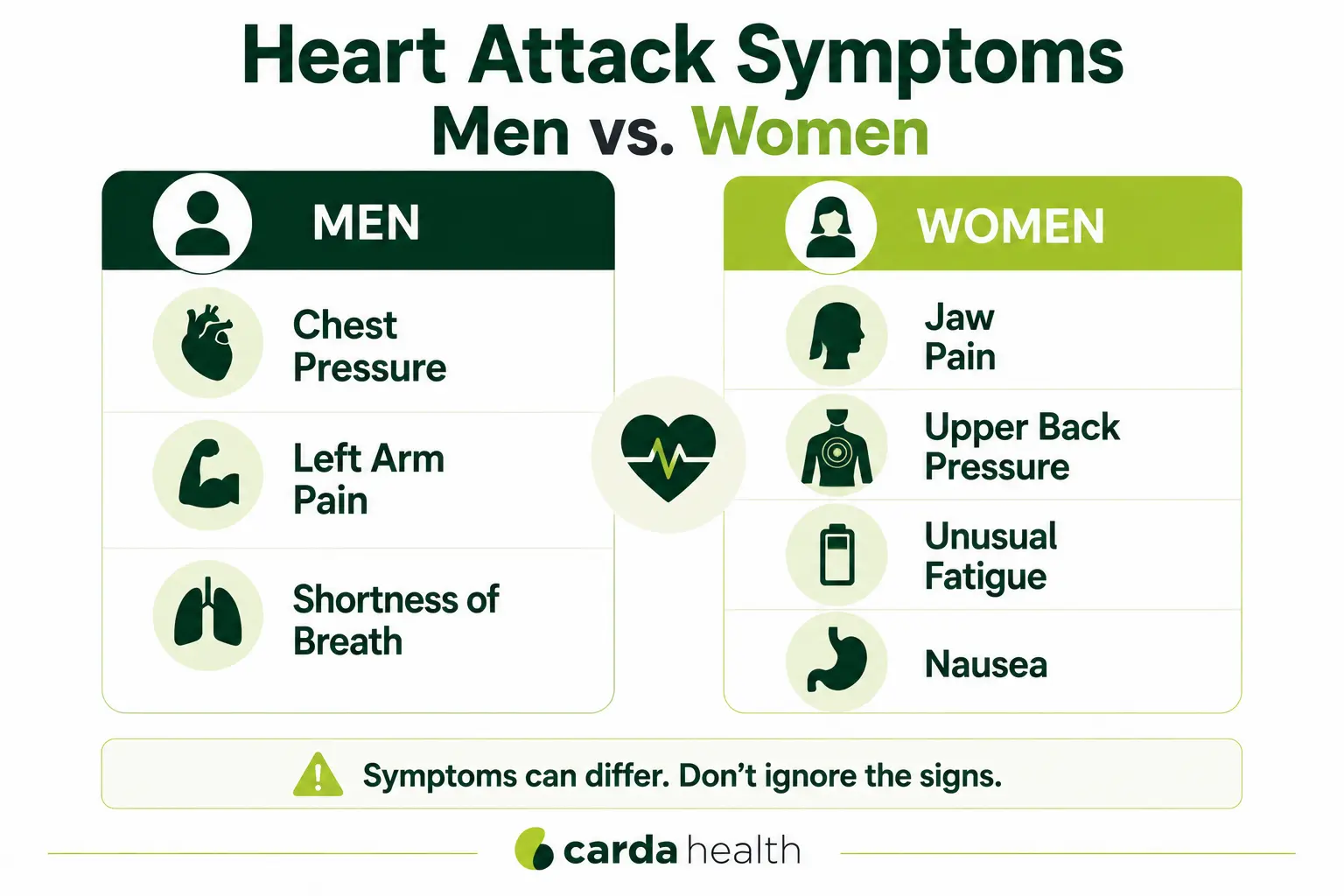
Men are more likely to experience the "classic" heart attack presentation: chest pressure or pain that radiates to the left arm or shoulder. While men can and DO experience atypical symptoms, the traditional pattern is more common.
Women are significantly more likely to experience atypical symptoms such as jaw pain, upper back pressure, neck tightness, unusual fatigue, nausea, shortness of breath, or anxiety — sometimes without any chest discomfort at all.
This disparity in symptom presentation is one of the key reasons heart attacks are more frequently missed or diagnosed late, contributing to worse outcomes.
Also Read: what happens after a heart attack.
When to Call 911 or Emergency Services
Call 911 or your local emergency services immediately if you experience pain or discomfort in any of the locations described above that are new, unexplained, and not related to a recent injury.
If you are with someone who may be having a heart attack, call emergency services first, then have them chew an aspirin (if not allergic) while waiting.
Also Read: STEMI heart attack.
Conclusion
Recognizing these less obvious symptoms — and taking them seriously, especially when they occur with shortness of breath, sweating, or nausea — can save your life or the life of someone near you. When in doubt, always get immediate medical help.
It is far better to be evaluated and find a non-cardiac cause than to delay treatment for a heart attack.
If you or a loved one has survived a heart attack, cardiac rehabilitation is one of the most impactful steps you can take to reduce the risk of future events. Carda Health's virtual cardiac rehab program provides supervised exercise, nutritional guidance, and education from home, making it easier to complete a full program regardless of where you live.
{{get-started}}
FAQs
Where do you feel pain during a heart attack?
Heart attack pain most commonly occurs in the center or left side of the chest but can also appear in the left arm, right arm, shoulders, jaw, neck, upper back, and stomach. Some people experience pain in one or more of these areas without any chest discomfort at all. This "referred pain" happens because the heart shares nerve pathways with these regions of the upper body.
Can a heart attack cause shoulder pain?
Yes. Shoulder pain, especially in the left shoulder, is a well-documented heart attack symptom.
What does heart attack jaw pain feel like?
Jaw pain from a heart attack typically presents as a dull ache or pressure in the lower jaw, often affecting both sides. Jaw pain is more commonly reported by women and should be treated seriously when it occurs with other symptoms such as shortness of breath or sweating.
Is upper back pain a sign of a heart attack?
It can be. Upper back pain, particularly between the shoulder blades, is an important and frequently overlooked heart attack symptom.
How can I tell if my pain is cardiac or muscular?
Cardiac pain tends to be a dull ache or pressure that is not affected by position changes or touch, lasts for minutes or longer, and is accompanied by systemic symptoms like sweating, shortness of breath, or nausea. Musculoskeletal pain is usually sharp or localized, worsens with specific movements, is tender to touch, and improves with rest or anti-inflammatory medication. However, this distinction is not always clear-cut — if there is any doubt, seek medical evaluation.
References
- American Heart Association. Warning Signs of a Heart Attack. heart.org.
- American Heart Association. Heart Attack Symptoms in Women. heart.org.
- Mayo Clinic. Heart Attack Symptoms: Know What's a Medical Emergency. mayoclinic.org.
- Gulati M, Levy PD, et al. 2021 AHA/ACC/ASE/CHEST/SAEM/SCCT/SCMR Guideline for the Evaluation and Diagnosis of Chest Pain. JACC. 2021;78(22).
- National Heart, Lung, and Blood Institute (NHLBI). Heart Attack Signs and Symptoms. nhlbi.nih.gov.
- Norton Healthcare. Jaw, Shoulder, and Neck Pain: Signs of Heart Attack. nortonhealthcare.com.
- Centers for Disease Control and Prevention. Heart Attack Facts. cdc.gov.