COPD cannot currently be fully reversed or cured. However, treatments and lifestyle changes can slow disease progression and improve breathing.
Many people newly diagnosed with COPD ask the same question: can COPD be reversed? The short answer is No. COPD cannot currently be fully reversed or cured. The lung damage caused by the disease is generally permanent. However, that does not mean nothing can be done. With the right treatment, lifestyle changes, and early management, it is often possible to slow the progression of COPD, improve symptoms, and maintain a better quality of life.
In this guide, we’ll explain if COPD cannot be reversed, what actually happens inside the lungs, and what are the steps that can help manage lung function decline.
COPD Cannot Be Fully Reversed
COPD (chronic obstructive pulmonary disease) is considered a progressive and largely irreversible lung condition. This means that the structural damage that occurs in the lungs, such as airway narrowing and destruction of the tiny air sacs (alveoli), usually cannot be restored to their original state.
Over time, chronic inflammation caused by smoking, environmental exposure, or other risk factors damages the airways and lung tissue. These changes reduce the lungs’ ability to move air efficiently, leading to persistent symptoms like shortness of breath, chronic cough, and mucus production.
While the damage itself is typically permanent, the course of the disease can still be influenced. Treatments such as inhaled medications, pulmonary rehabilitation, smoking cessation, and lifestyle changes can help reduce symptoms, prevent flare-ups, and slow further decline in lung function.
In other words, COPD is not reversible, but its progression and impact can still be managed effectively with proper care.
Why Cannot Be Reversed?
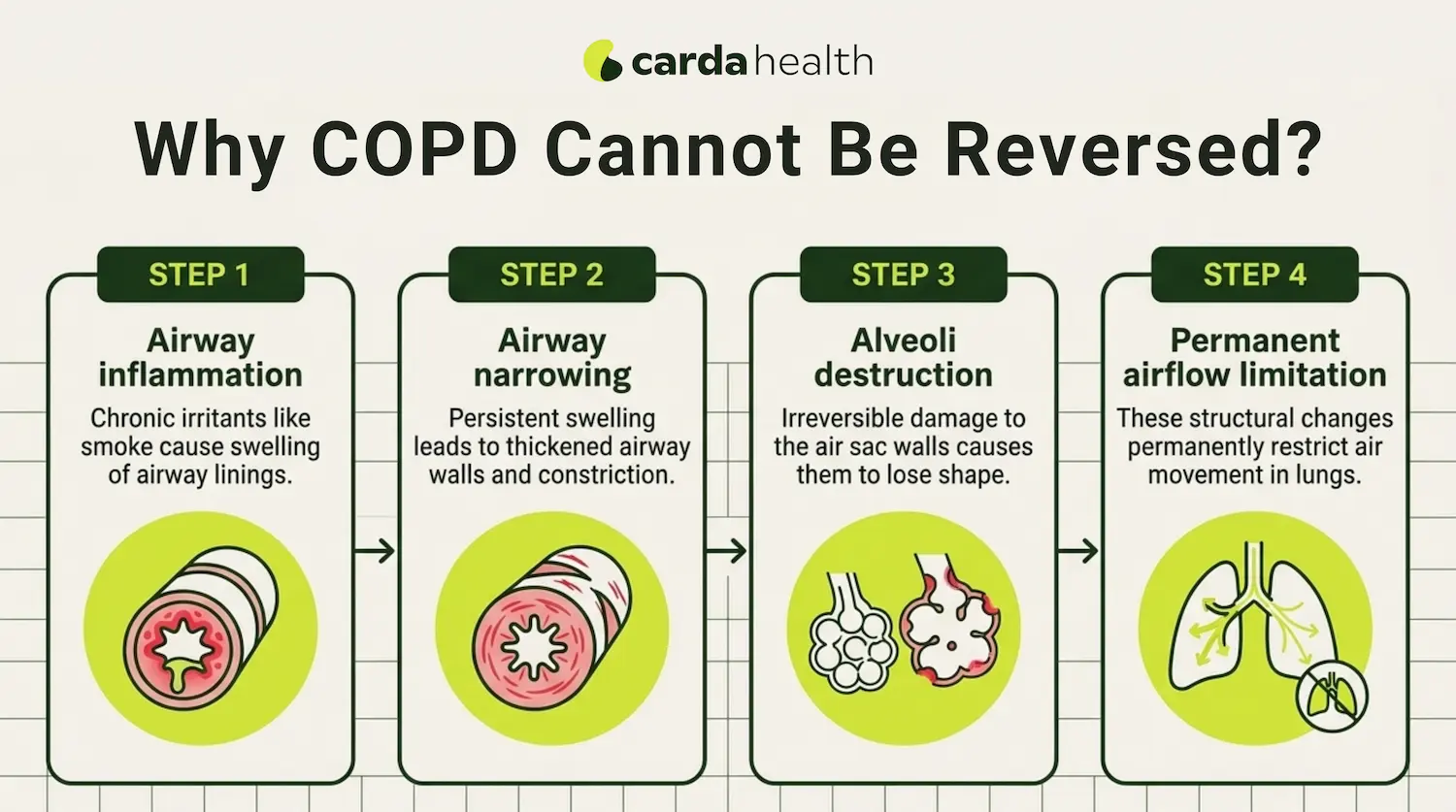
To understand why COPD cannot be reversed, it helps to look at what happens inside the lungs over time. The disease causes long-term structural changes in the airways and lung tissue, and many of these changes are permanent.
Airway Inflammation and Narrowing
In COPD, the airways become chronically inflamed due to irritants such as cigarette smoke, air pollution, or occupational exposure to dust and chemicals. This persistent inflammation thickens the airway walls and narrows the passages where air flows.
As the airways become smaller and less flexible, it becomes harder for air to move in and out of the lungs, which contributes to ongoing breathlessness.
Destruction of Alveoli (Air Sacs)
COPD often involves emphysema, a condition where the tiny air sacs in the lungs called alveoli become damaged or destroyed. These air sacs normally expand and contract to allow oxygen to enter the bloodstream and carbon dioxide to leave.
When alveoli are damaged, they lose their elasticity and may collapse or merge into larger air spaces. This reduces the total surface area available for gas exchange, making breathing less efficient.
Permanent Airflow Limitation
Because of these structural changes, airway narrowing, inflammation, and alveolar damage, people with COPD develop persistent airflow limitation. Unlike conditions such as asthma, where airway narrowing may be reversible, COPD airflow obstruction is usually lifelong. Although treatments can improve symptoms and lung function to some extent, they generally cannot fully restore the original structure of the lungs.
That is why COPD is described as an irreversible disease.
{{get-started}}
Can ‘Early COPD’ Be Reversed?
Even the early (stage 1) COPD cannot be fully reversed, but it can often be managed much more effectively if detected early. Removing risk factors, especially smoking, can reduce airway inflammation and slow the decline in lung function. Early diagnosis mainly helps slow disease progression and protect remaining lung capacity for a longer period of time.
How to Improve Life with COPD?
Although COPD cannot be reversed, several treatments and lifestyle changes can help improve symptoms, reduce flare-ups, and slow the progression of the disease.
1. Quitting Smoking
Stopping smoking is the most important step for people with COPD who currently smoke. Smoking is the main cause of COPD and continuing to smoke accelerates lung damage.
Also read: Smoking Cessation for COPD: How to do it?
2. Medications and Inhalers
Doctors commonly prescribe bronchodilators and inhaled corticosteroids to help relax airway muscles, reduce inflammation, and improve airflow. These inhaler medications can make breathing easier and help prevent exacerbations.
3. Pulmonary Rehabilitation
Pulmonary rehabilitation programs combine exercise training, breathing techniques, and education to help patients improve endurance and manage symptoms. These programs can significantly improve quality of life for people living with COPD.
4. Physical Activity and Breathing Techniques
Regular physical activity and breathing exercises can strengthen respiratory muscles and improve overall stamina.
Also read: 7 Pulmonary Rehab Exercises You Can Do at Home
How Treatment Can Slow COPD Progression?
One of the most important factors is removing ongoing lung irritants, especially cigarette smoke. When smoking stops, the rate at which lung function declines often slows compared with people who continue smoking. Medications keep airways open and reduce inflammation. This can improve airflow and make breathing easier during daily activities.
Frequent flare-ups can accelerate lung damage. Preventing exacerbations is another key part of slowing disease progression
Also Read: How Fast Does COPD Progress?
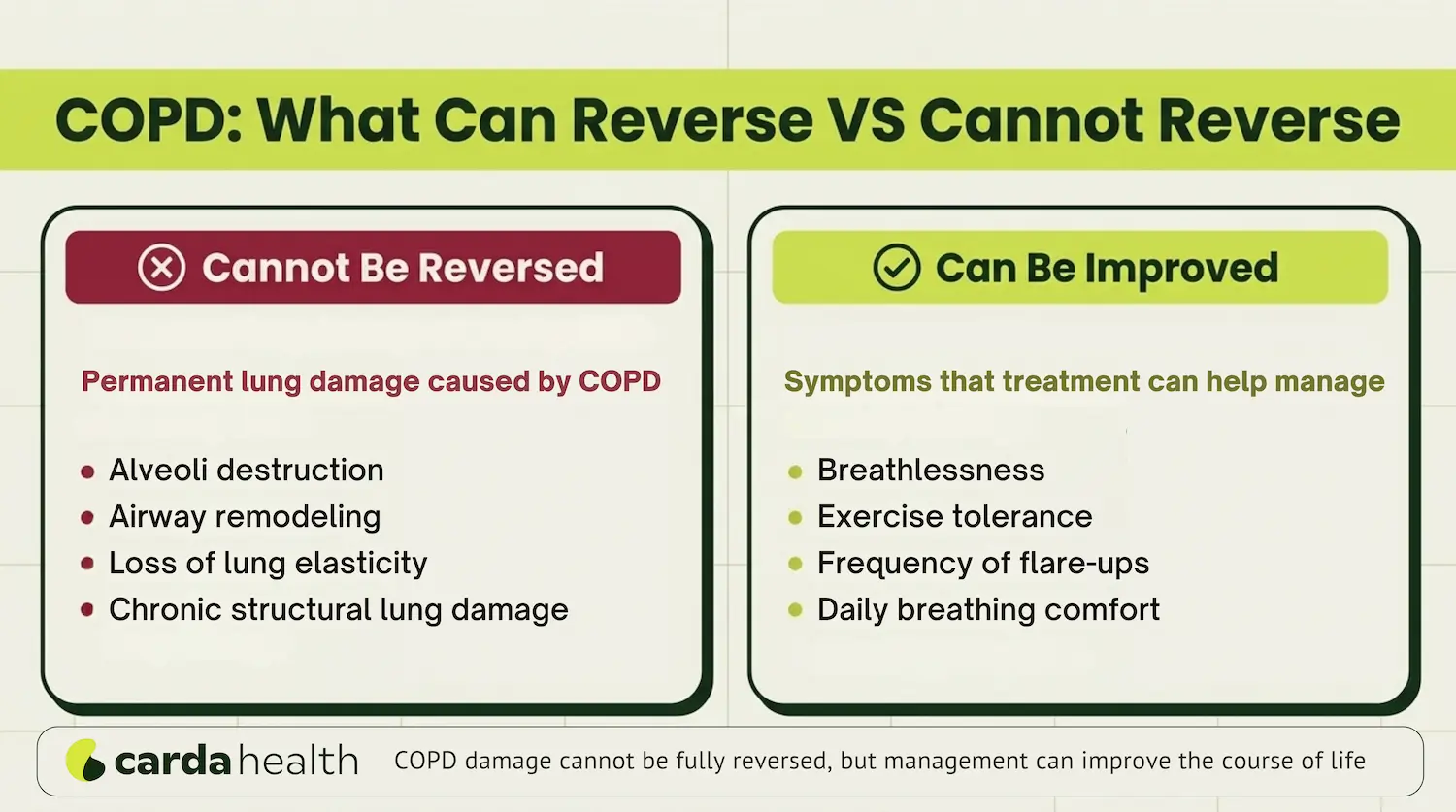
The goal of COPD management is to live active and fulfilling life by reducing the rate of progression, not by reversing it. Daily habits and proper medical care can make a significant difference in controlling symptoms and maintaining quality of life.
Healthy lifestyle choices also play an important role. Staying physically active within safe limits, and eating a balanced COPD diet also help support overall respiratory health.
Besides, regular medical checkups allow doctors to track lung function and adjust treatments when needed.
{{get-started}}
Conclusion
If you are diagnosed with COPD, structured support can make managing the condition easier. Carda Health’s virtual pulmonary rehabilitation program provides guided exercise, breathing techniques, and professional support to help patients manage symptoms and stay active from home.
FAQs
Can COPD ever be reversed?
No. COPD cannot currently be reversed, but treatment and lifestyle changes can slow disease progression and improve symptoms.
Can lungs heal themselves after COPD?
Lungs have limited ability to repair themselves, but severe damage caused by COPD is generally permanent. Some inflammation may improve after treatment or smoking cessation, which can lead to better breathing, but the lungs never get healed 100%.
Does COPD always get worse over time?
COPD is generally a progressive disease, but the rate of progression varies between individuals. With proper treatment many people can keep symptoms stable for long periods.
Can exercise reverse COPD?
Exercise cannot reverse COPD, but it can improve breathing efficiency and overall endurance. Pulmonary rehabilitation programs that include supervised exercise and breathing techniques, help patients reduce breathlessness and improve quality of life.
Can medication cure COPD?
There is currently no medication in early 2026 that can cure COPD. However, treatments such as bronchodilators, inhaled corticosteroids, and other therapies can help manage symptoms, improve airflow, and prevent flare-ups.
Can COPD go away if you stop smoking?
Stopping smoking does not make COPD go away, but it is the most effective way to slow the disease.
References:
2026 GOLD Report PDF
https://www.nhlbi.nih.gov/health/copd
https://www.cdc.gov/copd/index.html
https://www.lung.org/lung-health-diseases/lung-disease-lookup/copd
https://www.ncbi.nlm.nih.gov/books/NBK559281/