When you’re living with COPD, even small things can feel big. Getting dressed, walking to the kitchen, talking on the phone. Some days, catching your breath takes more effort than anything else.
But there are ways you can take back some control at home. Small, simple actions can help your lungs work a little easier, your body feel a little stronger, and your days feel a little calmer.
Not everything will be perfect every day. But with the right tools and support, you can protect your breathing, stay safer at home, and feel more confident facing what’s ahead. This guide is here to support you, step by step, with things that have been proven to help.
When Breathing Feels Hard: 4 Ways to Get More Air
When your chest feels tight or your breathing feels stuck, there are simple techniques you can use to help your lungs do their job with less effort.
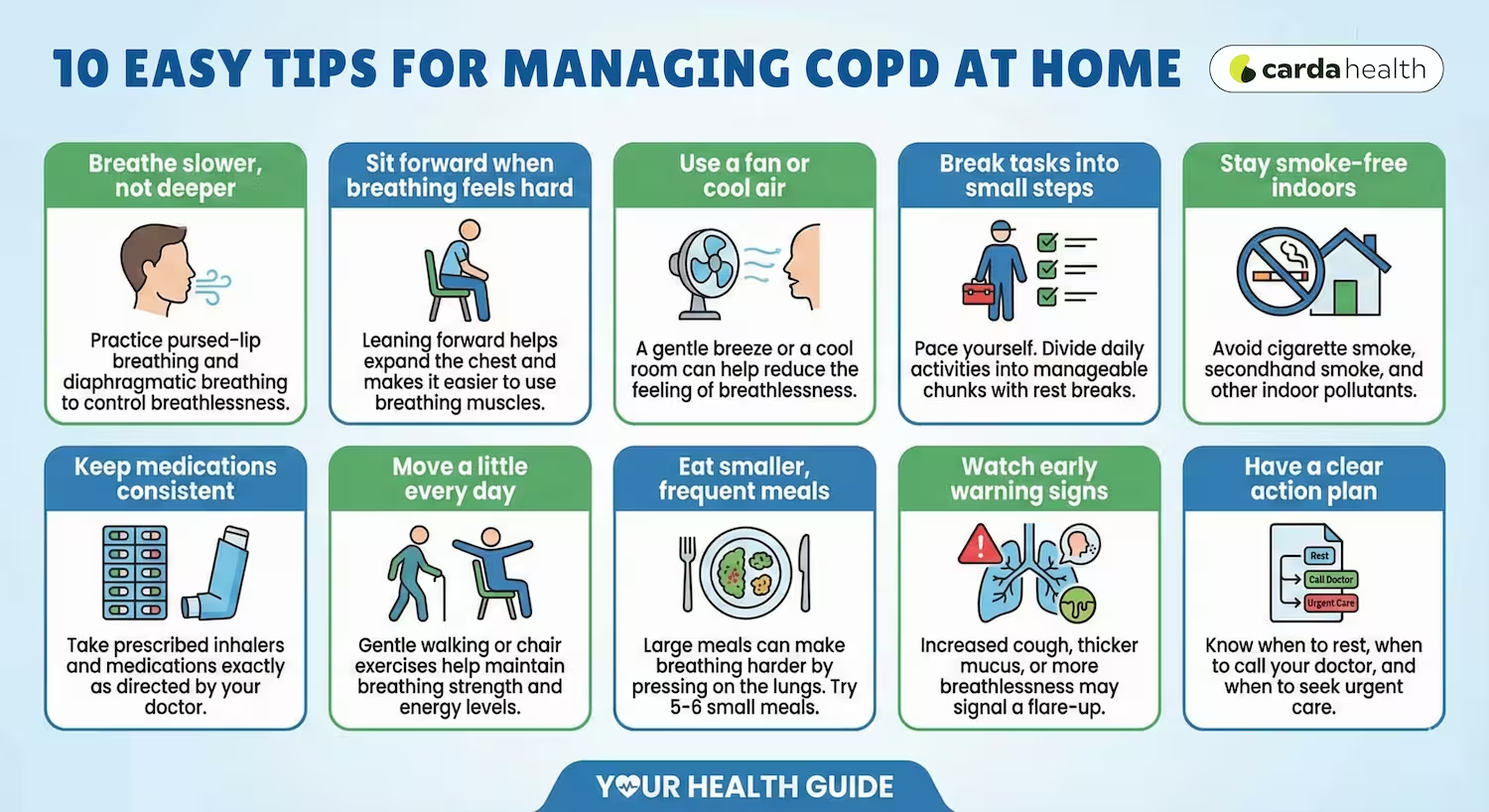
1. Pursed-Lip Breathing
A quick way to slow your breathing and reduce that “air hunger” feeling.
How to try it:
- Breathe in gently through your nose
- Purse your lips like you’re blowing out a candle
- Exhale slowly for twice as long as you inhaled
This helps release trapped air and makes each breath more effective.
2. Diaphragmatic Breathing
This helps your belly, not your shoulders, do the work of breathing.
How to try it:
- Place a hand on your belly
- Breathe in through your nose so your belly rises
- Exhale gently through pursed lips
- Keep your shoulders relaxed
It may feel strange at first, that’s okay. With practice, it gets easier.
3. Lean Forward to Breathe Easier
Changing your position can open your lungs. Try:
- Sitting and leaning slightly forward with your hands on your thighs
- Standing and leaning with your hands on a counter
- Resting your head and arms on a table when very breathless
Gravity helps your lungs expand and relaxes your chest muscles.
4. Cool Air Can Help Right Away
A small handheld fan or cool air on your face can make breathing feel easier quickly. Point it toward your mouth and nose, especially during breathlessness or anxiety.
Take a moment. Try one technique.
You might notice even a little relief, and that little relief matters
When Mucus Makes Breathing Worse
Thick mucus can make every breath feel like a struggle. Clearing it, even a little, can open your airways and help you breathe easier. Here are a few ways to help loosen and move mucus at home:
1. Stay Hydrated
Water keeps mucus thinner, so it’s easier to cough up. Sip throughout the day, even small sips help. Warm drinks like herbal tea or warm water with lemon can feel soothing too.
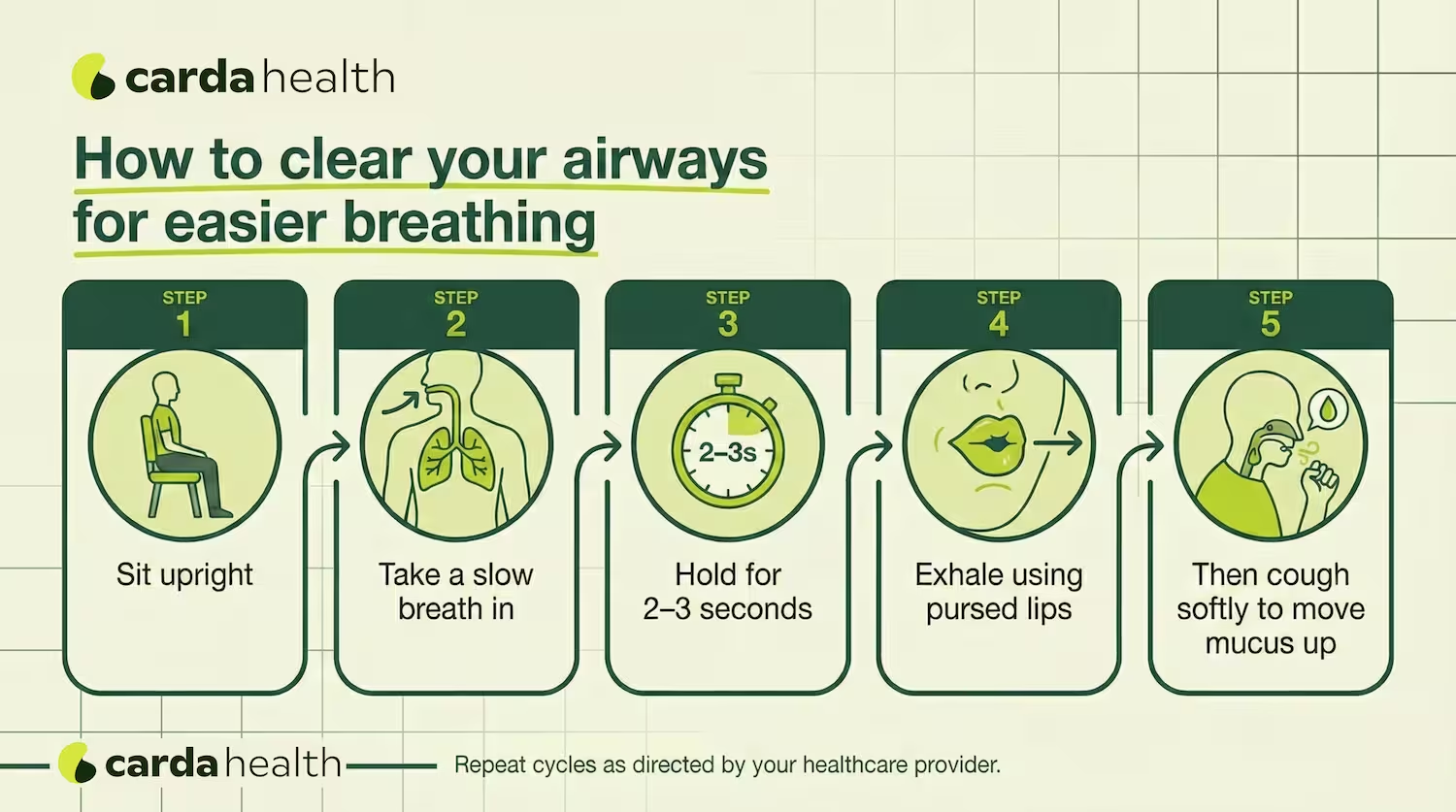
2. Airway Clearance Techniques
You don’t have to force big coughs. Gentle methods work better.
A simple technique you can try:
Step 1: Sit upright
Step 2: Take a slow breath in
Step 3: Hold for 2–3 seconds
Step 4: Exhale using pursed lips
Step 5: Then cough softly to move mucus up
If your doctor gave you an airway clearance device (like a flutter valve or positive-expiratory-pressure device), use it exactly as directed.
3. Humidify the Air (Just the Right Amount)
A little added moisture can keep mucus from drying and sticking.
If using a humidifier:
✔ Keep it clean
✘ Avoid over-humidifying
Too much humidity can worsen mold or allergies. Also, consider taking a warm steamy shower, it can temporarily help open your airways.
Remember, you don’t always have to clear ‘everything’ even a small change can make breathing lighter, and that’s all you need.
When Fatigue Limits Everything
COPD can make your body work harder just to breathe, no wonder you feel tired. Fatigue isn’t a sign of weakness, it’s a real symptom of COPD Stage 2 or later. But there are smart ways to save energy and still stay active.
Keep Moving: Even Just a Little
Rest is important, but too much sitting makes breathing muscles weaker.
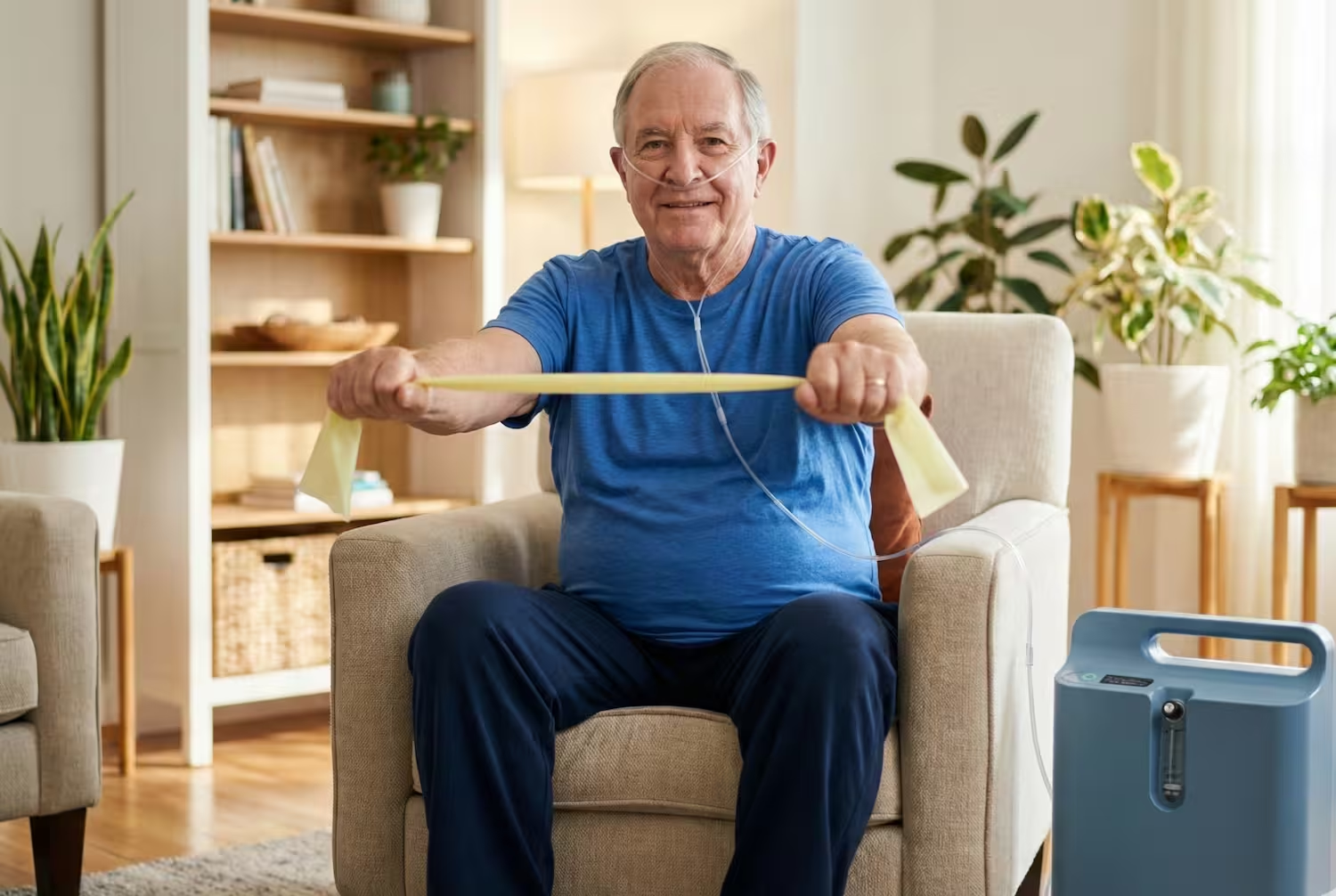
Try short bursts of gentle movement. Small movements like a few arm lifts from your chair, slow walk to another room, or light stretching while seated, can help you stay strong without wearing you out.
Also Read: At-home pulmonary rehab exercises
Save Energy for the Things That Matter
Start thinking of energy like a daily budget, use it wisely. Pick where you want to put your energy.
A few simple strategies to save energy:
– Sit to get dressed or shower
– Keep items within easy reach
– Take breaks between tasks
– Spread chores through the week
Every bit of saved energy is a win, and addition to your breath.
Make Your Home COPD-Friendly
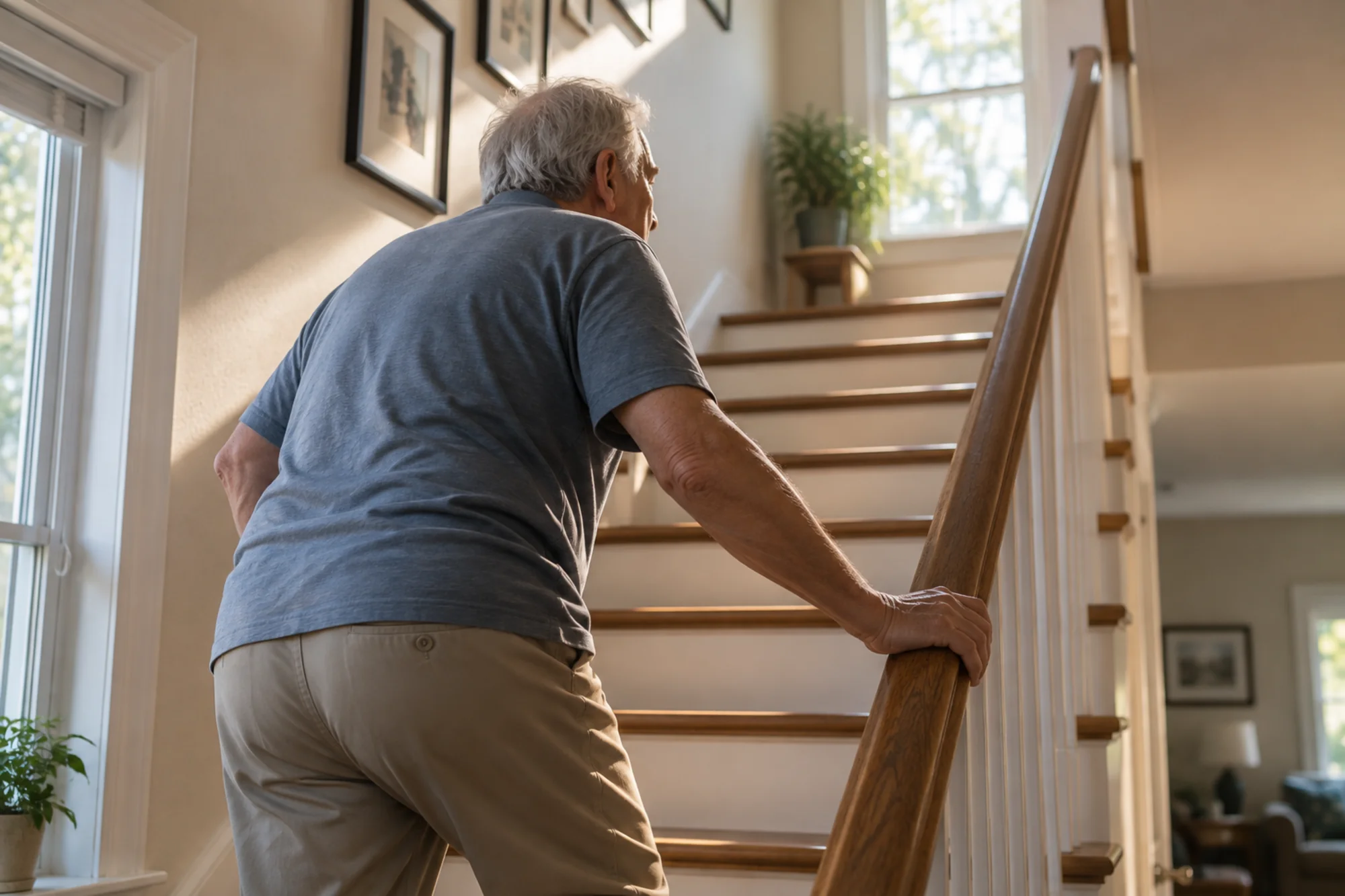
A safer setup means less rushing, less strain, and fewer accidents. Clear walkways, adding railings or grab bars, keeping items you use often at waist height, and using a shower chair or raised toilet seat can be very, very helpful.
This doesn’t mean that you’re giving up, instead, you’re being smart.
{{get-started}}
When Worry or Panic Tightens Your Chest
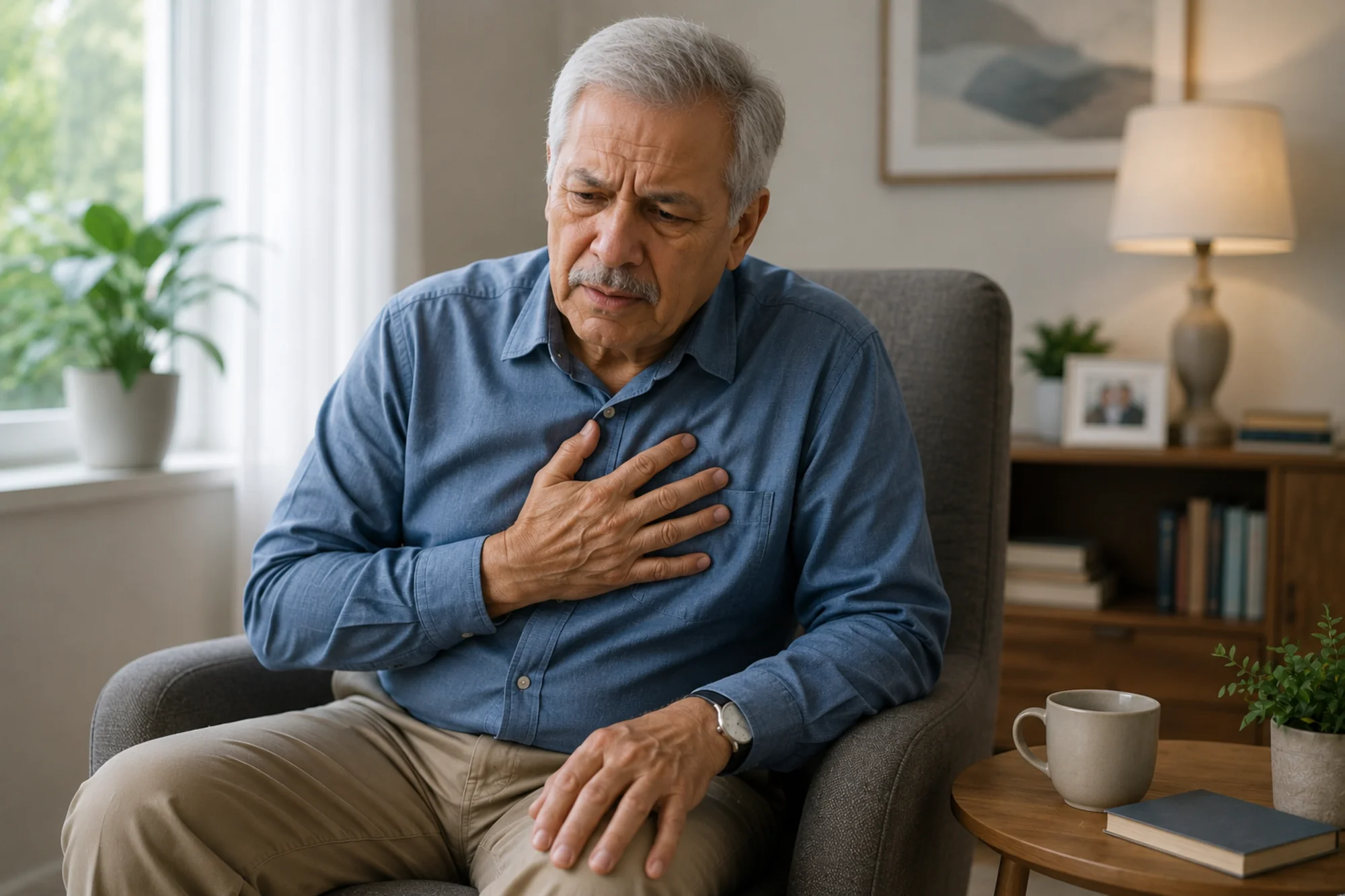
Breathlessness can make you feel scared, and feeling scared can make breathing even harder. This is a vicious cycle for COPD patients. That’s a tough cycle, but there are ways to break it.
When panic rises, your breath becomes faster and shallower.
A simple reset can help:
1. Breathe in through your nose for 2 seconds
2. Exhale through pursed lips for 4 seconds
3. Keep going until the tightness softens
Remember this: long out… short in.
Your lungs and your mind are connected. If one relaxes, the other follows. Try listening to calming music, closing your eyes for a minute, talking to someone nearby, using a handheld fan to cool your face. These are not so minor things they can help your lungs open.
Anxiety about breathlessness is very common in COPD. Finding someone to talk to, even by phone, can lift a weight off your chest.
Caregivers can help too:
- Stay calm beside the person
- Remind them to use their breathing technique
- Keep a hand near their shoulder for reassurance
Sometimes, just knowing someone is there helps you breathe easier. You’re stronger than you feel in those moments. And moments like that do pass.
When Eating Is Exhausting
Eating takes energy. So when COPD makes every breath harder, eating can start to feel like too much work. But your body needs fuel to keep your breathing muscles strong. Here’s how to make eating easier, and more helpful for your lungs:
Choose Small Meals, More Often
A big, heavy meal can push up on your breathing muscles and make it harder to breathe. Small portions throughout the day feel better and still give you the nutrition you need.
Eat Foods That Give You Strength
Protein: eggs, yogurt, beans, chicken, fish
Healthy fats: nut butter, olive oil, avocado
Easy calories: smoothies, soups, soft foods on low-energy days
Protein builds breathing muscles. Calories keep you going.
Avoid Foods That Make You Feel Bloated
Gas or heaviness can tighten your chest.
Try limiting:
- Fizzy drinks
- Fried or very salty food
- Big bowls of pasta or bread in one sitting
You don’t have to cut anything completely, just notice what makes breathing harder.
When You Want to Avoid Flare-Ups
COPD Flare-ups (also called exacerbations) can come on fast, and they can change everything. But many can be prevented with small, steady habits at home.
Read in detail: How COPD exacerbations can be avoided?
{{get-started}}
How Caregivers Can Help at Home
If you’re supporting someone with COPD, your presence alone makes a difference. Small actions can help them breathe easier, feel safer, and stay calm.
Stay Beside Them
During breathlessness:
- Speak softly and slowly
- Remind them to use their breathing technique
- Sit close, offer a hand if they want it
- Help them find a comfortable forward-leaning position
Your calmness can help their breathing settle.
Help Without Taking Over
Bring items closer so they don’t have to bend or reach. Help organize medications and refill prescriptions Encourage slow movement, not rushing. But allow independence wherever possible, it helps them feel capable and avoids intense reaction.
Know When to Get Medical Help
Call their doctor or emergency care if you notice very pale, blue, or gray lips/fingertips, or trouble speaking more than a few words. A sudden drop in oxygen (if monitored) can be a concerning sign as well. Acting early at that stage can prevent emergencies.
Caregiving doesn’t mean fixing everything. It means being there, and that matters more than you know.
When to See a Doctor or Go to the ER
Sometimes symptoms can change quickly, and knowing when to get help keeps you safer.
Call your doctor promptly if:
- Your breathing is worse than your usual bad days
- Your mucus becomes thicker or changes color
- You have more coughing than normal
- You get a fever or chills
Go to the emergency room or call emergency services immediately if you’re breathless even while sitting still, or you can’t speak full sentences. You deserve fast care when breathing becomes harder than what feels “normal” for you.
Life with COPD isn’t easy, and some days are harder than others. But every small step you take at home can protect your breathing and help you keep doing the things that matter to you. You don’t need to do everything at once. Just choose one helpful thing today, a breathing technique, a short walk, or a calmer moment when breath gets tight. These little changes add up.
You’re working hard just to breathe. You deserve support that works just as hard for you.
A Supportive Next Step: Virtual Pulmonary Rehab
You don’t have to face COPD alone even if you want to stay at home. Carda Health’s home-based pulmonary rehab program helps you:
✔ Strengthen your breathing muscles
✔ Move safely with expert guidance
✔ Prevent flare-ups and hospital visits
✔ Feel more confident in your daily routine
All from the comfort and safety of home, with a team that supports you every step of the way.
FAQs
Can home remedies replace medical treatment for COPD?
No. At-home strategies help manage symptoms but don’t replace inhalers, prescribed medicines, or oxygen therapy. Use them alongside your treatment, not instead of it.
What helps breathlessness quickly at home?
Pursed-lip breathing, leaning forward, using a handheld fan toward your face, and staying calm can make breathing easier within seconds.
Should COPD patients exercise every day?
Gentle daily movement, even a few minutes, keeps your breathing muscles stronger. It’s okay to go slow and take breaks.
Does stress make COPD breathing worse?
Yes. Anxiety can tighten chest muscles and speed up breathing, which makes breathlessness feel worse. Relaxation techniques can help break that cycle.
What can I do to prevent COPD from getting worse?
Avoiding smoke and irritants, staying current on vaccines, eating well, and having a flare-up action plan can help keep your COPD more stable.
References
American Lung Association - Living With COPD
https://goldcopd.org/2025-gold-report/
https://goldcopd.org/wp-content/uploads/2024/11/Pocket-Guide-2025-v1.0-12Nov2024_WMV-Draft.pdf
https://www.scielo.org.za/scielo.php?pid=S0256-95742015000900033&script=sci_arttext
https://pmc.ncbi.nlm.nih.gov/articles/PMC10111975/
https://www.mdpi.com/2077-0383/13/2/303
https://health.clevelandclinic.org/breathing-exercises-for-copd
https://www.nhlbi.nih.gov/health/copd
https://www.cdc.gov/copd/