Key Takeaways
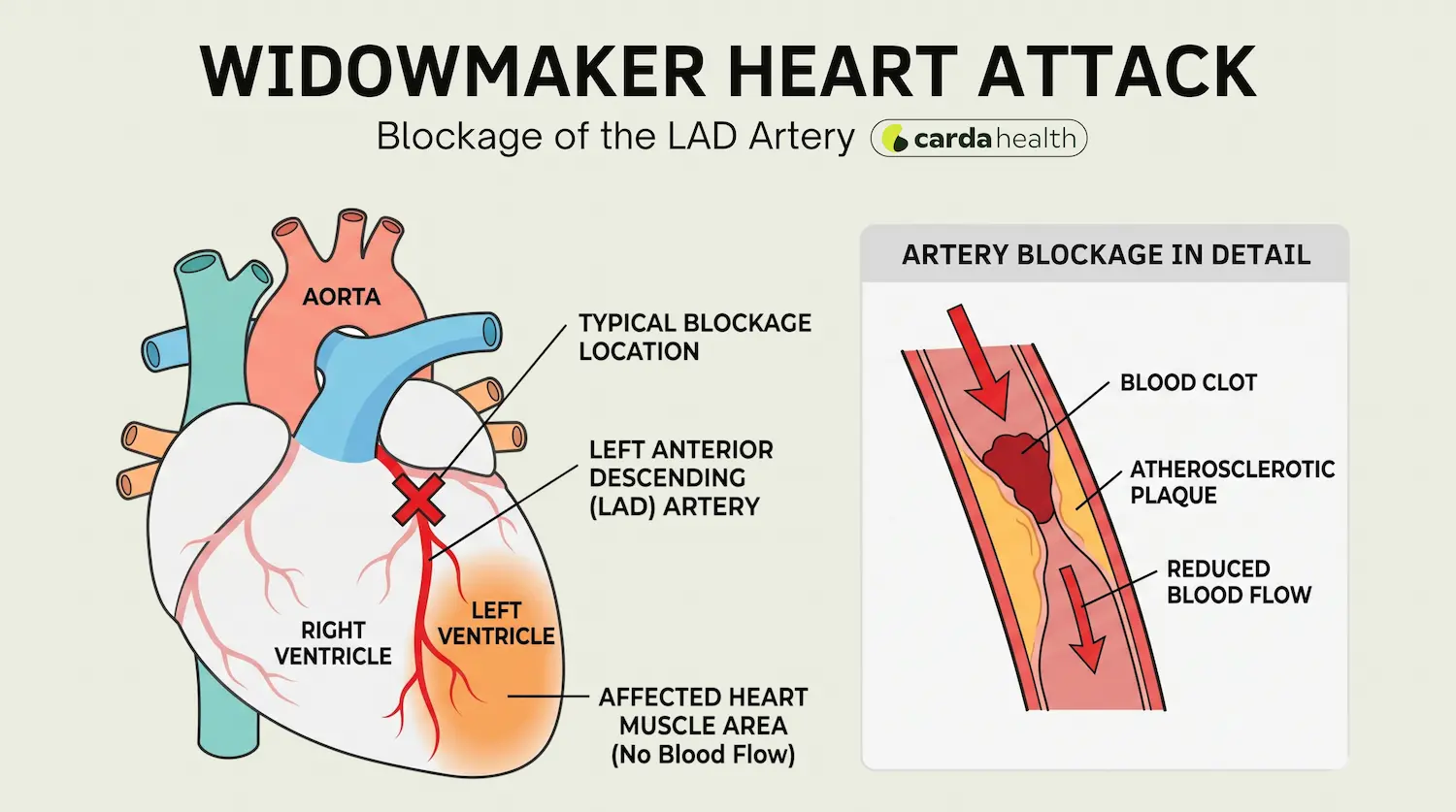
- A widowmaker heart attack occurs when the left anterior descending (LAD) artery, the heart's largest coronary artery, becomes completely blocked.
- Because the LAD supplies roughly 50% of the heart's blood, this type of heart attack is immediately life-threatening and requires emergency treatment.
- With rapid intervention, in-hospital survival rates now exceed 90%.
- Cardiac rehabilitation plays a critical role in recovery and reducing the risk of future cardiac events.
What Is a Widowmaker Heart Attack?
A widowmaker heart attack is one of the most serious types of heart attack a person can experience. It occurs when the left anterior descending (LAD) artery, the largest artery supplying blood to the heart, becomes completely or nearly completely blocked. The medical term for this event is an anterior ST-segment elevation myocardial infarction, or STEMI.
The LAD artery runs down the front of the heart and delivers oxygenated blood to the left ventricle, which is the heart's main pumping chamber. This single artery is responsible for supplying roughly 50% of the heart muscle's total blood flow. When it becomes blocked, a massive portion of the heart is suddenly starved of oxygen, and heart muscle cells begin to die within minutes.
Despite its name, a widowmaker heart attack is not limited to men. Women can and do experience this type of cardiac event. The term originated because of the historically high fatality rate and the fact that heart attacks were once considered primarily a male health concern, but that framing is outdated. Heart disease is the leading cause of death for both men and women.
If you have already experienced a heart attack and want to understand what recovery looks like, our guide on what happens after a heart attack covers the broader recovery process.
What Makes a Widowmaker Heart Attack So Dangerous?
All heart attacks are medical emergencies, but a widowmaker carries a particularly high risk because of the sheer volume of heart muscle that depends on the LAD artery.
In severe cases, a widowmaker can lead to cardiogenic shock, a life-threatening condition in which the heart can no longer pump enough blood to sustain the body's organs.
{{get-started}}
Symptoms of a Widowmaker Heart Attack
There is no way to tell from symptoms alone whether you are having a widowmaker heart attack or another type. The warning signs are the same across all heart attacks. The difference lies in which artery is blocked, something only medical testing can reveal.
Common symptoms include chest pain or pressure (often described as a tightness, squeezing, or heaviness in the center or left side of the chest), shortness of breath, pain that radiates to the arm, jaw, neck, shoulder, or back, a cold sweat, nausea or vomiting, lightheadedness or dizziness, and unusual fatigue.
Symptoms in Women
Symptoms in women may present differently. Women are more likely to experience less obvious signs such as unusual fatigue, upper back discomfort, nausea, or indigestion-like sensations. These subtler symptoms can lead to delays in seeking care, which is one reason women with heart attacks sometimes have worse outcomes than men.
If you or someone near you experiences any of these symptoms, call 911 immediately. Do not drive yourself to the hospital. Arriving by ambulance ensures you can begin receiving treatment en route and allows the hospital team to prepare for your arrival.
What Causes a Widowmaker Heart Attack?
The vast majority of widowmaker heart attacks are caused by atherosclerosis, the gradual buildup of cholesterol, fat, calcium, and other substances (collectively called plaque) on the inner walls of the coronary arteries. This process develops silently over years, sometimes decades.
Less common causes include coronary artery spasm (a sudden, temporary tightening of the artery wall) and spontaneous coronary artery dissection (SCAD), in which the artery wall tears without warning. SCAD is more common in younger women and may occur without traditional risk factors.
If your doctor suspects coronary artery disease, they may recommend an angiogram to visualize blockages and assess their severity.
Risk Factors for a Widowmaker Heart Attack
Non-modifiable risk factors include age (risk increases for men after 45 and women after 50), a family history of heart disease, and genetic conditions such as elevated lipoprotein(a), which is not detected on standard cholesterol panels.
Modifiable risk factors include smoking (considered the single strongest modifiable risk factor), high blood pressure, high LDL cholesterol, diabetes, obesity, physical inactivity, excessive alcohol use, and chronic stress.
Women-specific risk factors deserve special attention. Estrogen levels decline after menopause, which increases cardiovascular risk. Women who experienced gestational diabetes, preeclampsia, or high blood pressure during pregnancy also carry a higher long-term risk of heart disease.
How Is a Widowmaker Heart Attack Diagnosed?
When a patient arrives at the emergency department with suspected heart attack symptoms, the medical team works rapidly to confirm the diagnosis and identify the affected artery.
Electrocardiogram (EKG) is typically the first test performed, followed by blood tests that measure cardiac biomarkers such as troponin — proteins released by damaged heart cells. Elevated troponin levels confirm that heart muscle damage has occurred.
Also read: cardiac enzymes and heart attacks.
Coronary angiogram (cardiac catheterization) is the definitive test. A thin catheter is threaded through an artery (usually in the wrist) to the heart, and contrast dye is injected so doctors can see the exact location and severity of the blockage on real-time X-ray imaging.
Treatment: How Doctors Respond to a Widowmaker
Cardiologists often say "time is muscle," and nowhere is this more true than with a widowmaker. Every minute that the LAD artery remains blocked, more heart muscle dies. The national target for opening a blocked artery (known as door-to-balloon time) is 90 minutes, and many leading hospitals now aim for under 60 minutes.
Emergency stabilization
Treatment begins immediately. Patients may receive supplemental oxygen, chewable aspirin to reduce clotting, nitroglycerin to improve blood flow, and medications to manage pain and heart rhythm.
Percutaneous coronary intervention (PCI)
PCI is the most common treatment for a widowmaker. During this procedure, a balloon-tipped catheter is guided to the blockage and inflated to open the artery. A small metal mesh tube called a stent is then placed to keep the artery open.
To learn more about this device and what to expect afterward, see our articles on what is a stent and heart stent recovery time.
Coronary artery bypass graft (CABG) surgery
CABG may be recommended when the blockage is too complex for a stent, when multiple arteries are blocked, or when the left main artery is involved. This open-heart surgery reroutes blood flow around the blockage using a healthy blood vessel from another part of the body.
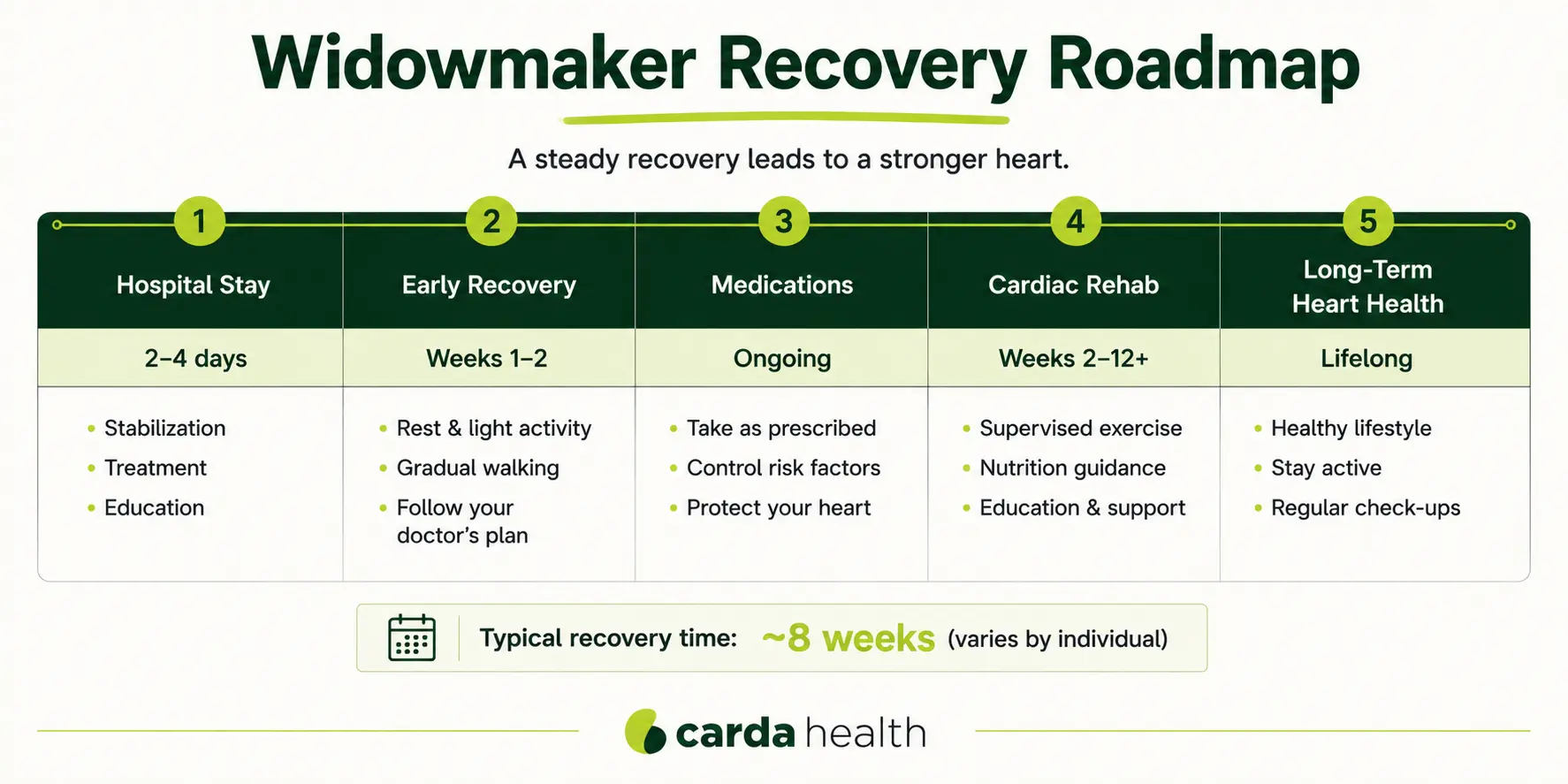
After treatment, patients are typically prescribed a combination of medications to protect the heart going forward. These commonly include blood thinners (to prevent clots around the stent), statins (to lower cholesterol and stabilize plaque), beta-blockers (to reduce heart rate and blood pressure), and ACE inhibitors (to support heart function).
Survival Rates and Prognosis
The survival picture for widowmaker heart attacks depends heavily on when and where treatment is received.
According to data reported by the American Heart Association, only about 12% of people who experience a widowmaker outside of a hospital or advanced care facility survive the event. However, the story is very different when patients reach the hospital quickly. With prompt percutaneous coronary intervention, in-hospital survival rates now exceed 90% in many centers.
Recovery After a Widowmaker Heart Attack
Surviving a widowmaker is the first critical milestone. What comes next — the recovery process — is what determines your long-term quality of life and your risk of experiencing another cardiac event.
Hospital stay and initial recovery
Most patients spend two to four days in the hospital after a widowmaker, though longer stays are common when there are complications. The general recovery timeline is approximately eight weeks. Some people return to work within two weeks, while others — particularly those with physically demanding jobs or significant heart damage — may need up to three months.
Cardiac rehabilitation
Cardiac rehab is a medically supervised program that combines structured exercise, education on heart-healthy living, nutritional guidance, and psychosocial support.
Research published by the Centers for Disease Control and Prevention (CDC) indicates that completing a cardiac rehab program can reduce the risk of cardiovascular death by nearly 45% and lower hospital readmissions by about 30%.
Despite these powerful benefits, fewer than 15% of eligible patients actually complete cardiac rehabilitation. Common barriers include transportation challenges, scheduling conflicts, limited access to facilities (especially in rural areas), and the physical difficulty of traveling to in-person sessions while recovering.
Virtual cardiac rehab program
Carda Health's virtual cardiac rehab program includes live vital sign monitoring, personalized exercise programming, nutrition guidance, and stress management support — all delivered through a simple video platform.
Learn more about how virtual cardiac rehab works in our guide on virtual cardiac rehab. If you are ready to start exercising safely after a cardiac event, our articles on exercises after a heart attack and exercises for heart patients with stents offer practical starting points.
Emotional recovery matters, too. Cardiac rehab programs that include psychosocial support — including counseling and peer group connection — help address these challenges as part of a comprehensive recovery plan.
How to Reduce Your Risk
While some risk factors for a widowmaker heart attack cannot be changed, many of the most significant contributors are within your control.
Eat a heart-healthy diet
Focus on fruits, vegetables, whole grains, lean proteins, and healthy fats. A Mediterranean-style eating pattern has been shown to reduce cardiovascular risk. Limit saturated fats, added sugars, and sodium.
Stay physically active
The American Heart Association recommends at least 150 minutes of moderate aerobic exercise per week — activities like brisk walking, cycling, or swimming.
Quit smoking
Smoking is the strongest modifiable risk factor for heart attacks. Quitting at any age significantly reduces cardiovascular risk.
Manage your numbers
Regular screenings for blood pressure, cholesterol (including LDL, HDL, and triglycerides), and blood sugar help catch risk factors early.
Aspirin therapy was once broadly recommended for heart attack prevention but is no longer advised for everyone. Current guidelines from the American Heart Association recommend daily aspirin only for specific high-risk individuals, and only under a doctor's guidance.
If you or a loved one is recovering from a heart attack, stent placement, or heart surgery, check your eligibility for Carda Health's virtual cardiac rehab program.
{{get-started}}
Frequently Asked Questions
Can you survive a widowmaker heart attack?
Yes. While a widowmaker is extremely dangerous, survival rates have improved dramatically with modern emergency medicine. When patients reach the hospital quickly and receive percutaneous coronary intervention (PCI), in-hospital survival rates now exceed 90%. The key factor is speed — calling 911 at the first sign of symptoms gives you the best chance.
What are the warning signs of a widowmaker heart attack?
The symptoms are the same as any heart attack: chest pain or pressure, shortness of breath, pain radiating to the arm, jaw, neck, or back, cold sweats, nausea, and lightheadedness.
Is a widowmaker the worst kind of heart attack?
It is among the most dangerous types because the LAD artery supplies the largest portion of heart muscle. A widowmaker that is treated within 60 to 90 minutes can result in minimal lasting damage, while a less severe heart attack that goes untreated for hours can be far more harmful.
Can women have a widowmaker heart attack?
Absolutely. The name is misleading — widowmaker heart attacks affect people of all genders.
How long does it take to recover from a widowmaker heart attack?
Most people need about eight weeks for initial recovery, though timelines vary. Some return to work in two weeks; others need up to three months.
References
- American Heart Association. Heart Attack and Sudden Cardiac Arrest Differences. heart.org.
- Cleveland Clinic. Widowmaker Heart Attack.
- Centers for Disease Control and Prevention. Cardiac Rehabilitation.
- Thygesen K, Alpert JS, et al. Fourth Universal Definition of Myocardial Infarction. Circulation. 2018;138(20).
- American College of Cardiology. Guidelines for the Management of Patients With Chronic Coronary Disease.
- American Heart Association. Aspirin and Heart Disease Prevention Guidelines. 2019 Update.
- Mayo Clinic. Heart Attack Risk Factors.