
If you've just been told you have AFib, or your heart has been doing something that feels like flip-flopping, fluttering, or racing for no reason, it's natural to feel rattled. Atrial fibrillation is the most common heart rhythm problem in the world, doctors understand it well, and it is very treatable.
This guide explains what AFib actually is, why it matters, and what living with it looks like, in plain language.
What Is Atrial Fibrillation?
A healthy heartbeat starts in one place: a small cluster of cells called the sinus node, the heart's natural pacemaker. It sends out one steady electrical signal at a time. The upper chambers (the atria) squeeze first, the lower chambers (the ventricles) squeeze a beat later, and blood moves smoothly through, usually 60 to 100 times a minute at rest.
In atrial fibrillation, that single steady signal is replaced by a flurry of mixed signals firing at once, like a crowd all clapping off-beat instead of in rhythm. The atria stop contracting properly and instead quiver, or fibrillate. The ventricles, taking their cues from the chaos above, beat irregularly and often too fast. The result is an uneven, frequently rapid heartbeat.
AFib is extremely common. The American Heart Association estimates that around five million Americans are living with AFib today, with more than 12 million projected by 2030. It becomes more common with age; Johns Hopkins Medicine notes that about one in 10 people over 80 has the condition. If that's you or someone you love, you are far from alone.
Types and Stages of AFib
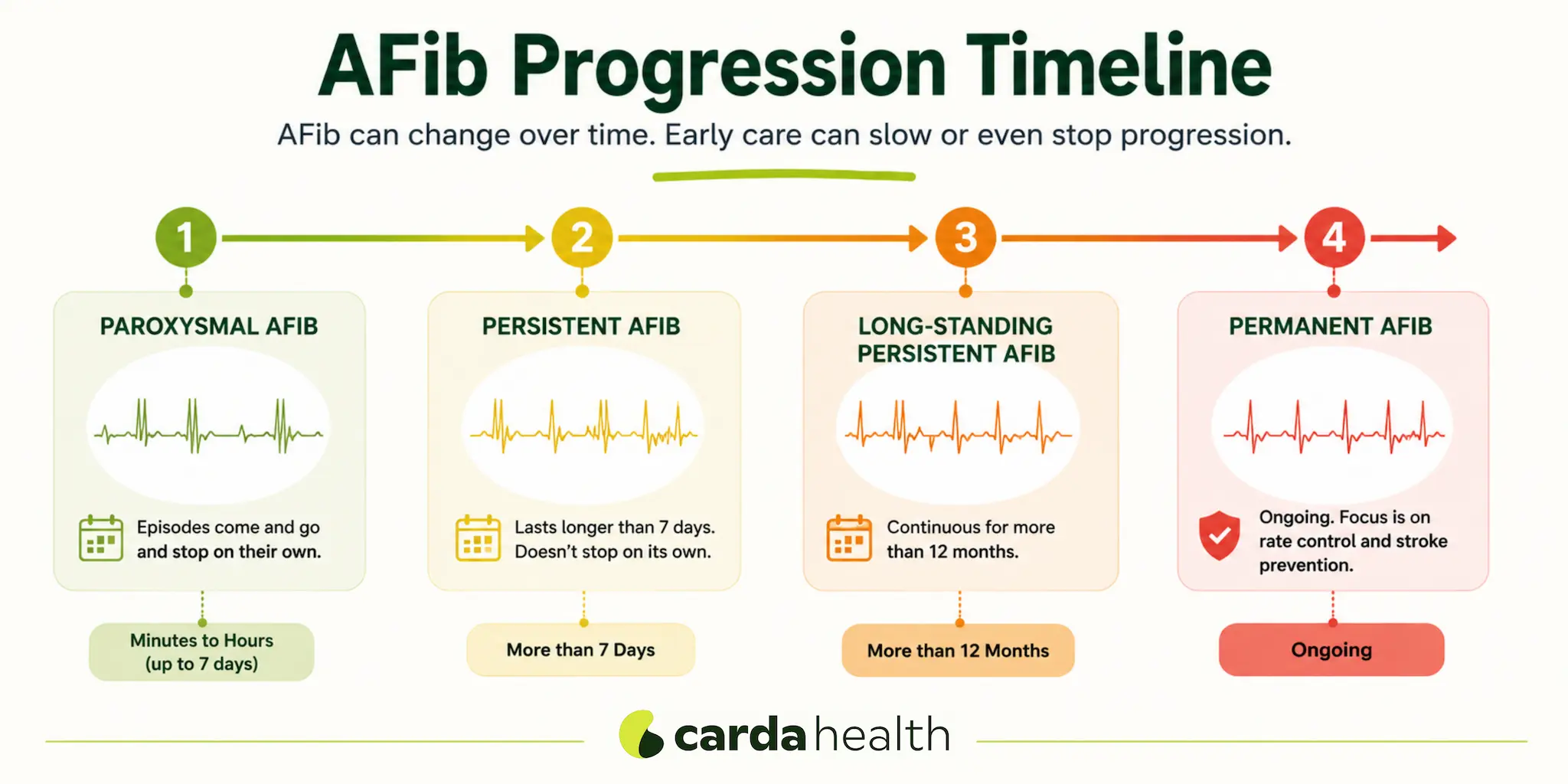
Not all AFib looks the same. Doctors describe it by how long episodes last and whether the rhythm comes back on its own:
AFib also tends to be progressive — short, occasional episodes can become longer and more frequent over time. That's why the 2023 ACC/AHA guideline for atrial fibrillation now frames AFib in four stages, from "at risk" through "pre-AFib" to diagnosed and finally permanent AFib. The message behind the staging is hopeful: acting early — on both treatment and the health factors that drive AFib — can slow or even stop that progression.
AFib Symptoms
AFib feels different from person to person. According to the Mayo Clinic, the most common symptoms include:
- Palpitations — a racing, pounding, fluttering, or "flip-flopping" feeling in the chest
- Fatigue and feeling worn out by activities that used to be easy
- Shortness of breath, especially with exertion
- Dizziness or lightheadedness
- Weakness or reduced stamina during exercise
- Chest discomfort or a feeling of pressure (new or severe chest pain is an emergency — see below)
{{get-started}}
When AFib Has No Symptoms
Some people have no symptoms at all — their AFib is discovered during a routine exam, before a surgery, or through a smartwatch alert. This "silent" AFib matters just as much, because the stroke risk is there whether or not you feel the rhythm. It's one of the best arguments for keeping regular checkups, especially after 65 or if you have risk factors.
What Causes AFib?
AFib happens when changes to the heart's tissue or its electrical signaling disrupt the normal rhythm. Usually there isn't one single cause — several factors stack up over time.
Risk Factors
Conditions and traits that make AFib more likely include:
- Older age — risk rises steadily after 65
- High blood pressure — one of the most common contributors
- Existing heart disease, including coronary artery disease, heart valve problems, and heart failure
- Obesity, diabetes, and sleep apnea
- Thyroid problems (especially an overactive thyroid) and chronic kidney disease
- Family history — AFib can run in families, particularly when it starts young
- Recent heart surgery — AFib sometimes appears during recovery
Common Triggers
Separate from long-term risk factors, certain things can set off an individual episode: alcohol (even a single heavy evening — the so-called "holiday heart"), acute illness or infection, dehydration, intense stress, poor sleep, and stimulants. Triggers vary widely from person to person, so many people find it useful to keep a simple log of what preceded an episode and share it with their care team.
Why AFib Matters: Stroke and Other Complications
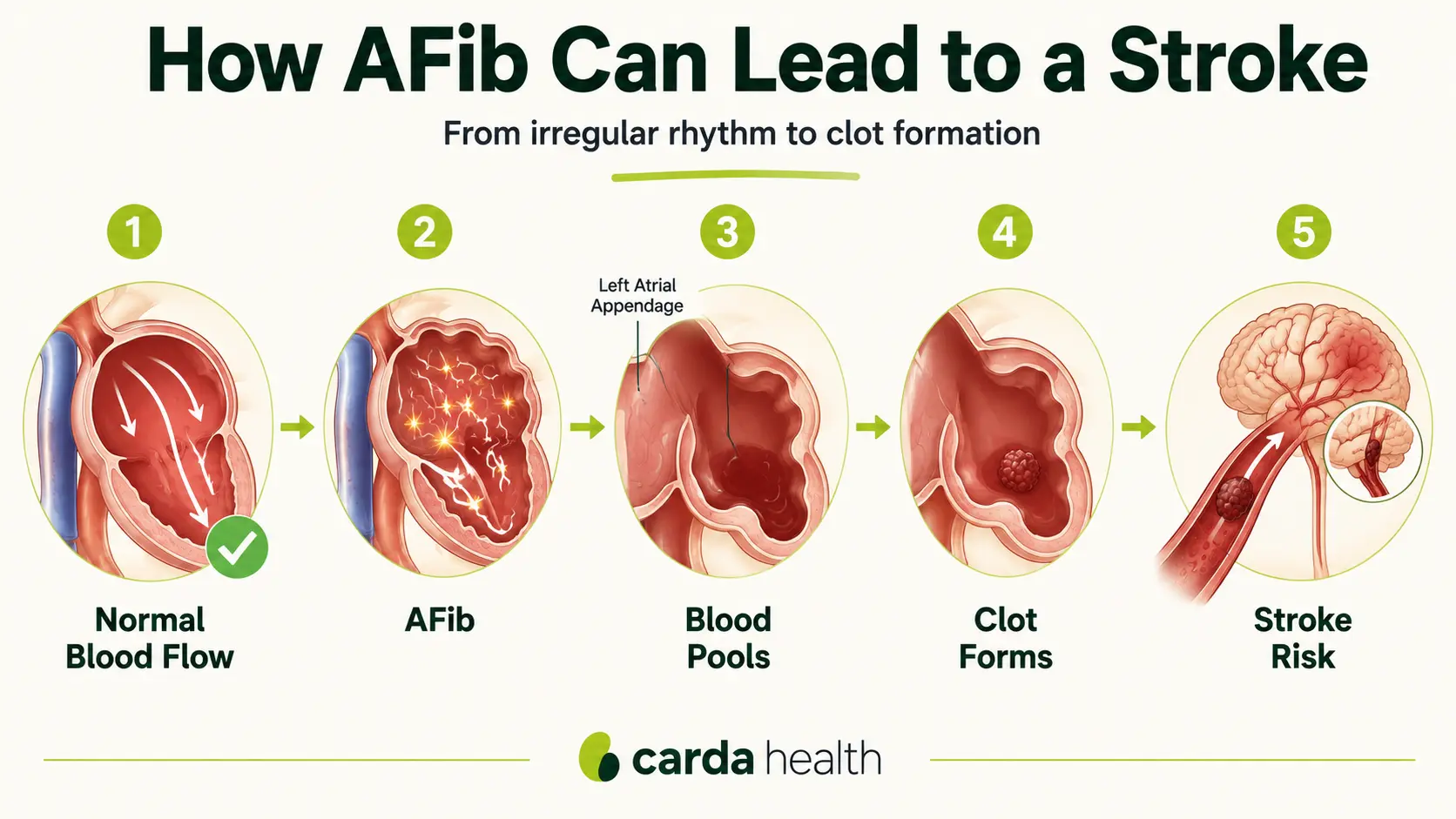
Here's the part that makes AFib more than a nuisance. When the atria quiver instead of squeezing, they don't empty completely. Blood can sit and pool — most often in a small pouch of the left atrium — and pooled blood can form clots. If a clot breaks loose and travels to the brain, it causes a stroke. That chain is why AFib is linked to roughly a fivefold increase in stroke risk, even for people who feel no symptoms.
Over time, AFib that keeps the heart racing can also weaken the heart muscle and contribute to heart failure — a condition where the heart can't pump efficiently enough to meet the body's needs. If you want to understand that connection better, see our guide to heart failure symptoms and early warning signs.
How AFib Is Diagnosed
The key test is an electrocardiogram (ECG or EKG) — a quick, painless recording of the heart's electrical activity that shows AFib's telltale irregular pattern. Because paroxysmal AFib can come and go, your doctor may also ask you to wear a Holter or event monitor for days or weeks to catch episodes as they happen.
How AFib Is Treated
Treatment has three goals: control the heart's rate or rhythm, prevent stroke, and address the conditions feeding the AFib. Your plan depends on your symptoms, your stroke risk, how long you've had AFib, and your overall health.
Medications
Rate-control medicines (such as beta blockers or calcium channel blockers) slow the heart to a comfortable pace. Rhythm-control medicines (antiarrhythmics) aim to keep the heart in normal rhythm. And because stroke is the central danger, many people take anticoagulants (blood thinners) — a decision your care team individualizes based on your personal stroke-risk profile.
Procedures
If medicines aren't enough, options include electrical cardioversion — a brief, controlled shock that resets the rhythm — and catheter ablation, a minimally invasive procedure that quiets the small areas of tissue sending the faulty signals. Your cardiologist can walk you through whether and when these make sense for you.
Lifestyle Changes
The 2023 AFib guideline puts strong emphasis on managing weight, controlling blood pressure, treating sleep apnea, limiting alcohol, and staying physically active — because these steps reduce both AFib episodes and the conditions driving them.
Living Well With AFib: Exercise and Cardiac Rehab
After an AFib diagnosis, many people quietly become afraid of their own heartbeat — they stop walking far, avoid stairs, skip activities they love. It's an understandable instinct, and it's usually the wrong one. For most people with AFib, the right kind of regular exercise is part of the treatment, not a threat.
A Cochrane review of exercise-based cardiac rehabilitation in AFib found that structured exercise training improved exercise capacity in people with atrial fibrillation. A large cohort study in the Journal of the American Heart Association went further, finding that participation in exercise-based cardiac rehab was associated with lower all-cause mortality among patients with AFib.
That's what cardiac rehabilitation is for: a medically supervised program of monitored exercise, education, and support that rebuilds strength and, just as importantly, confidence. You learn what your heart can safely do instead of guessing. You can read more about the benefits of cardiac rehabilitation in our dedicated guide.
Carda Health delivers virtual cardiac rehab entirely from home: live video sessions with a dedicated clinical exercise physiologist, shipped equipment that monitors your heart rate and rhythm in real time, and a program built around your condition and your goals. For people managing AFib alongside other heart conditions, it's a way to get stronger safely, without the commute. Eligibility depends on your diagnosis and insurance plan, and Carda's team handles that paperwork for you.
When to Seek Emergency Care
Most AFib episodes are not emergencies. But call 911 right away if you or someone near you has:
- Chest pain or pressure that is new, severe, or lasts more than a few minutes
- Signs of stroke — face drooping, arm weakness, slurred or strange speech, sudden confusion or vision loss
- Fainting or near-fainting
- Severe shortness of breath or trouble breathing at rest
- A racing heart that won't settle accompanied by feeling very unwell
When in doubt, get checked. With AFib, it is always better to be seen and reassured than to wait.
Conclusion
AFib is an electrical problem: the heart's upper chambers quiver out of rhythm instead of beating steadily. It's the most common arrhythmia there is, its biggest danger — stroke — is largely preventable with treatment, and the path forward combines medication, sometimes a procedure, healthier daily habits, and rebuilding your strength with safe, supervised exercise.
A diagnosis of AFib is the beginning of managing your heart health, not the end of an active life. You don't have to figure it out alone.
{{get-started}}
Frequently Asked Questions
Is AFib dangerous?
An AFib episode by itself is usually not immediately life-threatening. The real danger is what untreated AFib makes more likely over time, mainly stroke, and in some people heart failure.
Can AFib go away on its own?
Individual episodes of paroxysmal AFib often stop on their own within hours or days. The underlying tendency, however, usually doesn't disappear by itself, and AFib tends to progress without management.
Can you exercise with AFib?
For most people, yes, and regular activity is actually part of treatment. The key is doing it safely, ideally with guidance. A supervised program like cardiac rehab lets you rebuild fitness while your heart rate and rhythm are monitored, which is especially reassuring early on. Always clear your exercise plan with your care team first.
Is AFib the same as a heart attack or cardiac arrest?
No. AFib is an electrical rhythm problem in the heart's upper chambers. A heart attack is a blocked artery cutting off blood flow to heart muscle, and cardiac arrest is the heart suddenly stopping. They're related but distinct — our guide to heart failure vs. heart attack untangles the commonly confused terms.
What is the life expectancy of someone with AFib?
There's no single answer — it depends on your age, overall heart health, and how well the condition and its risk factors are managed. Untreated AFib is associated with higher risks, but with modern treatment and healthy habits, many people with AFib live long, full, active lives.
References
- American Heart Association. What is Atrial Fibrillation?
- American Heart Association. Why Atrial Fibrillation Matters.
- Joglar JA, et al. 2023 ACC/AHA/ACCP/HRS Guideline for the Diagnosis and Management of Atrial Fibrillation. Circulation. 2024;149(1):e1–e156.
- Mayo Clinic. Atrial fibrillation: Symptoms and causes.
- Johns Hopkins Medicine. What Is Afib?
- Risom SS, et al. Exercise-based cardiac rehabilitation for adults with atrial fibrillation. Cochrane Database of Systematic Reviews.
- Buckley BJR, et al. Exercise-Based Cardiac Rehabilitation and All-Cause Mortality Among Patients With Atrial Fibrillation. J Am Heart Assoc. 2021;10:e020804.