

Key Takeaways
End-stage heart failure (Stage D) is advanced heart failure with symptoms that interfere with daily life or recurrent hospitalizations despite guideline-directed therapy. Common symptoms include severe breathlessness, extreme fatigue, fluid buildup throughout the body, loss of appetite and weight loss (cardiac cachexia), confusion, and reduced kidney function. While there is no cure at this stage, medications, advanced therapies, and palliative care can help manage symptoms and improve quality of life. Cardiac rehabilitation may be an option for carefully selected, clinically stable patients, but only with approval from a heart failure specialist.
What Is End-Stage (Stage D) Heart Failure?
End-stage heart failure, also called advanced heart failure or Stage D heart failure, is the most severe form of heart failure. At this stage, the heart cannot fill or pump effectively enough to meet the body’s needs, even with guideline-directed medical therapy. Symptoms interfere with daily life, and many patients experience recurrent hospitalizations.
Advanced heart failure is not limited to a weakened pump. It can also develop when the ejection fraction is preserved, where impaired filling of the heart and elevated pressures inside it are the central problem.
It is important to understand that end-stage heart failure does not mean the heart has stopped. That would be cardiac arrest. Heart failure means the heart cannot keep up with the body’s demands. At Stage D, the medications and therapies that worked in earlier stages are no longer enough to control symptoms, and patients often require frequent hospitalizations.
According to the Centers for Disease Control and Prevention (CDC), nearly 6.7 million adults age 20 and older in the United States live with heart failure. While many manage the condition for years at earlier stages, a significant number eventually progress to Stage D.
For an overview of how heart failure presents at earlier stages, see our guide on heart failure symptoms.
Heart Failure Stages: Where End-Stage Fits
Doctors use two classification systems to describe heart failure severity. The ACC/AHA staging system (Stages A through D) tracks the progression of the disease over time, while the NYHA functional classification (Classes I through IV) describes how symptoms affect daily activity.
Stage D describes advanced heart failure with symptoms that interfere with daily life or recurrent hospitalizations despite guideline-directed therapy. NYHA Class IV describes patients who have symptoms at rest. The classifications overlap, but they are not interchangeable. A patient at Stage D is assigned an NYHA class based on their current symptoms, and that class can change over time as symptoms improve or worsen, whereas ACC/AHA stages describe disease progression and do not move backward.
| ACC/AHA Stage | Typical NYHA Class | Description | Activity Tolerance |
|---|---|---|---|
| Stage A: At Risk | — | Risk factors present but no structural heart disease or symptoms | No limitations |
| Stage B: Pre-HF | Class I | Structural heart changes but no symptoms | No limitations on physical activity |
| Stage C: Symptomatic | Class II–III | Structural heart disease with current or prior symptoms | Mild to marked limitation; comfortable at rest |
| Stage D: Advanced | Commonly Class III–IV | Symptoms that interfere with daily life or recurrent hospitalizations despite guideline-directed therapy | Marked limitation; patients classed as NYHA IV have symptoms at rest |
Symptoms of End-Stage Heart Failure
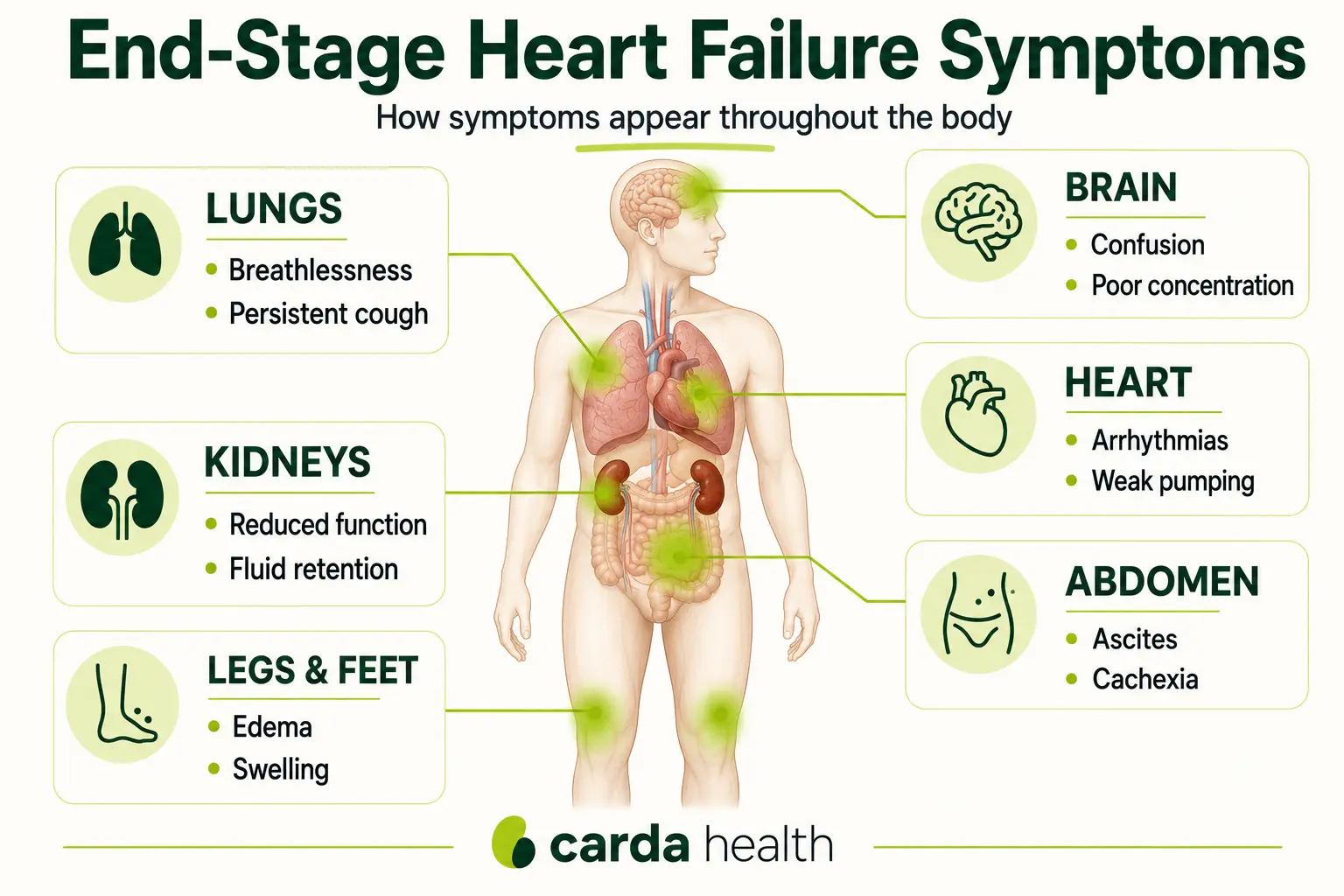
The symptoms of end-stage heart failure are severe and affect nearly every aspect of daily life. While many of these symptoms also appear at earlier stages, what distinguishes Stage D is their intensity, their persistence despite guideline-directed therapy, and the toll they take on day-to-day function.
Severe Shortness of Breath
Breathlessness occurs with minimal activity and, in more advanced cases, at rest. It often worsens when lying flat (orthopnea), and some patients wake suddenly at night gasping for air (paroxysmal nocturnal dyspnea) due to fluid buildup in the lungs.
Extreme Fatigue and Weakness
Persistent exhaustion makes simple tasks like bathing, dressing, or walking short distances difficult. It results from reduced blood and oxygen delivery and progressive muscle loss.
Fluid Buildup (Edema)
Fluid accumulates in the legs, feet, ankles, and sometimes the abdomen (ascites), causing swelling and discomfort. Rapid weight gain and swollen neck veins can signal severe fluid retention.
Loss of Appetite and Cardiac Cachexia
Patients may experience poor appetite, nausea, and early fullness. Advanced cases can lead to cardiac cachexia, a serious loss of muscle and body weight caused by chronic heart failure.
Persistent Cough or Wheezing
A chronic cough, sometimes producing white mucus, develops when fluid backs up into the lungs. It often worsens at night or while lying down.
Pink or frothy sputum is different and is not a routine symptom. It can signal acute pulmonary edema, a medical emergency. Call 911 for pink or frothy sputum, severe breathlessness at rest, chest pain, or fainting.
Confusion and Cognitive Changes
Reduced blood flow to the brain can cause memory problems, poor concentration, confusion, and slower thinking. These symptoms may resemble dementia, especially in older adults.
Reduced Kidney Function
Decreased blood flow to the kidneys can impair waste removal, a condition known as cardiorenal syndrome. Reduced urine output is the most relevant sign, and patients may also notice worsening swelling or fluid retention.
Rapid or Irregular Heartbeat
Palpitations, a racing heartbeat, or skipped beats are common as the heart struggles to maintain blood flow. Arrhythmias such as atrial fibrillation can increase stroke risk.
Pain
Pain is common but often overlooked in end-stage heart failure. Patients may experience chest pain, abdominal discomfort from congestion, or generalized body aches. New or severe chest pain should be treated as an emergency.
Depression and Anxiety
Depression and anxiety are common in advanced heart failure and frequently go unrecognized. Breathlessness, physical limitation, loss of independence, and uncertainty about the future all contribute, and low mood can in turn make symptoms feel worse and daily self-care harder to sustain. These are treatable. Persistent sadness, loss of interest, or anxiety should be raised with the care team, as counseling, medication, and palliative care support can all help.
How End-Stage Symptoms Differ From Earlier Stages
At earlier stages of heart failure (Stage C), symptoms like shortness of breath, fatigue, and swelling are present but intermittent. They tend to be triggered by exertion, respond to rest, and can usually be controlled with medications. Patients at these stages can often maintain many of their daily activities with appropriate treatment.
At Stage D, the picture changes fundamentally. Symptoms become refractory, meaning they persist despite guideline-directed therapy. Medication use can also become limited at this stage by low blood pressure, kidney dysfunction, electrolyte abnormalities, or intolerance, so treatments that once helped may no longer be possible to maintain at effective doses.
One of the most important things for families to understand is that heart failure often follows a “rollercoaster” trajectory rather than a steady, linear decline. Patients may have surprisingly good days followed by sudden deterioration, which can make it difficult to know when the end is approaching. This unpredictability distinguishes heart failure from many other terminal conditions and can be emotionally exhausting for caregivers.
Treatment and Symptom Management at Stage D
Medications and Advanced Therapies
Guideline-directed medical therapy continues to be adjusted and optimized at Stage D. Depending on the patient, this can include diuretics, an angiotensin receptor-neprilysin inhibitor (ARNI) or an ACE inhibitor or ARB, beta-blockers, mineralocorticoid receptor antagonists, and SGLT2 inhibitors. In severe cases, intravenous inotropes (such as dobutamine or milrinone) may be used to support the heart’s pumping ability, either in the hospital or at home through a continuous infusion.
For eligible patients, advanced therapies may be considered. A left ventricular assist device (LVAD) is a mechanical pump surgically implanted to help the weakened heart circulate blood. Heart transplantation remains the most definitive treatment for end-stage heart failure, though the limited availability of donor organs means only a small fraction of patients receive one.
Also read: Can Heart Failure Be Reversed?
Cardiac Rehabilitation
Cardiac rehabilitation is not appropriate for every patient at Stage D. A JACC expert panel concluded that the evidence is insufficient for patients with active NYHA Class IV symptoms or advanced heart failure. Medicare coverage for chronic heart failure does extend to NYHA class II to IV, but only for stable, chronic heart failure meeting specific clinical criteria.
Where rehabilitation is considered, it should be limited to carefully selected, clinically stable patients and only after approval from their heart failure specialist. In those patients, the focus shifts from building cardiovascular fitness to maintaining function, managing symptoms, preventing deconditioning, and supporting emotional wellbeing.
Acute decompensation, worsening symptoms at rest, or unstable disease call for medical stabilization, not exercise sessions.
For patients who have been cleared by their heart failure specialist and cannot travel to in-person facilities, Carda Health’s virtual cardiac rehab program pairs patients with a clinical exercise physiologist who supervises sessions from home, adjusting intensity based on the patient’s current capacity and symptoms. Eligibility is assessed case by case together with the patient’s care team.
Learn more in our guides on what is heart rehab and virtual cardiac rehab.
{{get-started}}
Palliative Care vs. Hospice
Palliative care can be started at any stage of heart failure, alongside disease-directed or life-prolonging treatment. Its focus is on improving quality of life through symptom relief, psychosocial support, and help with treatment decisions. Palliative care does not mean giving up on treatment, it means adding a layer of support focused on comfort and wellbeing.
Hospice care is typically appropriate when the prognosis is six months or less and the patient has decided to focus on comfort rather than pursuing disease-directed or life-prolonging treatment. Hospice provides comprehensive support at home or in a dedicated facility, including nursing, pain management, emotional and spiritual counseling, and support for the family.
For Caregivers: What to Know
Caring for someone with end-stage heart failure can be physically and emotionally demanding due to the condition’s unpredictable nature. Caregiver burnout is common, making support and self-care important.
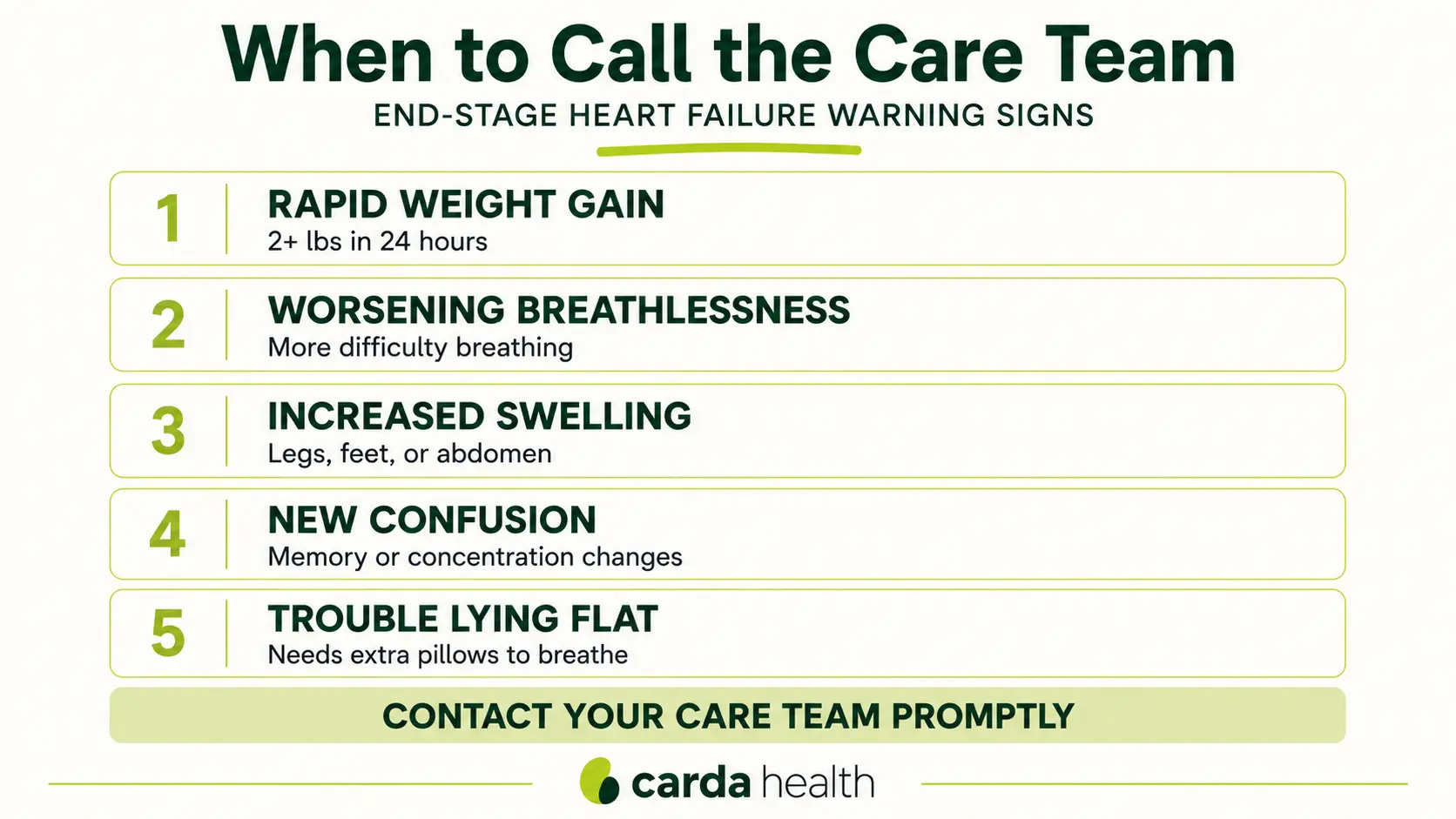
Watch for warning signs such as rapid weight gain, increased swelling, confusion, or difficulty lying flat, as these may indicate worsening heart failure and should prompt a call to the care team.
Some symptoms are emergencies. Call 911 for pink or frothy sputum, severe breathlessness at rest, chest pain, or fainting.
Palliative care teams can support both patients and caregivers by providing emotional, practical, and decision-making assistance. Seeking help is an important part of effective long-term caregiving.
Conclusion
End-stage heart failure is a serious and life-limiting condition, but it is not a journey that patients or families have to navigate alone. Understanding the symptoms, knowing what to expect, and being aware of the care options available, from medications and advanced therapies to palliative care and hospice, allows patients and their loved ones to make informed decisions at every step.
If you or someone you love is living with heart failure at any stage, building a care team that addresses physical symptoms, emotional wellbeing, and long-term heart health makes a meaningful difference in quality of life.
{{get-started}}
Frequently Asked Questions
What are the signs of end-stage heart failure?
The most common signs include severe shortness of breath at rest, extreme fatigue, significant fluid buildup (swelling in the legs, abdomen, and neck veins), loss of appetite and muscle wasting (cardiac cachexia), persistent coughing, confusion, reduced urine output, rapid or irregular heartbeat, chest and abdominal pain, and depression or anxiety. These symptoms persist despite guideline-directed therapy.
How long can you live with end-stage heart failure?
Life expectancy at Stage D varies widely depending on individual factors, including the underlying cause of heart failure, response to treatment, age, and overall health. Some patients live months; others live several years with advanced therapies. Prognosis is highly individual, so it is best discussed directly with the treating heart failure specialist.
Can end-stage heart failure be reversed?
In most cases, Stage D heart failure cannot be fully reversed. However, some patients may stabilize or improve with advanced therapies such as LVADs or heart transplantation. In rare cases, addressing the underlying cause (such as correcting a valve problem or managing a reversible cardiomyopathy) can lead to meaningful improvement. Cardiac rehabilitation is not appropriate for everyone at this stage and should only be considered for carefully selected, clinically stable patients with their heart failure specialist's approval.
What is cardiac cachexia?
Cardiac cachexia is an involuntary, progressive loss of muscle and fat tissue that occurs in advanced heart failure. It results from chronic inflammation, reduced blood flow to the digestive system, increased metabolic demand from the failing heart, and poor nutrient absorption. Cachexia is one of the most significant indicators of poor prognosis in heart failure. There is no single established treatment: nutritional assessment may help, and management is individualized and usually multidisciplinary.
References
- Heidenreich PA, et al. 2022 AHA/ACC/HFSA Guideline for the Management of Heart Failure. Circulation. 2022;145(18).
- The Criteria Committee of the New York Heart Association. Nomenclature and Criteria for Diagnosis of Diseases of the Heart and Great Vessels. 9th ed.
- Bozkurt B, Fonarow GC, Goldberg LR, et al. Cardiac Rehabilitation for Patients With Heart Failure: JACC Expert Panel. J Am Coll Cardiol. 2021;77(11):1454-1469.
- Maciver J, Ross HJ. A Palliative Approach for Heart Failure End-of-Life Care. Curr Opin Cardiol. 2018;33(2). PMC5811237.
- Braun LT, et al. Palliative Care and Cardiovascular Disease and Stroke. Circulation. 2016. PMC5726453.
- Centers for Disease Control and Prevention. Heart Failure. cdc.gov.
- Goodlin SJ. Palliative Care in Congestive Heart Failure. JACC. 2009;54(5):386-396.