
Key Takeaways
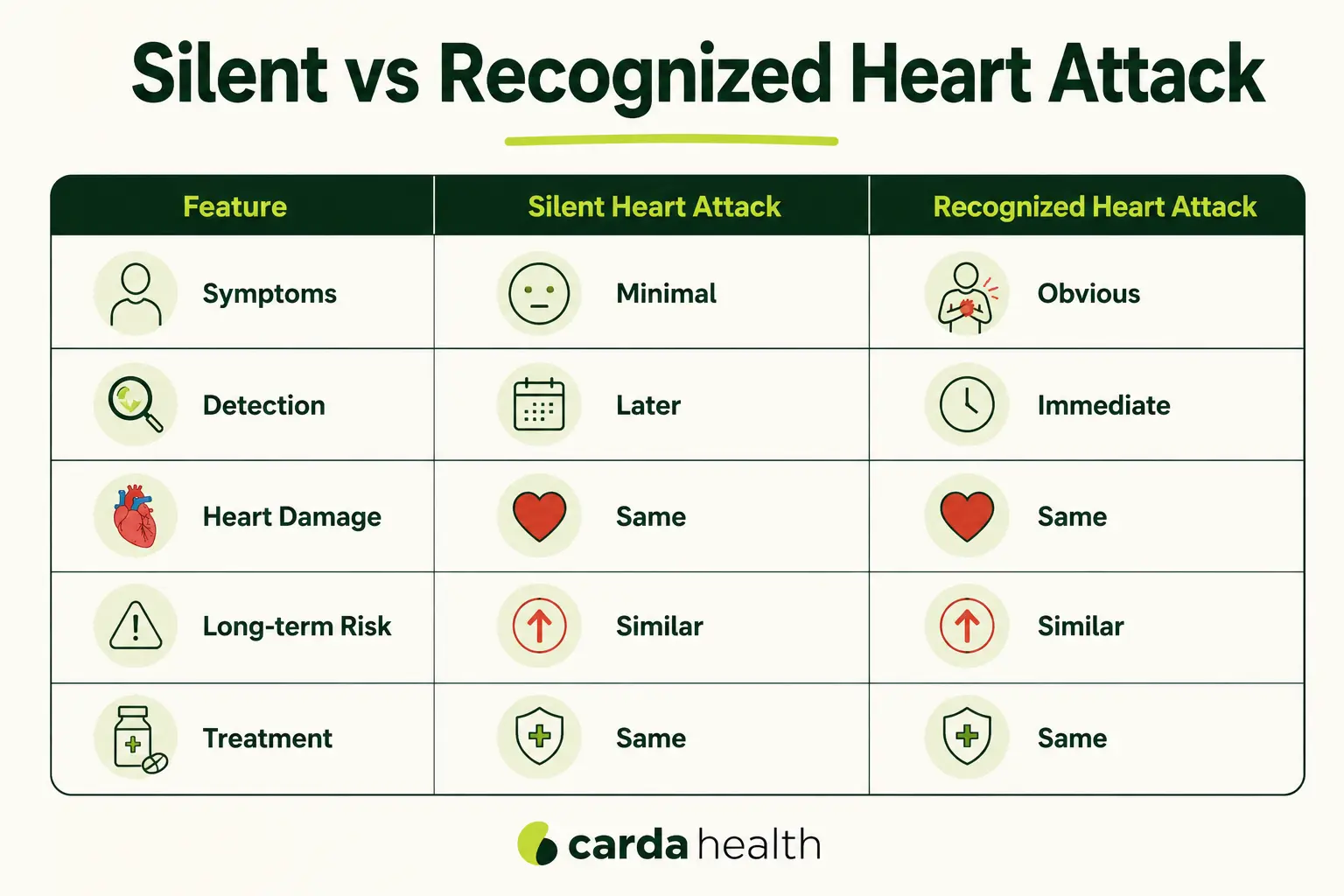
A silent heart attack causes the same permanent heart damage as a recognized one, the only difference is that it goes unnoticed at the time it occurs. Research shows that the 10-year mortality rate after a silent heart attack is comparable to that of a recognized heart attack. However, once discovered, the same treatments, medications, lifestyle changes, and cardiac rehabilitation that improve outcomes after any heart attack apply here too.
What Is a Silent MI?
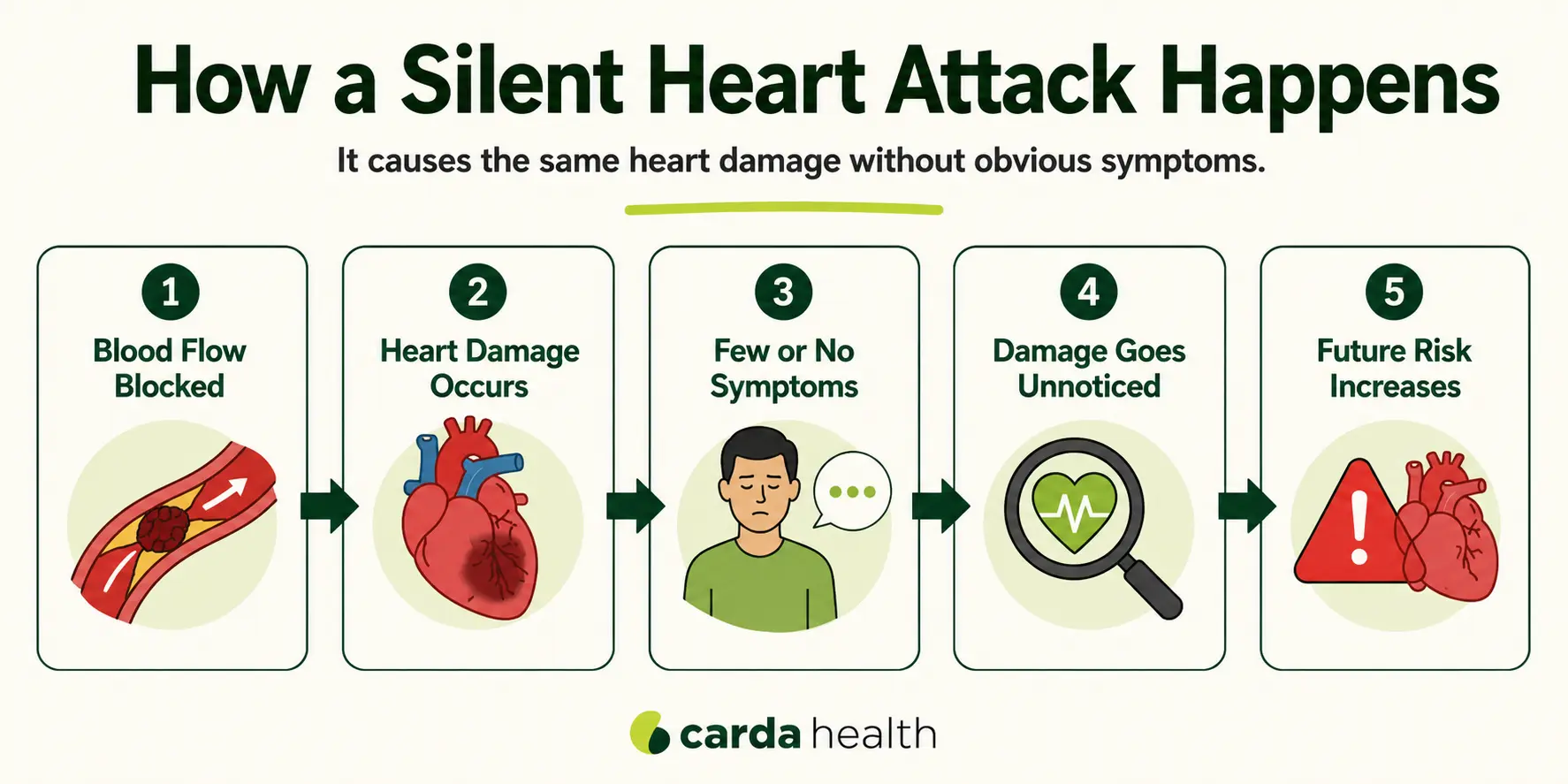
A silent heart attack, also called an unrecognized myocardial infarction (UMI) or silent ischemia, is a heart attack that occurs with minimal symptoms, atypical symptoms, or no noticeable symptoms at all. The heart muscle suffers the same damage as in a recognized heart attack: blood flow to part of the heart is blocked, and heart muscle cells die and are replaced by scar tissue.
The difference is simply that the person experiencing it does not realize what has happened.
Silent Heart Attack Ratio
According to the American Heart Association, approximately 170,000 of the estimated 805,000 heart attacks that occur in the United States each year are silent. That means roughly one in five heart attacks goes unrecognized at the time it occurs.
They are more common in women, people with diabetes (who may have reduced pain sensation due to neuropathy), and older adults.
Also Read what happens after a heart attack.
Life Expectancy After a Silent Heart Attack
A silent heart attack is just as serious as a recognized one in terms of long-term outcomes.
According to a study published in JAMA Cardiology in 2018, researchers followed 935 older adults using cardiac MRI and found that 17% had experienced an unrecognized heart attack. Over a follow-up period of up to 13 years, the 10-year mortality rate for people with silent heart attacks was comparable to those who had had a recognized heart attack; approximately half of both groups had died within the decade.
Additional research has reinforced these findings. A large community-based study published in the Journal of the American College of Cardiology (the ARIC study) found that silent heart attacks were associated with a significantly elevated risk of developing heart failure, similar in magnitude to the risk seen after a recognized heart attack.
And a study published in the Journal of the American Heart Association found that silent MI is an independent risk factor for sudden cardiac death.
The AHA reports that having a silent heart attack increases the risk of heart failure by 35% compared to people without evidence of a prior heart attack. The risk of dying from heart disease after a silent MI is roughly three times higher than for someone with a normal cardiac history.
{{get-started}}
Factors That Affect Long-Term Prognosis
No single number can predict life expectancy after a silent heart attack. Prognosis depends on a combination of measurable factors, most of which can be influenced by medical treatment and lifestyle changes once the silent MI is discovered.
What to Do After Learning You Had a Silent Heart Attack
Finding out that you had a silent heart attack can be unsettling, especially when the event may have happened months or years ago. But you now have the information needed to protect your heart going forward, using the same evidence-based strategies that help every heart attack survivor.
Medical Evaluation
Your doctor will likely recommend a comprehensive cardiac evaluation to assess the current state of your heart. This typically includes an echocardiogram to measure your ejection fraction (how well your heart pumps), a stress test to evaluate how the heart performs under exertion, and blood work including a lipid panel and HbA1c (to assess diabetes risk).
In some cases, a coronary angiogram may be recommended to visualize the coronary arteries and identify any significant blockages that may require treatment.
Based on these findings, your cardiologist will likely start medications that are standard after any heart attack: statins to lower cholesterol and stabilize plaque, antiplatelet agents to reduce clotting risk, beta-blockers to protect the heart, and ACE inhibitors to support cardiac function.
Cardiac Rehabilitation
Even though the heart attack occurred in the past, cardiac rehabilitation is still indicated and can significantly improve outcomes. A structured rehab program combines supervised exercise training, nutritional guidance, education about heart disease management, and psychosocial support.
For someone who has just discovered a silent heart attack, cardiac rehab serves a dual purpose: it helps address the heart damage that has already occurred, and it builds the habits and knowledge that prevent a second event.
Carda Health's virtual cardiac rehab program makes it possible to complete a full rehabilitation program from home.
Learn more in our guide on what is heart rehab.
Lifestyle Changes
The lifestyle modifications that improve prognosis after a silent heart attack are the same ones recommended after any heart attack.
Quitting smoking is the single most impactful change a smoker can make.
Adopting a heart-healthy diet, rich in vegetables, fruits, whole grains, lean proteins, and healthy fats while limiting saturated fats, sodium, and added sugars, helps slow the progression of coronary artery disease.
Regular moderate physical activity (at least 150 minutes per week, under medical guidance) strengthens the cardiovascular system.
Managing blood pressure, cholesterol, and blood sugar through ongoing medical care and medication adherence is essential. And addressing stress, anxiety, and depression, all common after a cardiac diagnosis, supports better overall recovery.
For more on the warning signs of heart failure that can develop after undetected heart damage, see our guide on heart failure symptoms.
Conclusion
A silent heart attack is not a minor heart attack, it is an unrecognized one. The damage to the heart is real and permanent, and the long-term risks are comparable to those of a heart attack that was diagnosed and treated at the time it occurred. What changes the outlook is what happens after the discovery.
A comprehensive cardiac evaluation, protective medications, cardiac rehabilitation, and sustained lifestyle changes can meaningfully improve your prognosis and quality of life. The event may be in the past, but the opportunity to protect your heart is right now.
{{get-started}}
Frequently Asked Questions
How serious is a silent heart attack?
Very serious. A silent heart attack causes the same permanent heart muscle damage as a recognized heart attack.
Can you live a normal life after a silent heart attack?
Many people do. Once a silent heart attack is discovered, with treatment and lifestyle changes one can significantly improve long-term outcomes. The key is treating the discovery as a call to action, not as something to dismiss because the event is in the past.
Does a silent heart attack damage the heart permanently?
Yes. Like any heart attack, a silent MI causes irreversible death of heart muscle cells.
How is a silent heart attack discovered?
Most silent heart attacks are discovered incidentally during an electrocardiogram (EKG), echocardiogram, or cardiac MRI performed for another reason. Some are discovered when a patient develops heart failure symptoms and further testing reveals prior infarction.
Is cardiac rehab recommended after a silent heart attack?
Yes. Cardiac rehabilitation is recommended for all heart attack patients, including those with a delayed diagnosis. Virtual cardiac rehab programs make it possible to complete rehabilitation from home.
References
- Acharya T, et al. Association of Unrecognized Myocardial Infarction With Long-Term Outcomes in Community-Dwelling Older Adults: The ICELAND MI Study. JAMA Cardiol. 2018;3(11):1101–1106.
- American Heart Association. Silent Heart Attacks All Too Common, and Often Overlooked.
- Qureshi WT, et al. Silent Myocardial Infarction and Long-Term Risk of Heart Failure: The ARIC Study. J Am Coll Cardiol. 2018;71(1):1–8.
- Zhang L, et al. Association Between Silent Myocardial Infarction and Long-Term Risk of Sudden Cardiac Death. J Am Heart Assoc. 2021;10(1):e017044.
- Heart.org: Ischemic Heart Disease and Silent Ischemia.
- Centers for Disease Control and Prevention. Cardiac Rehabilitation.