

Key Takeaways
With heart failure, what you eat directly affects how you feel. Extra sodium makes your body hold fluid, forcing an already tired heart to work harder. The plan is simple: eat mostly fresh, unprocessed foods, keep sodium within the limit your care team sets (commonly 1,500–3,000 mg a day), watch fluids if you have a limit, and weigh yourself daily to catch fluid buildup early.
Being told to change how you eat can feel daunting. The good news is a heart failure diet isn’t about bland food. It’s mostly about one mineral, sodium, and a few habits that help you feel better, breathe easier, and stay out of the hospital.
Why Diet Matters So Much in Heart Failure
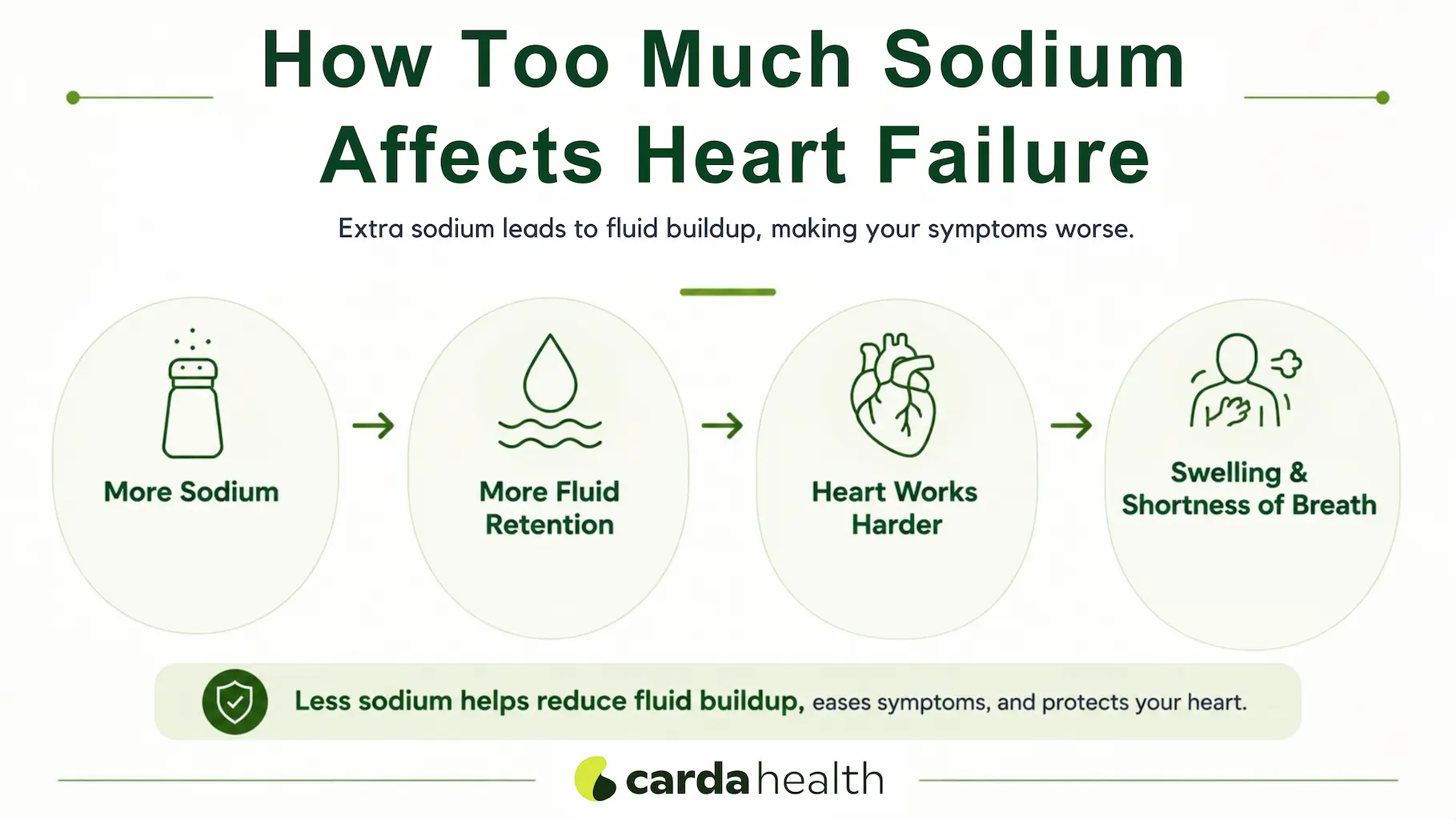
Sodium acts like a sponge: the more you eat, the more water your body holds on to. In heart failure, that extra fluid raises the workload on an already tired heart, showing up as swelling, weight gain, and shortness of breath. As the Mayo Clinic explains, excess sodium also makes diuretics (“water pills”) less effective. If swelling or breathlessness creeps up, our guide to heart failure symptoms covers the warning signs.
How Much Sodium Is Safe?
You’ll see different numbers from different experts, typically somewhere between 1,500 and 3,000 mg per day. The Cleveland Clinic cites 1,500–2,000 mg as a usual restriction, while the 2022 heart failure guideline emphasizes avoiding excessive sodium. Your right number depends on your stage, medications, and kidneys, ask your care team, and treat it as a daily cap, not an average. For perspective: the average American eats about 3,400 mg a day, and roughly 70% comes from packaged and restaurant food, not the shaker.
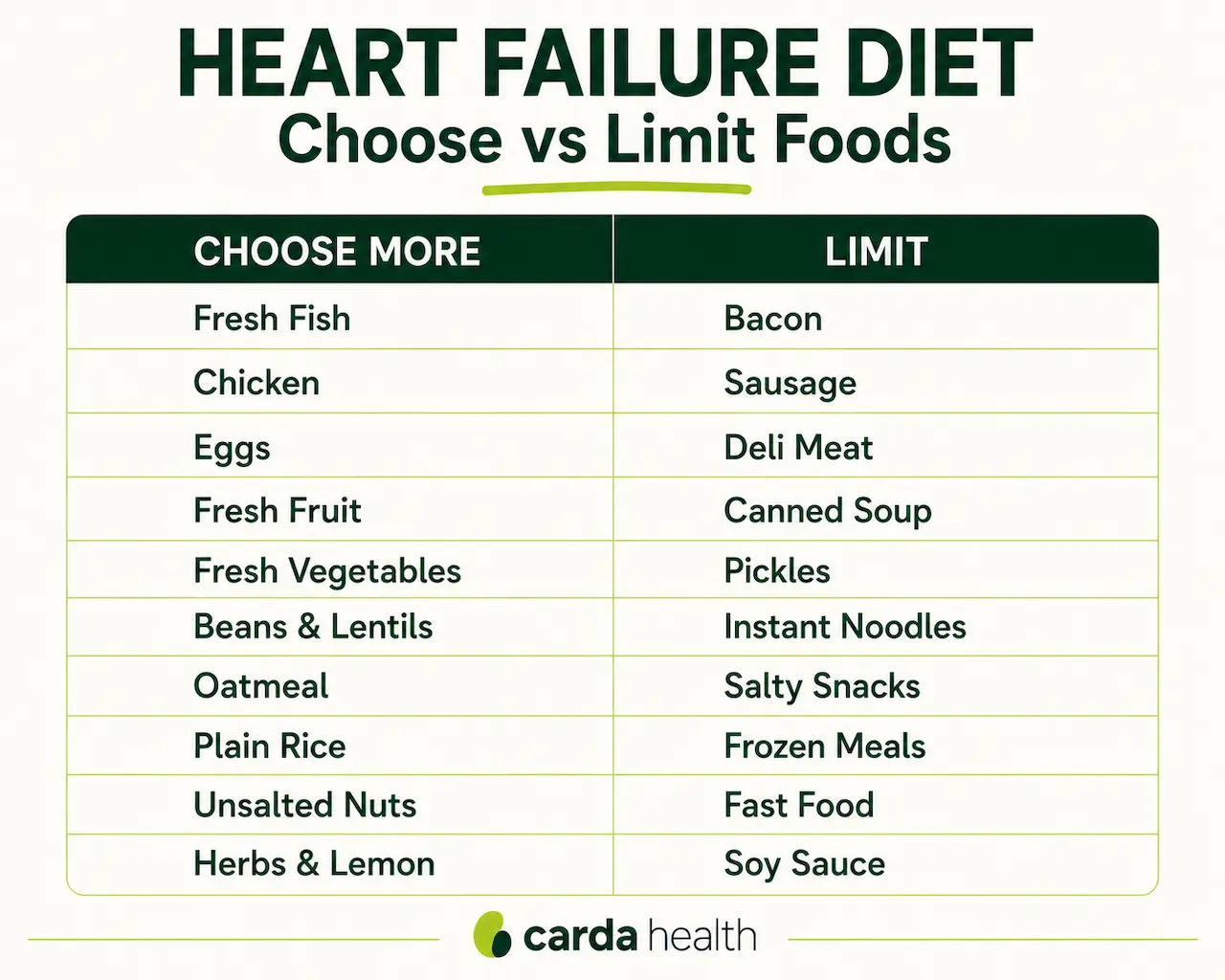
Heart Failure Diet at a Glance: Choose vs. Limit
Smart Habits That Make Low-Sodium Easier
Read Food Labels
Check the sodium per serving, and the number of servings in the package. Foods with 140 mg or less per serving are considered low in sodium; if salt or sodium appears early in the ingredient list, put it back.
Cook at Home, Flavor Without Salt
Cooking from fresh ingredients puts you in control. Build flavor with herbs, spices, garlic, citrus, and vinegar instead of salt. Per UCSF, taste buds adapt within weeks, food you once loved may soon taste too salty.
Eating Out
Restaurant food is the hardest sodium to see. Order simply prepared fish, meat, or vegetables; ask for sauces and dressings on the side; and request no added salt, kitchens are used to it.
Fluids, Alcohol, and Salt Substitutes
Do You Need a Fluid Limit?
Not everyone with heart failure needs one. When prescribed, often around 1.5 to 2 liters a day, it’s usually for persistent swelling or low blood sodium. Soup, ice cream, and fruit count as fluid too. Follow your care team’s guidance rather than restricting on your own.
A Caution About Salt Substitutes
Many salt substitutes swap sodium for potassium, and combined with common heart failure medications or kidney problems, excess potassium can trigger dangerous heart rhythms, as the American Association of Heart Failure Nurses warns. Check with your care team first; salt-free herb blends are a safer default.
Alcohol
Alcohol can weaken the heart muscle and disturb its rhythm, so most people with heart failure are advised to limit it strictly or skip it. Ask your cardiologist what’s safe for you.
The Daily Weight Check: Your Early Warning System
Diet and monitoring are two halves of the same fluid story. Weigh yourself every morning, after the bathroom, before breakfast, and write it down. A gain of 2–3 pounds in a day, or about 5 in a week, usually means fluid, not fat: call your care team before symptoms escalate. This single habit prevents more hospital trips than almost any other.
Diet Is One Piece: Pair Nutrition With Cardiac Rehab
Eating well works best alongside safe, structured exercise, exactly what cardiac rehabilitation combines: supervised activity, nutrition education, and ongoing support. Learn about the benefits of cardiac rehabilitation, or see how Carda Health delivers virtual cardiac rehab at home, live sessions with a dedicated clinician, with guidance that covers the whole picture, plate included.
Conclusion
A heart failure diet comes down to a few habits: choose fresh over processed, know your sodium number and respect it daily, watch fluids if you have a limit, be careful with salt substitutes, and step on the scale every morning. Small, consistent choices add up to easier breathing and fewer hospital visits.
{{get-started}}
Frequently Asked Questions
How much sodium can I have with heart failure?
Most recommendations fall between 1,500 and 3,000 mg per day. Your limit depends on your stage, medications, and kidneys, ask your care team for your number and treat it as a daily cap.
What foods should I avoid with congestive heart failure?
The biggest offenders: processed and cured meats, canned soups, frozen dinners, fast food, salty snacks, and condiments like soy sauce and dressings. Fresh, home-prepared foods are almost always safer.
Do I need to limit fluids?
Only if your care team says so, fluid limits are individualized. When prescribed, a common range is 1.5–2 liters a day, counting soups, ice cream, and foods that melt.
Are salt substitutes safe with heart failure?
Be cautious. Most replace sodium with potassium, which can build up dangerously alongside certain heart failure medications or kidney disease. Ask your care team first; salt-free herb blends are safer.
Can diet reverse heart failure?
Diet alone can’t cure it, but it reduces symptoms and hospitalizations, and combined with medication and rehab, some people’s heart function genuinely improves. More in our guide to whether heart failure can be reversed.
References
- Cleveland Clinic. Heart Failure Diet (patient education).
- Mayo Clinic News Network. Mayo Clinic Q&A: Congestive heart failure and diet.
- Heidenreich PA, Bozkurt B, Aguilar D, et al. 2022 AHA/ACC/HFSA Guideline for the Management of Heart Failure. Circulation. 2022;145(18):e895–e1032.
- UCSF Health. Diet and Congestive Heart Failure.
- Mass General Brigham. Nutrition and Heart Failure: How to Manage Sodium Intake.
- American Association of Heart Failure Nurses. Heart Failure & Salt: How to follow a low salt diet.
- Stanford Medicine. Demystifying Heart Failure: Hold the salt and other healthy eating habits.