At-Home Pulmonary Rehab: Is It as Effective as In-Person?

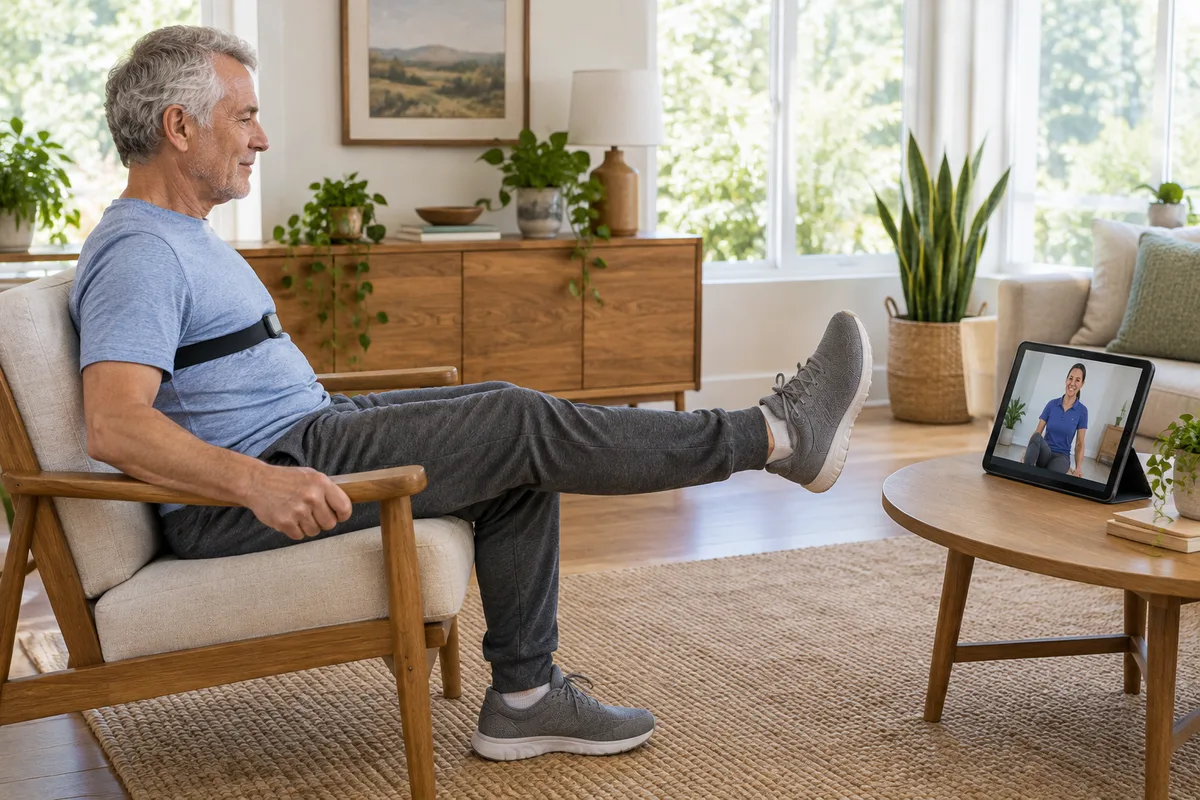
Quick answer: At-home pulmonary rehab is supervised pulmonary rehab you join from home, usually by live video, with a clinician checking your readings during each session. In the research, mostly in people with COPD and across several remote models, home and telerehab programs produced walking-distance gains similar to rehab at a center, and more people finished them. These are research results, not Carda's own outcomes. The American Thoracic Society strongly recommends offering adults with stable chronic lung disease the choice of center-based rehab or telerehabilitation.
How At-Home Pulmonary Rehab Works
At-home rehab keeps the parts that make pulmonary rehab a program rather than an exercise video: an assessment first, physician-prescribed exercise, education, and an individualized treatment plan, which Medicare requires for every pulmonary rehab program. What changes is the setting. You exercise at home while a clinician watches by live video and checks your readings during the session.
For what each part of a program includes and how progress is measured, see what pulmonary rehabilitation is. A note on terms: some people use "cardiopulmonary rehab" for any heart or lung rehab, but at Carda it means integrated programs for people with both a heart and a lung condition, covered in our guide to cardiopulmonary rehabilitation. This page is about pulmonary rehab.
Equipment and Monitoring: How Carda Delivers It
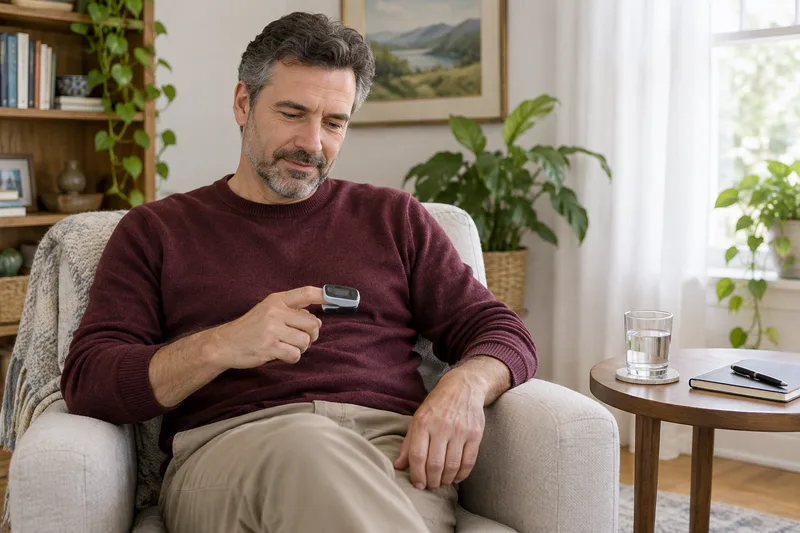
Carda's program is 36 sessions over 12 weeks, joined from home on a tablet Carda sends you along with devices to track your vital signs. Before you start, an assessment checks your breathing, your oxygen needs during exercise and how you respond to exertion. Every exercise session is one-to-one: a clinical exercise physiologist watches your readings live and can adjust or stop the session, with physician oversight. That level of supervision is what sets a program like Carda's apart from apps or recorded classes.
“Changed my Life”
“This program has literally changed my life for the better! I am almost done with my pulmonary therapy and will really miss my one on one interaction with my therapist Meagan. I was literally stuck in my house on my oxygen 24/7. Now I can go to the grocery store, visit friends, have a LIFE! I will definitely continue my therapy even after I officially graduate. Thank you thank you thank you!”
Diane Ellsworth, US, Verified
“Carda for the Win!”
“I stumbled upon Carda and thought that I would check it out. I was a little skeptical until I was told that MEDICARE paid for this! I went from getting a high heart rate and shortness of breath when taking 35 steps (yes, I counted them), to walking normal and performing activities that I thought was gone forever! Would I suggest Carda to others? YES!!!!”
Lynn Brooks, US, Verified
Patient reviews describe individual experiences; results vary.
Is At-Home Pulmonary Rehab as Effective as In-Person Rehab?
Pulmonary rehab itself has strong evidence in COPD. A Cochrane review of 65 randomized trials found it improves breathlessness, fatigue, emotional function and sense of control. Six-minute walk distance improved by about 44 meters on average, and quality-of-life scores improved by more than the amount patients notice. After a hospital stay for a COPD flare-up, rehab may reduce hospital readmissions, although results varied widely between trials, and it did not significantly reduce deaths. The American Thoracic Society strongly recommends pulmonary rehab for adults with stable COPD and after a hospital stay for a flare-up.
Home-based options have been tested too. A 2021 Cochrane review compared telerehabilitation (delivered by phone, web or video) with rehab at a center and found similar average walking-distance outcomes in the studied populations, which were mostly people with COPD, across several remote models. Quality of life and breathlessness may also be similar, though that evidence is less certain. In the review's trials, 93% of people finished telerehab, against 70% at a center. These results come from research programs, not from Carda's own patients. The 2023 American Thoracic Society guideline strongly recommends that patients with stable chronic lung disease be offered the choice between center-based rehab and telerehab.
If you are looking for the same answer for heart patients, the comparable cardiac evidence is covered in our post on home-based vs. center-based cardiac rehab.
What About Older Adults?
Most people in the telerehab trials were older adults, with average ages from 66 to 71. The trials do not report results separately for people over 65, so the evidence applies to older adults broadly rather than to a specific age group. Medicare sets no separate rules or session limits for older adults.
Is It Safe, Including on Oxygen?
The Cochrane telerehab review found no extra side effects compared with rehab at a center, and the American Thoracic Society found adverse events were similar for both. Safety starts before the first session: an exercise assessment checks, among other things, whether you need supplemental oxygen while you exercise. If you already use long-term oxygen, you keep using it during rehab, and the team checks whether you need a different flow rate while exercising.
There is little research on home rehab specifically for people on supplemental oxygen, so talk with your doctor and the rehab team about whether home sessions suit you. In Carda's program, an exercise physiologist watches your vital signs live throughout each one-to-one session, with physician oversight.
What About After COVID-19?
Pulmonary rehab can help some people with lasting breathing problems after COVID-19, but screening comes first, because exercise can worsen symptoms for people whose symptoms flare after activity. Our post on pulmonary rehab after COVID covers who it suits and what to watch for.
Who It Suits, Coverage and How to Start
Who At-Home Rehab Suits
At-home rehab tends to suit people with stable chronic lung disease, especially those for whom travel is the barrier: distance, transportation, or the effort of getting to a center two or three times a week. Talk with your doctor before choosing home sessions if:
- You need high-flow oxygen, or your oxygen level drops sharply during exertion.
- You have had a recent heart problem that is not yet stable.
- Your symptoms get worse a day or two after activity, as can happen with long COVID.
How Long Does It Last?
At home or at a center, Medicare's limits are the same: up to two one-hour sessions a day and up to 36 sessions over up to 36 weeks, with up to 36 more if your Medicare contractor approves. Most pulmonary rehab programs in research ran 8 to 12 weeks, and the ATS/ERS statement recommends at least 8 weeks for a substantial effect.
What Medicare Covers at Home
Through December 31, 2027, Original Medicare may cover eligible pulmonary rehab sessions at home by live two-way audio-video when the provider and program meet Medicare's requirements; after that, it depends on whether Congress extends the rule. Eligibility, cost-sharing and plan rules still apply, and our guide to Medicare and pulmonary rehab explains them.
Who Rehab Reaches Today
Pulmonary rehab works, but few eligible people get it: in 2019 just 4% of Medicare patients with COPD used it. Distance and transportation are among the main barriers, and living more than 10 miles from a program was linked with lower use after a COPD hospital stay. At-home rehab removes the travel.
How to Start
- Ask your doctor. Rehab needs a referral. For COPD, Medicare expects the referral from the doctor treating your lung disease.
- Ask about home sessions. Ask whether an at-home program fits your condition, and whether you need oxygen during exercise.
- Check coverage. Ask what you will pay per session under your plan.
Check whether Carda's at-home pulmonary rehab is right for you
Frequently Asked Questions
Is at-home pulmonary rehab as effective as in-person rehab?
In the studies so far, average walking-distance outcomes were similar: a 2021 Cochrane review, mostly of people with COPD and several remote models, found little difference from rehab at a center, and in its trials 93% of people finished telerehab against 70% at a center. Results for quality of life and breathlessness look similar but are less certain. These are research findings, not Carda's own outcomes.
Does Medicare cover rehab at home?
Through December 31, 2027, Original Medicare may cover eligible pulmonary rehab sessions at home by live two-way audio-video when the provider and program meet Medicare's requirements. Eligibility, referral and cost-sharing rules still apply, and Medicare Advantage plans may add their own.
Is home rehab safe if I use oxygen?
There is little research on home rehab for people on supplemental oxygen specifically. Before starting, an exercise assessment checks your oxygen needs during exercise, and you keep using any prescribed oxygen. Ask your doctor and the rehab team whether home sessions suit you.
What equipment do I need for at-home pulmonary rehab?
Programs typically send what you need. Carda sends a tablet and devices to track your vital signs, and a clinical exercise physiologist guides each session live, one-to-one.
References
- 42 CFR 410.47, Pulmonary rehabilitation program: Conditions for coverage.
- Public Law 119-75, Consolidated Appropriations Act, 2026, Sec. 6209 and 6211.
- CMS. Virtual CR, ICR and PR Furnished by Hospital Outpatient Departments FAQ. April 9, 2026.
- Medicare.gov. Telehealth.
- Medicare.gov. Pulmonary rehabilitation.
- Medicare.gov. Medicare costs (2026 Part B deductible).
- Spruit MA, et al. An official ATS/ERS statement: key concepts and advances in pulmonary rehabilitation. Am J Respir Crit Care Med. 2013;188(8):e13-e64.
- Rochester CL, et al. Pulmonary rehabilitation for adults with chronic respiratory disease: an official ATS clinical practice guideline. Am J Respir Crit Care Med. 2023;208(4):e7-e26.
- McCarthy B, et al. Pulmonary rehabilitation for chronic obstructive pulmonary disease. Cochrane Database Syst Rev. 2015.
- Puhan MA, et al. Pulmonary rehabilitation following exacerbations of chronic obstructive pulmonary disease. Cochrane Database Syst Rev. 2016.
- Cox NS, et al. Telerehabilitation for chronic respiratory disease. Cochrane Database Syst Rev. 2021.
- Bhatt SP, et al. Pulmonary rehabilitation utilization in older adults with COPD, 2013-2019. Ann Am Thorac Soc. 2024;21(5):740-747.
- Spitzer KA, et al. Participation in pulmonary rehabilitation after hospitalization for COPD among Medicare beneficiaries. Ann Am Thorac Soc. 2019;16(1):99-106.