What Is Pulmonary Rehabilitation? What Happens in a Session


Quick answer: Pulmonary rehabilitation is a supervised medical program that helps people with chronic lung disease breathe better and do more. It combines exercise training tailored to you, breathing techniques, education and support, delivered by a team. Programs usually run two or three sessions a week, and international guidelines recommend at least 8 weeks for a substantial benefit. Medicare covers it for moderate to very severe COPD and for lasting breathing problems after COVID-19, and it can be done at a center or from home.
What Pulmonary Rehab Is
The American Thoracic Society and European Respiratory Society define pulmonary rehab as a comprehensive program that starts with a thorough assessment of each patient, followed by therapies tailored to that person: exercise training, education and help changing habits. Its aims are to improve both physical and emotional condition and to help people keep up healthy habits for the long term.
It is delivered by a team. Depending on the program, that team can include doctors, nurses, respiratory therapists, physical therapists, exercise specialists and dietitians. Most programs run as outpatient sessions, and some are offered at home or online.
Who Pulmonary Rehab Is For
The strongest evidence is in COPD. The American Thoracic Society's 2023 guideline makes strong recommendations for pulmonary rehab in:
- Stable COPD
- After a hospital stay for a COPD flare-up
- Interstitial lung disease, such as pulmonary fibrosis
It makes a conditional recommendation for pulmonary hypertension, based on lower-quality evidence. Benefits are also recognized in asthma, bronchiectasis, lung cancer, before and after a lung transplant, and after COVID-19, though those groups were outside the scope of the 2023 guideline. Your doctor may also suggest rehab before and after lung surgery.
What Happens in a Session
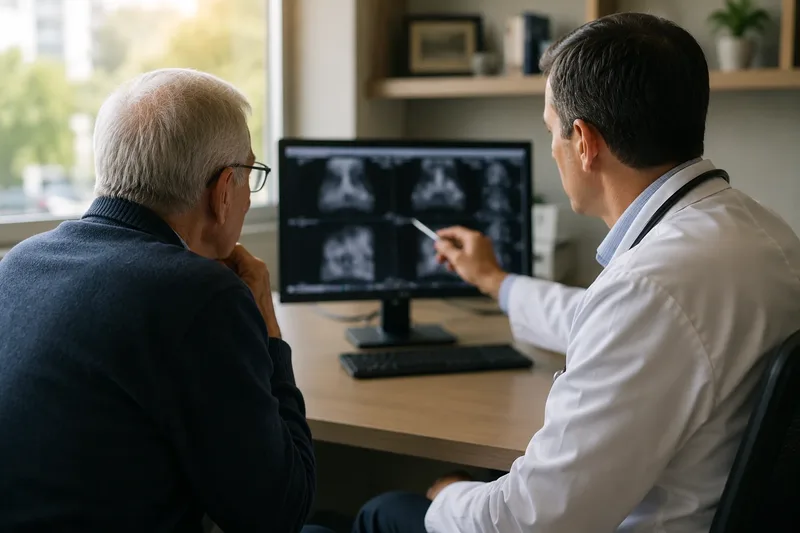
Before the first session, the team assesses you. That usually includes tests such as a breathing test, an exercise test and a 6-minute walk test, which measures how far you can walk in six minutes. The results set your starting point and your exercise plan.
Sessions are built around these parts:
- Endurance exercise, such as walking or cycling, at an intensity set for you. Some programs use intervals, short bursts with rests in between, which give similar results with fewer symptoms.
- Strength training for the arms and legs. Strength and endurance work complement each other, and strength training tends to cause less breathlessness.
- Breathing techniques, such as pursed-lip breathing and belly breathing (below).
- Education on your medicines, spotting a flare-up early, saving energy in daily tasks and quitting smoking, plus nutrition advice.
- Emotional support and stress management.
For examples of the exercises themselves, see our guide to pulmonary rehab exercises.
Two Breathing Techniques You Will Likely Learn
The American Lung Association calls pursed-lip breathing and belly breathing the two most useful breathing exercises taught by pulmonary rehab specialists.
- Pursed-lip breathing: breathe in through your nose, then breathe out through pursed lips, as if blowing out a candle, for at least twice as long as you breathed in.
- Belly breathing: breathe in through your nose and let your belly fill, then breathe out through your mouth for two to three times as long as the breath in, keeping your neck and shoulders relaxed.
Breathing exercises on their own are not a substitute for a full program. A Cochrane review found they can improve exercise capacity but have no consistent effect on breathlessness or quality of life, which is why rehab combines them with exercise training and education.
These techniques are for everyday breathlessness, not emergencies. Call 911 if breathlessness comes on suddenly or is severe, is much worse than your usual, or comes with chest pain, blue or gray lips, confusion, or trouble speaking.
How Often and How Long
Most programs run two or three sessions a week over several weeks or months. The ATS/ERS statement on pulmonary rehab says there is no agreed ideal length and recommends at least 8 weeks to achieve a substantial effect on exercise and quality of life; most programs in research ran 8 or 12 weeks. Endurance training is typically done three to five times a week, and 20 to 60 minutes per session of continuous exercise at a higher intensity gives the most benefit.
Medicare covers up to two one-hour sessions a day, and up to 36 sessions over up to 36 weeks, with up to 36 more if your Medicare contractor approves.
How Progress Is Measured
Your team repeats the same tests at the start and the end, so you can see the change. Each common measure has a "minimal important difference": the smallest change patients notice in daily life.
| Measure | What it tracks | Change that matters |
|---|---|---|
| 6-minute walk test | How far you walk in six minutes | About 30 meters in COPD |
| COPD Assessment Test (CAT) | How COPD affects daily life | A 2-point drop (lower is better) |
| St George's Respiratory Questionnaire | Quality of life with lung disease | About 4 points |
| Chronic Respiratory Questionnaire | Breathlessness, fatigue, mood and sense of control | 0.5 points per area |
| mMRC breathlessness scale | How much breathlessness limits activity, graded 0 to 4 | Used as a grade, not a change score |
People tend to walk a little further the second time they do a walk test just from practice, so guidelines recommend doing two walk tests at the start.
What Pulmonary Rehab Can Do for COPD
A Cochrane review of 65 randomized trials in COPD found that pulmonary rehab improves breathlessness, fatigue, emotional function and sense of control by more than the amount patients notice. Six-minute walk distance improved by about 44 meters on average, and quality of life improved too. The reviewers concluded that more trials comparing rehab with usual care are not needed.
After a hospital stay for a flare-up, a separate Cochrane review found rehab improved walking distance by about 62 meters and quality of life, and may reduce readmissions, although results varied widely between trials. It did not significantly reduce deaths. In the trials reviewed for the 2023 American Thoracic Society guideline, rehab started within three weeks of leaving hospital reduced readmissions.
Pulmonary Rehab or Physical Therapy?
The two overlap but are not the same. Physical therapy is a broad service for many conditions, focused on movement, strength and function. Pulmonary rehab is a structured program for chronic lung disease: it starts with an assessment, then combines exercise training with breathing techniques, education and emotional support, and Medicare requires each program to include a psychosocial assessment, an outcomes assessment and an individualized treatment plan. A physical therapist may be one member of the pulmonary rehab team. The difference is one of scope.
Does Medicare Cover Pulmonary Rehab?
Yes, for people with moderate to very severe COPD (GOLD stages II to IV) when the doctor treating the lung disease refers them, and for people with confirmed or suspected COVID-19 who have had breathing problems for at least four weeks. Costs, home-based coverage and documentation are explained in our guide to whether Medicare covers pulmonary rehab.
Few People Who Could Benefit Get It
Fewer than 5% of people with COPD who could benefit from pulmonary rehab receive it. Among Medicare patients with COPD, use rose only from 2.5% in 2013 to 4.0% in 2019. Among Medicare patients hospitalized for COPD in 2012, just 1.9% started rehab within six months, and people living more than 10 miles from a program were less likely to start. Rehab you can join from home takes travel out of the equation.
Starting Pulmonary Rehab From Home
Carda Health offers pulmonary rehab you can do from home: 36 sessions over 12 weeks, joined on a tablet Carda sends you. Every exercise session is one-to-one, with a clinical exercise physiologist watching your vital signs live and physician oversight. To start, ask your doctor whether pulmonary rehab is right for you; for COPD, Medicare expects the referral from the doctor treating your lung disease. Our guide to at-home pulmonary rehab covers how home programs compare with center-based ones.
“Blessed and Grateful”
“I am truly blessed and grateful to have found Carda as it has supported my well being tremendously. My energy level has increased and am now able to climb stairs without losing my breath which is especially great with COPD. The exercises are perfect for me and the timing is perfect as well as I do not feel burdened and over exercised. Thank you Carda Health, you have changed my life.”
Doris Helfer, US, Verified
Patient reviews describe individual experiences; results vary.
Check whether Carda's pulmonary rehab is right for you
Frequently Asked Questions
What is pulmonary rehabilitation?
It is a supervised medical program for people with chronic lung disease. It starts with an assessment, then combines exercise training tailored to you with breathing techniques, education and emotional support, delivered by a team.
What happens at a pulmonary rehab session?
Most sessions include endurance exercise such as walking or cycling, strength training for the arms and legs, breathing techniques, and education on topics such as medicines, flare-ups and saving energy.
How long does pulmonary rehab last?
Usually two or three sessions a week. International guidelines recommend at least 8 weeks for a substantial benefit, and most programs in research ran 8 to 12 weeks. Medicare covers up to 36 sessions, with up to 36 more if your Medicare contractor approves.
Who qualifies for pulmonary rehab?
The strongest evidence is for COPD, including after a hospital stay for a flare-up, and for interstitial lung disease. Medicare covers it for moderate to very severe COPD and for breathing problems lasting at least four weeks after COVID-19.
Is pulmonary rehab the same as physical therapy?
No. Physical therapy focuses on movement and function for many conditions. Pulmonary rehab is a full program for lung disease that adds breathing techniques, education and emotional support, and a physical therapist may be part of the team.
How do I know if pulmonary rehab is working?
Your team repeats tests such as the 6-minute walk test and the COPD Assessment Test at the start and end. Walking about 30 meters further on the walk test, or a 2-point drop in your CAT score (lower is better), is a change patients notice.
Can I do pulmonary rehab at home?
Yes, for many people. The American Thoracic Society's 2023 guideline strongly recommends offering adults with stable chronic lung disease the choice of center-based rehab or telerehabilitation. Carda Health delivers pulmonary rehab at home with a clinical exercise physiologist watching your vital signs live during each one-to-one session. Ask your doctor whether home sessions suit you.
References
- Spruit MA, et al. An official ATS/ERS statement: key concepts and advances in pulmonary rehabilitation. Am J Respir Crit Care Med. 2013;188(8):e13-e64.
- Rochester CL, et al. Pulmonary rehabilitation for adults with chronic respiratory disease: an official ATS clinical practice guideline. Am J Respir Crit Care Med. 2023;208(4):e7-e26.
- National Heart, Lung, and Blood Institute. Pulmonary rehabilitation.
- American Lung Association. Pulmonary rehabilitation.
- American Lung Association. Breathing exercises.
- McCarthy B, et al. Pulmonary rehabilitation for chronic obstructive pulmonary disease. Cochrane Database Syst Rev. 2015.
- Puhan MA, et al. Pulmonary rehabilitation following exacerbations of chronic obstructive pulmonary disease. Cochrane Database Syst Rev. 2016.
- Holland AE, et al. Breathing exercises for chronic obstructive pulmonary disease. Cochrane Database Syst Rev. 2012.
- Kon SS, et al. Minimum clinically important difference for the COPD Assessment Test: a prospective analysis. Lancet Respir Med. 2014;2(3):195-203.
- Jones PW. St. George's Respiratory Questionnaire: MCID. COPD. 2005;2(1):75-79.
- Holland AE, et al. An official ERS/ATS technical standard: field walking tests in chronic respiratory disease. Eur Respir J. 2014;44(6):1428-1446.
- Singh SJ, et al. An official systematic review of the ERS/ATS: measurement properties of field walking tests in chronic respiratory disease. Eur Respir J. 2014;44:1447-1478.
- 42 CFR 410.47, Pulmonary rehabilitation program: Conditions for coverage.
- Medicare.gov. Pulmonary rehabilitation programs.
- CMS. Virtual CR, ICR and PR Furnished by Hospital Outpatient Departments FAQ. April 9, 2026.
- Medicare.gov. Telehealth.
- Bhatt SP, et al. Pulmonary rehabilitation utilization in older adults with COPD, 2013-2019. Ann Am Thorac Soc. 2024;21(5):740-747.
- Spitzer KA, et al. Participation in pulmonary rehabilitation after hospitalization for COPD among Medicare beneficiaries. Ann Am Thorac Soc. 2019;16(1):99-106.