
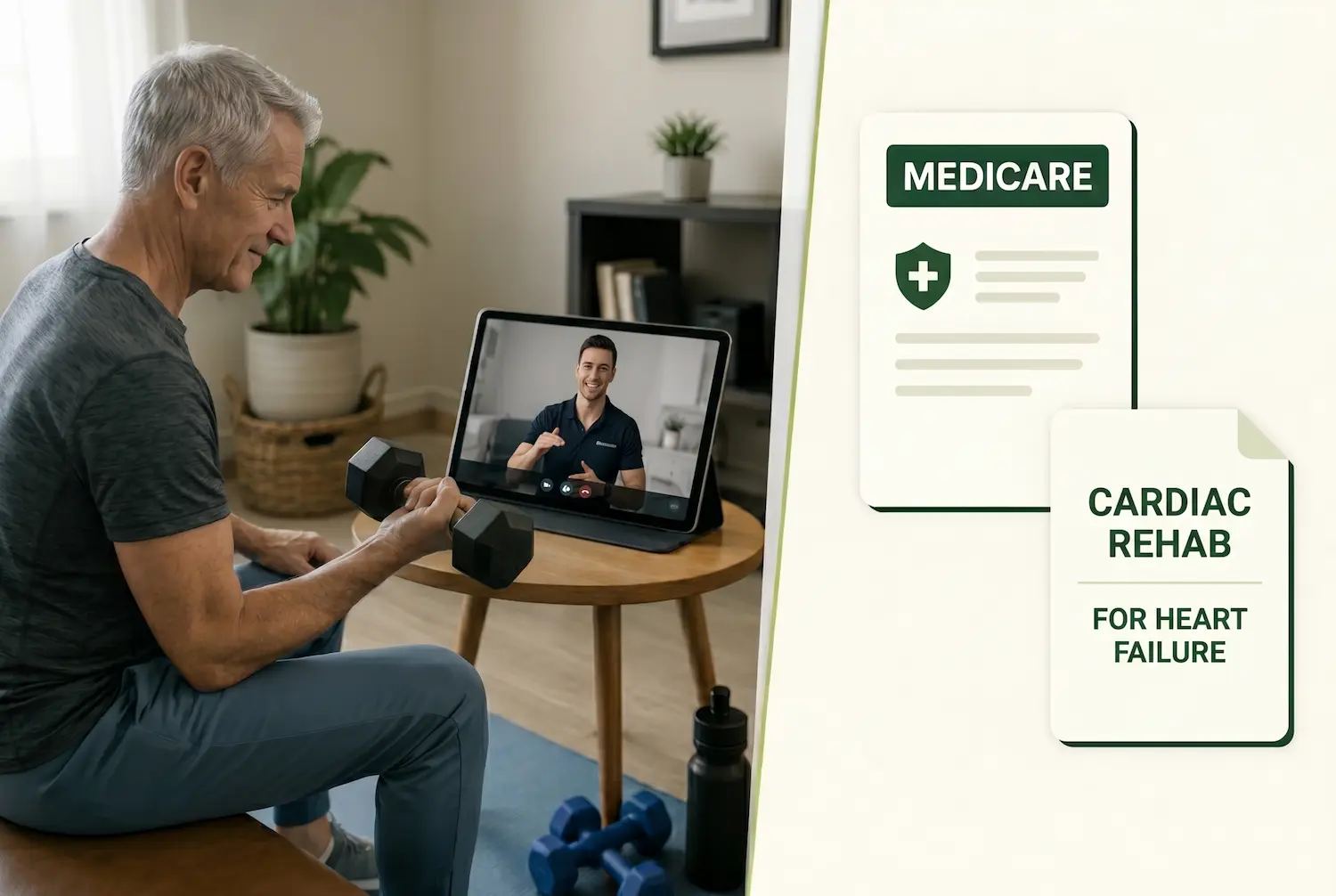
After a heart failure diagnosis, a very natural fear takes hold: if my heart is weak, won't exercise make things worse? It is one of the most common worries cardiologists hear, and the answer is reassuring. For the great majority of people with stable heart failure, the right kind of supervised exercise is not a risk. It is part of the treatment, and a powerful one.
This guide explains why that is true, what rehab involves, who qualifies, and how to start.
Is Exercise Safe With Heart Failure?
Yes, for most people with stable heart failure, and the evidence is strong. Exercise in cardiac rehab is medically supervised, started gently, and tailored to your heart, which is what makes it safe. Rather than straining the heart, regular activity helps it and the surrounding muscles use oxygen more efficiently, so everyday tasks feel easier over time.
This is not a fringe idea. The 2022 AHA/ACC/HFSA heart failure guideline gives exercise training its strongest possible rating, a Class 1 recommendation, for heart failure patients who are able to participate. In plain terms, that means the medical consensus is not just that exercise is allowed, but that it is recommended.
What Is Cardiac Rehab?
Cardiac rehabilitation is a medically supervised program that combines three things: monitored exercise, education on heart-healthy living, and emotional and psychosocial support. A care team typically including exercise specialists, nurses, and dietitians guides you through it. If you want the full picture of how it works in general, see our overview of what cardiac rehab is, and the broader benefits of cardiac rehabilitation. Here, we focus on what makes it specific and valuable for heart failure.
How Cardiac Rehab Helps Heart Failure
For heart failure specifically, the benefits are practical and measurable. Here is what cardiac rehab is shown to do:
| Benefit | What it means for you |
|---|---|
| Better functional capacity | You can walk farther and handle daily activities, such as stairs and chores, with less breathlessness and fatigue |
| Improved quality of life | Many people report feeling more capable, more confident, and less limited by their symptoms |
| Fewer hospital stays | Exercise-based rehab is linked to lower rates of heart-failure-related hospitalization |
| Stronger whole-body fitness | Muscles and lungs become more efficient, which eases the workload the heart feels |
| Education and confidence | You learn what your body can safely do, replacing fear and guesswork with a clear plan |
What the Research Says
The evidence base here is unusually solid. A JACC expert panel on cardiac rehabilitation in heart failure concluded that exercise training and the other parts of rehab are safe and significantly improve quality of life, functional capacity, and heart-failure-related hospitalizations. Landmark trials reinforce this: HF-ACTION found exercise training safe in patients with reduced ejection fraction and linked to modestly lower rates of death and hospitalization, while the ExTraMATCH II analysis pooled multiple studies supporting exercise-based rehab. Even so, the panel noted rehab remains underused, with fewer than a third of eligible patients taking part.
{{get-started}}
What to Expect in a Heart Failure Rehab Program
The Exercise Sessions
Sessions usually combine gentle aerobic activity, such as treadmill walking or stationary cycling, with light resistance work to rebuild strength. Throughout, your heart rate, rhythm, and how hard the effort feels are monitored closely. Intensity starts low and rises gradually within limits your care team sets, and if symptoms such as unusual breathlessness appear, the plan is adjusted on the spot. That supervision is what lets you push safely.
Education and Support
Rehab is more than exercise. You also learn the day-to-day skills that keep heart failure stable: understanding your medications, managing sodium and fluids, and weighing yourself daily to catch fluid buildup early. Our guide to a heart failure diet covers the nutrition side in detail, and many programs include counseling to address the stress and low mood that often accompany a new diagnosis.
How Long It Lasts
A standard program is 36 sessions, commonly scheduled as two to three one-hour sessions per week over about 12 weeks. The aim is not just to get you through those weeks, but to build habits and confidence that carry forward for life.

Who Qualifies, and Does Medicare Cover It?
Cardiac rehab for heart failure is widely covered, but with specific criteria. As outlined by Medicare, coverage for heart failure applies to people with stable, chronic heart failure with reduced ejection fraction. The standard rule set by CMS is a left ventricular ejection fraction of 35% or less and New York Heart Association class II to IV symptoms, despite at least six weeks of optimal heart failure therapy, in patients who are clinically stable.
A practical note: this rule means coverage is clearest for heart failure with reduced ejection fraction (HFrEF). People with preserved ejection fraction (HFpEF) may not meet the threshold, even though exercise can still help them. Coverage also varies by plan, so check with your care team and insurer about your situation, since eligibility is individual.
Doing Cardiac Rehab at Home
One reason rehab is so underused is simple: getting to a center several times a week is hard. Transportation, distance, work, and fatigue all get in the way, which helps explain why fewer than a third of eligible patients attend. Home-based and virtual rehab directly remove that barrier.
Carda Health delivers virtual cardiac rehab entirely from home, with live, supervised video sessions led by a dedicated clinical exercise physiologist and shipped devices that monitor your heart rate and rhythm in real time. For people managing heart failure, that means getting stronger safely without the commute, while a clinician watches the same vital signs they would in a center. Carda's team also handles the eligibility and insurance paperwork that often slows enrollment.

When Should You Wait Before Starting Cardiac Rehab?
Although exercise is one of the most effective treatments for stable heart failure, there are times when it is safest to wait until your condition has been stabilized. Cardiac rehabilitation is designed for people whose heart failure is medically managed and who have been cleared by their healthcare team to begin supervised exercise.
Before starting cardiac rehab, your doctor may recommend delaying exercise if you have:
- New or worsening chest pain
- Severe shortness of breath while resting
- Rapid weight gain or increasing leg swelling caused by fluid buildup
- A recent hospitalization for worsening heart failure
- A new or uncontrolled abnormal heart rhythm (arrhythmia)
- Dizziness, fainting, or unexplained lightheadedness
These situations do not necessarily mean you'll never be able to participate in cardiac rehab. In many cases, treatment can stabilize your condition, allowing you to safely begin a supervised program later. Your healthcare team will determine the right time to start based on your symptoms, heart function, medications, and overall health.
Once you're medically stable, cardiac rehabilitation provides a structured environment where exercise intensity is carefully monitored and adjusted to your individual needs, helping you rebuild strength while minimizing risk.
Conclusion
If heart failure has made you afraid to move, cardiac rehab is built to give that confidence back. Supervised exercise is safe for most people with stable heart failure, carries the highest level of guideline support, and is proven to help you feel stronger, live better, and stay out of the hospital. A diagnosis does not have to mean a smaller life. With the right support, it can be the start of a stronger one.
{{get-started}}
Frequently Asked Questions
Is exercise safe if I have heart failure?
For most people with stable heart failure, yes. In cardiac rehab, exercise is medically supervised, started gently, and adjusted to your heart, which is what makes it safe. Always get clearance from your care team first, and rehab provides that supervision as you build up.
Does cardiac rehab improve heart failure?
It reliably improves how you function and feel, increasing exercise capacity and quality of life and reducing hospital stays. It is not a cure, but it is one of the most effective non-drug treatments available, which is why guidelines recommend it strongly.
How long does cardiac rehab for heart failure take?
A typical program is 36 sessions, usually two to three times a week over about 12 weeks. The lasting goal is to build exercise habits and confidence you can keep for life.
Does Medicare cover cardiac rehab for heart failure?
Yes, for qualifying patients. Medicare covers it for stable, chronic heart failure with an ejection fraction of 35% or less and NYHA class II to IV symptoms, after at least six weeks of optimal therapy. Coverage varies by plan, so confirm your eligibility with your care team and insurer.
What exercises are done in heart failure rehab?
Mostly gentle aerobic activity such as treadmill walking or stationary cycling, combined with light resistance training, all at a monitored intensity that increases gradually as you get stronger.
Can cardiac rehab be done at home for heart failure?
Yes. Home-based and virtual programs deliver supervised sessions and remote heart monitoring from your home, which makes it far easier to start and finish a program. This is exactly what Carda Health provides.
References
- American Heart Association. Cardiac Rehab for Heart Failure.
- Heidenreich PA, Bozkurt B, Aguilar D, et al. 2022 AHA/ACC/HFSA Guideline for the Management of Heart Failure. Circulation. 2022;145(18):e895-e1032.
- Bozkurt B, Fonarow GC, Goldberg LR, et al. Cardiac Rehabilitation for Patients With Heart Failure: JACC Expert Panel. J Am Coll Cardiol. 2021;77(11):1454-1469.
- Million Hearts (HHS). Cardiac Rehabilitation.
- Centers for Medicare & Medicaid Services. NCD: Cardiac Rehabilitation Programs for Chronic Heart Failure (20.10.1).
- Medicare.gov. Cardiac Rehabilitation Program Coverage.