
One in Four Heart Attack Survivors Will Have Another Within a Year. Here's How to Make Sure You're Not One of Them.

You made it.
The heart attack. The hospital. The fear. The uncertainty of whether you'd ever feel normal again. You survived. And that's not nothing.
They sent you home with medications, instructions about what to eat and what to avoid, and a follow-up appointment scheduled for a few months out.
And now you're home, trying to get back to normal, but there's this thought that keeps showing up—usually at 3am, or when you feel a twinge in your chest:
"Could it happen again?"
The honest answer is: Yes, it could.

The Statistics Nobody Wants to Say Out Loud
Every year, 805,000 Americans have a heart attack.
About 200,000 of them—one in four—will have another one within 12 months.
That's not meant to scare you. That's just what the data shows.
But here's what most people don't realize:
There's something that can reduce your risk of a second heart attack by nearly half.
It's called cardiac rehabilitation. And if you're like most heart attack survivors, you've heard of it... but you're not doing it.
Maybe your cardiologist mentioned it during a follow-up appointment. Maybe it was in your discharge paperwork. Maybe a nurse handed you a brochure.
And you thought, "Yeah, I should probably look into that."
But then... you didn't.
Not because you don't care. Not because you're irresponsible.
But because something got in the way.
Let me guess which one it was:
Reason #1: "I'm Terrified to Exercise. What If Something Happens?"
This is the big one.
Your heart just failed you. It stopped working the way it was supposed to. You ended up in the hospital, maybe thinking you weren't going to make it.
And now someone's telling you to exercise? To get your heart rate up on purpose?
It feels counterintuitive. Maybe even dangerous.
You're thinking: "What if I push too hard? What if something happens while I'm exercising? Shouldn't I be taking it easy and letting my heart heal?"
So you don't do it. You rest. You take it easy. You figure the safest thing is to avoid anything that might stress your heart.
And I completely understand that instinct.
But here's what the research shows—and what cardiologists know but don't always have time to fully explain:
Your heart actually needs that exercise to get stronger.
Sitting still isn't protecting your heart. Over time, it's actually making things worse. Your cardiovascular system gets weaker. Your risk goes up. Your world gets smaller.
The fear is real. But so is the risk of doing nothing.
Reason #2: "The Logistics Are Impossible"
Let's be honest about what traditional hospital cardiac rehab actually requires:
- Driving to a hospital facility 2-3 times per week for 12 weeks
- Finding parking (anyone who's been to a hospital knows what a nightmare that is)
- Coordinating rides if you don't drive
- Leaving your spouse alone if they need care
- Working around rigid appointment schedules
- Spending an hour in a crowded rehab room with 15 other people
For someone who's 68 years old, still recovering, managing multiple health conditions, and maybe caring for a spouse—that's not just inconvenient.
It's genuinely impossible.
So you don't go. Or you go twice and realize you can't sustain it.
And nobody follows up. Nobody checks in. You just... fall through the cracks.
The problem isn't that you don't want to get better.
The problem is the system wasn't designed for your reality.
Reason #3: "I'm Not Sure It'll Actually Work for Me"
You've been through a lot of health interventions over the years.
Programs that sounded great but didn't deliver. Treatments that helped temporarily but didn't last. Promises that didn't pan out.
And now someone's telling you cardiac rehab will "reduce your risk" and "make you stronger" and "help you get your life back."
You're thinking: "I've heard this before. Why should I believe it's different this time?"
That skepticism is valid.
But here's the critical difference:
Cardiac rehab isn't a trend. It's evidence-based medicine.
It's backed by decades of research from institutions like the American Heart Association. Medicare covers it specifically because the data proves it works—it reduces hospital readmissions, prevents second cardiac events, and extends lives.
The question isn't whether cardiac rehab works.
The question is whether you can find a way to actually do it that fits your life.
And for 90% of heart attack survivors, the answer has been no.
Until now.
What If Cardiac Rehab Could Actually Fit Your Life?

Imagine for a moment:
No driving to a hospital.
No crowded rehab rooms.
No coordinating rides or leaving your spouse alone.
No wondering if you're pushing too hard or not hard enough
Instead:
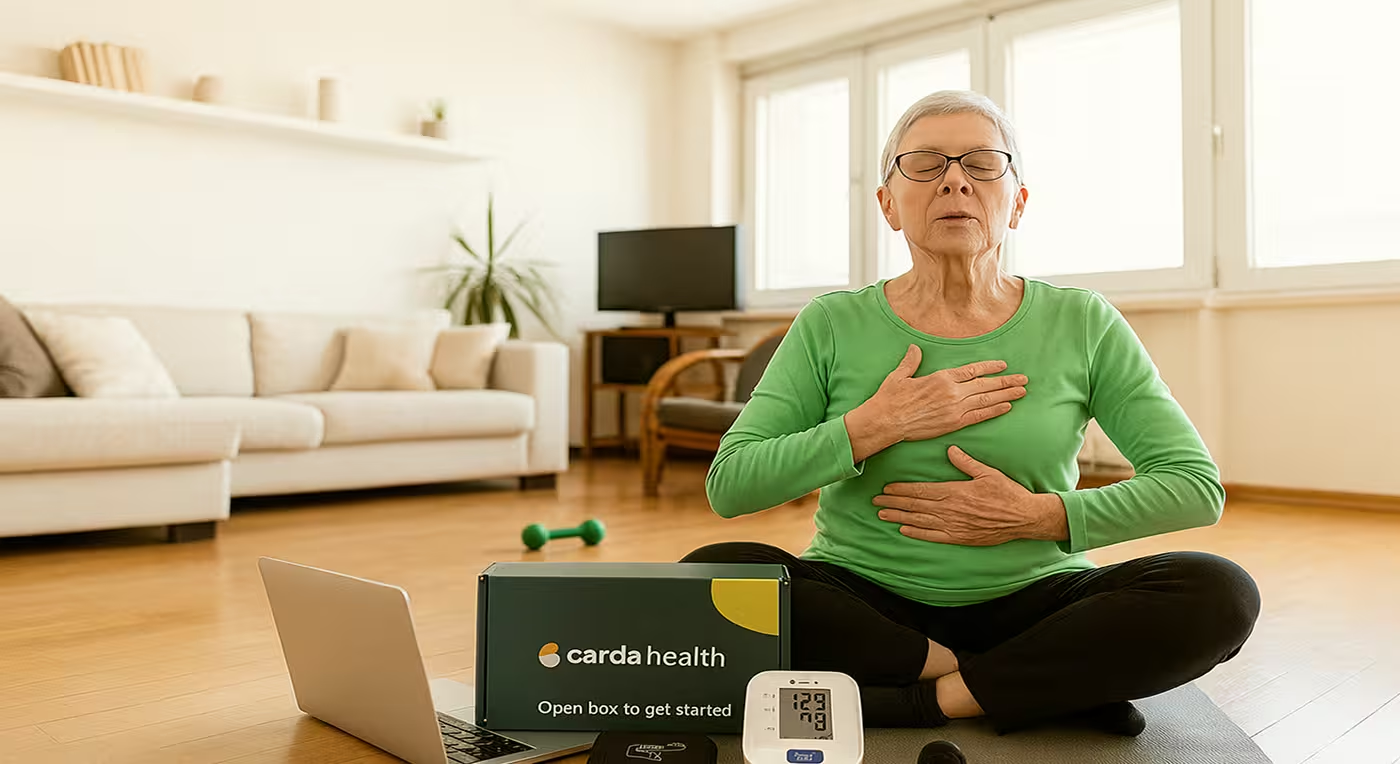
You're in your living room. Comfortable clothes. A time that works for your schedule—morning, afternoon, whatever fits your day.
A tablet sits on your coffee table. (It was sent to you. You didn't have to buy it or figure out the technology.)
On the screen is a Clinical Exercise Physiologist. Not someone managing 15 patients at once. Someone focused on you. Someone who knows your medical history, your limitations, your concerns.
They're monitoring your heart rate in real-time. Your blood pressure. Your oxygen levels.
If something doesn't look right, they see it immediately and adjust. If you're having a rough day, they modify the exercises on the spot. If you're feeling strong, they might challenge you a little more.
Most importantly:
You feel safe.
Because someone is watching. Someone qualified is there with you. You're not doing this alone.
This is Carda Health—a virtual cardiac rehabilitation program designed specifically to remove every barrier that's kept you from doing what you know you should do.
{{button-get-started}}
How It Actually Works
Here's what happens when you enroll in Carda:

Step 1: Free Assessment
You answer questions about your health history. A physician reviews your medical information to confirm cardiac rehab is safe and appropriate for you. No cost. No commitment. Just an assessment.
Step 2: Equipment Delivered to Your Home
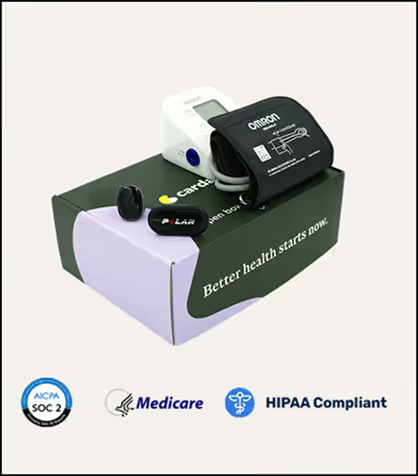
If you're approved, within days you receive everything you need:
- Tablet (pre-loaded with the Carda app)
- Heart rate monitor
- Blood pressure cuff
- Pulse oximeter
- Resistance bands
Step 3: You're Matched With a Clinical Exercise Physiologist
This isn't a fitness instructor. This is a medical professional trained at institutions like Mayo Clinic and Cleveland Clinic who specializes in cardiac rehabilitation.
They create a personalized exercise plan based on your specific heart condition, your limitations, and your goals.
Step 4: Sessions Begin
Three times a week. About an hour each. From your living room.>
Your physiologist appears on screen and guides you through each exercise. They monitor your vitals in real-time throughout every session.
If you're struggling, they adjust immediately. If something concerning appears, they see it and respond. If you need encouragement, they provide it.
You're never alone. You're never guessing. You're never wondering if what you're doing is safe.
Step 5: Week by Week, You Get Stronger
The stairs get easier. The exhaustion lifts. The constant worry begins to fade.You start doing things you thought might be behind you: walking without stopping, playing with grandkids, going places independently, living your life instead of just managing your condition.This is what cardiac rehab is supposed to do.And this is what happens when all the barriers are removed.
{{button-find-out}}
"What Does This Actually Cost?"
Here's where it gets better:
If you pay $0 when you see your doctor, Carda could be free too. Medicare covers cardiac rehabilitation. If you have qualifying supplemental insurance (like Medigap or secondary insurance), you could be 100% covered with qualifying supplemental insurance.
In fact, 50% of Carda patients pay $0 copay.
Compare that to traditional hospital programs:
- $22+ per session = over $790 for a standard 36-session program
- Plus transportation costs (often $700+)
- Plus coordinating rides, taking time off work, navigating hospital logistics
Carda patients save over $1,200 on average compared to hospital-based programs.
And you do it all from home.
{{button-find-out}}
Is This Program Right for You?
Carda Health is designed for heart attack survivors who:
✓ Want to reduce their risk of another cardiac event
✓ Need cardiac rehab but can't access traditional hospital programs
✓ Feel uncertain about exercising safely after a heart attack
✓ Are dealing with mobility limitations, transportation challenges, or caregiving responsibilities
✓ Want personalized medical supervision while exercising at home
The program is available in 48 states and accepts Medicare, supplemental insurance, and major insurance providers including UnitedHealthcare, Aetna, BlueCross BlueShield, and Humana.

Your Next Step
If you're ready to take action, here's what to do:
>>Click below to see if you qualify for Carda Health<<
You'll answer a few quick questions about your health history (takes about 5 minutes).
A physician reviews your information to confirm cardiac rehab is appropriate and safe for you.
They'll verify your insurance coverage to see if you're 100% covered with qualifying supplemental insurance.
If you qualify, your equipment ships within days.
No hidden fees. No complicated setup. No driving anywhere.
{{button-find-out}}
One Final Thought
You survived your heart attack for a reason.
Maybe it's to see your grandchildren grow up. Maybe it's to grow old with your spouse. Maybe it's to finally do the things you've been putting off.
But you can't do any of that if you end up back in the hospital.
Cardiac rehab isn't optional. It's essential.
The only question is whether you're going to find a way to actually do it.
Now there's a way that fits your life. No excuses. No barriers. Just you and a medical professional helping you get stronger from home.
Don't be part of the 90% who skip it.
Don't be one of the 200,000 who ends up back in the ER this year.
Be one of the people who takes action.

{{button-find-out}}

Tablet, Heart Rate Monitor, and Blood Pressure Monitor